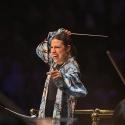
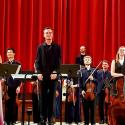
You never quite know what to expect from the acoustics of the Royal Albert Hall. It was hard to credit the total focus Kazuki Yamada drew from his City of Birmingham Symphony Orchestra right from the start of Poulenc's Sinfonietta - a precision which carried through to an exhilarating performance of the Concerto for Two Pianos with a stunning sibling duo. Adams' now-classic choral blockbuster Harmonium, on the other hand, sometimes benefitted from the halo of sound, but the combined masses of the Sydney Philharmonia Choirs and the CBSO chorus couldn't give us many of the words of John Donne and Emily Dickinson in full grave glory - a big ask at the best of times.
One thing's for certain: the CBSO has done it again in appointing the best of Music Directors. Yamada took over from Mirga Gražinytė-Tyla in 2024, and this is the first time I've heard him work with his orchestra live: the promise of the "new conducting kid on the block" who wowed me with the BBC Symphony Orchestra in Berlioz's Symphonie fantastique in 2011 is fully realised.
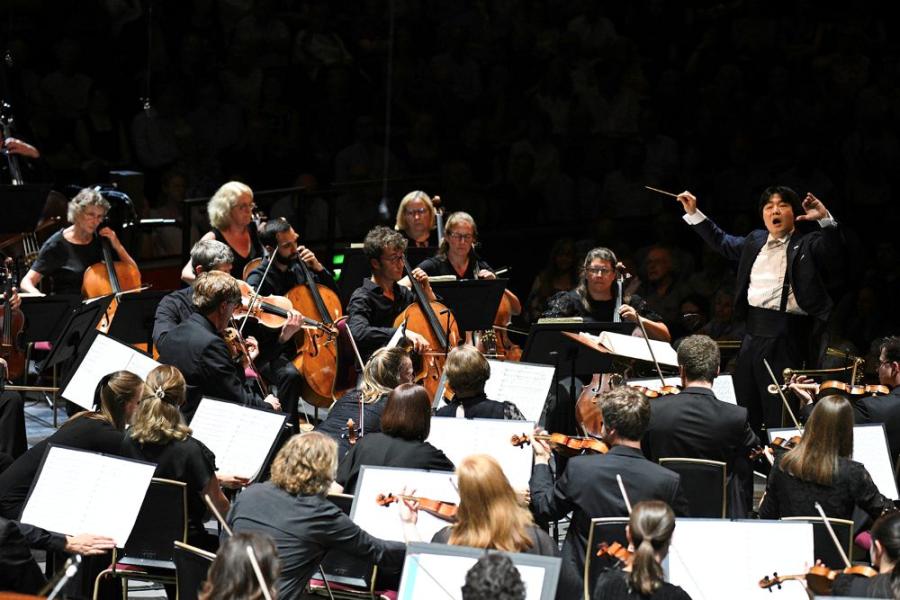
This was the Poulenc Sinfonietta's first performance of the Proms, and it was my first live experience of it too. Composed in 1947-8, some 23 years after the keynote ballet Les Biches, it has much of that score's kaleidoscopic quality, the same bitter-sweet essence that suggests sadness beneath the surface, and a fresh parade of wonderful melodies (there was a similarity in that respect to the Respighi Roman trilogy we heard in full technicolor on Friday).
Expanded to twice its quarter-hour brief - the BBC's commission to celebrate the first anniversary of what was then the Third Programme - the Sinfonietta never outstays its welcome, at least not in this live wire of a performance. Double its usual number of strings helps with the fleeting romanticism, and the glorious writing for harp (Katherine Thomas) and first trumpet (guest principal Holly Clark, outstanding) gilded the iridescent lily.
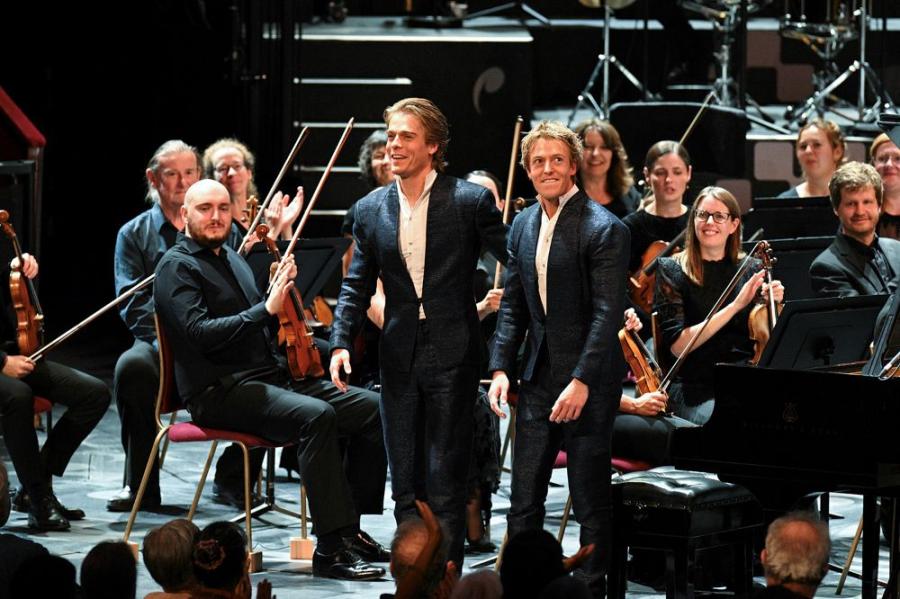
If the opening of the Sinfonietta grabs you at the start, the way the Concerto for Two Pianos begins is a real shock to the system. I'm sure it's been stated before, but Dutch brothers Lucas and Arthur Jussen are more than just pretty faces. They have if anything even bigger personalities than the former doyennes of this repertoire, the Labèque sisters.
They fizzed and rolled with Yamada's brilliant marshalling of his troops, deft in every sudden turn; the togetherness with the castanets - Poulenc outdoing Prokofiev's Third Piano Concerto - has to be heard (on Radio 3) to be believed. And the gamelan music was mystically layered. As outlines of the Fledermaus Overture emerged from complex textures, it seemed that their encore was a fantasia on tunes from the operetta, as the waltz made clear: Strauss einander by Igor Roma. The Jussens' place as Proms regulars seems assured.
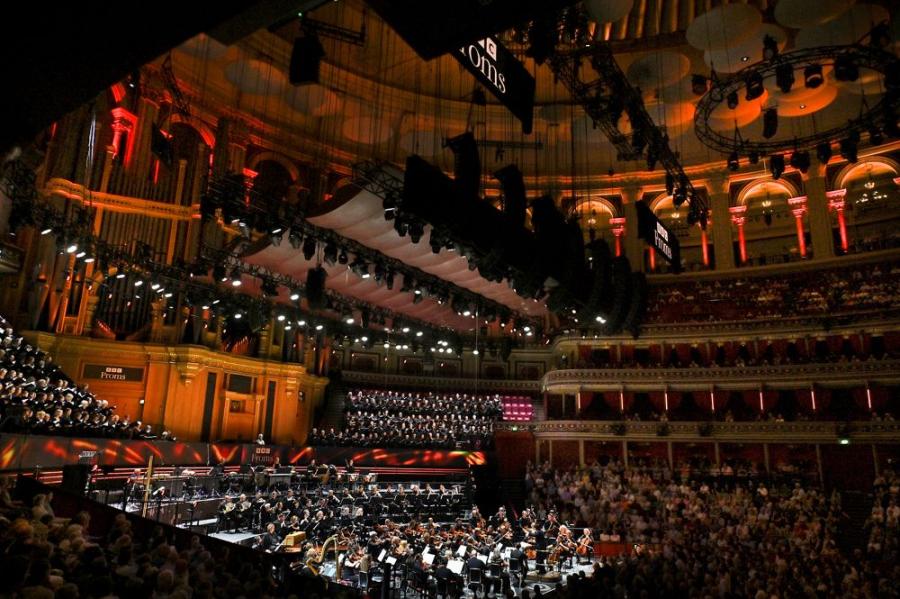
Poulenc held the torch for tonality up to his death in 1963; Bernstein and Britten continued it; and then in 1980 John Adams emerged as a fully-fledged master of modulations on a grand scale with Harmonium. The words of John Donne emerge only fleetingly at first in "Negative Love"; I caught "never" and then not much more. The moving unisons of Emily Dickinson's "Because I could not stop for Death" were crystal clear text-wise, then vanished with the harmonies.
As for "Wild Nights", forget it in the horn-whooping blaze of sound until you get to the overlapping effects of "Rowing in Eden". Full credit to the two choruses for sustaining the high lines, but the orchestra and Yamada were the real stars in the spellbinding interludes, the gradual metamorphosis between the second and third movements the highlight of the performance.