

"It was insanely excellent," enthused one of the Järvi Academy Symphony Orchestra's young musicians about the Estonian Festival Orchestra's performance of Nielsen's Third Symphony with its inspirational guiding light, Paavo Järvi. Seated in the balcony behind and above the orchestra, the lucky youthful players rose to their feet the minute the work ended. They earned their laurels, too, in the opening concert under Paavo's father Neeme, 89 - undiminished in his passion for the rich and rare, glowing with the new life the youth orchestra has given him despite a fall at the Estonian Song Festival which put him out of action last summer.
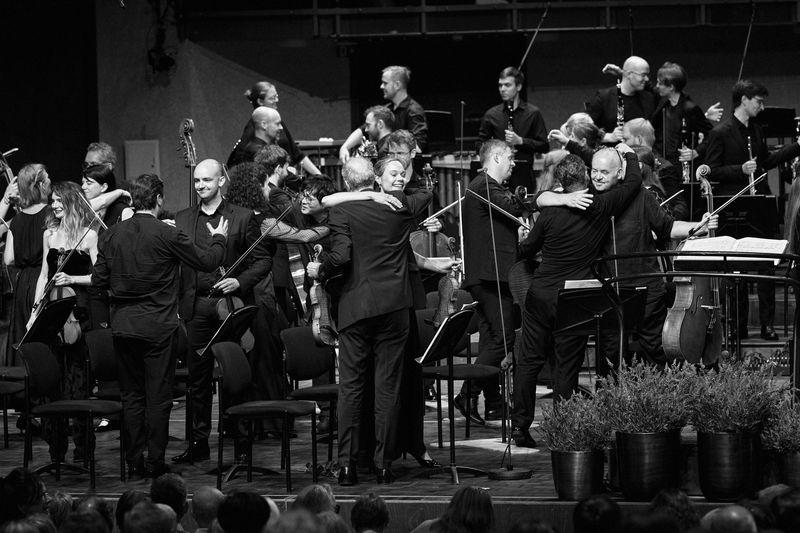
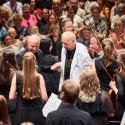
So the circle of love and excellence the Järvis have built around them grows bigger every year in the idyllic surroundings of Estonia's summer capital, Pärnu. When I first came in 2016 - I've only missed only festival since, and that wasn't in 2020, when health was still flourishing in Estonia - I made the grand statement that the Estonian Festival Orchestra musicians responded to Paavo Järvi in the same way as the Lucerne Festival Orchestra players had to Claudio Abbado ("not so much an orchestra," Daniel Harding told me, "as a love-in"). And since Abbado's death, this remains for me the next best thing (pictured below by Kaupo Kikkas, the players after one of the LFO concerts).
But there has been a parallel rise in the constitution of the Järvi Academy Symphony Orchestra, 130 young musicians from 28 countries (55 from Estonia). Two years ago they seemed to have rejuvenated Neeme Järvi, who shaped nuanced performances of Beethoven's First Symphony and Schubert's "Unfinished" with them. The opening concert this year, which I saw on the festival's excellent TV channel - all main events broadcast live, then incorporated into a fabulous archive - before I came to Pärnu three days later, surpassed expectations.
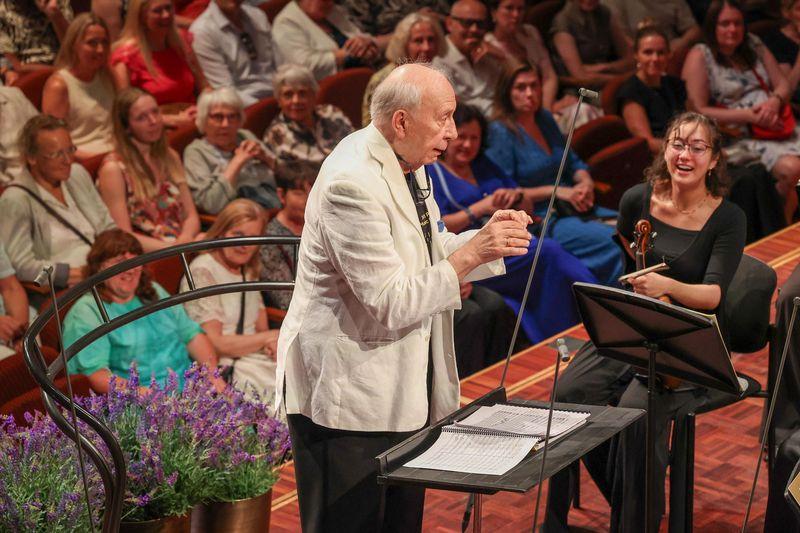
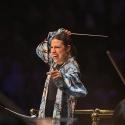
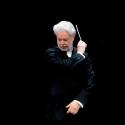
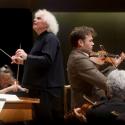
It was a vintage Järvi Senior programme of the rich and rare, tied to the festival theme "Forces of Nature", with works by Estonian Heino Eller, Dvořák (In Nature's Realm, vintage Bohemian beauty), Smetana (Vltava, very fast), Grieg and Fibich; the second half was especially spellbinding, with twilight magic from Eller and Fibich - much the most melodically rich and poetic work of his I've heard- framing impassioned work on Grieg's The Last Spring in its string version. Järvi's late economy of movement would sometimes burgeon, as in the expansive gestures for the Grieg, and he surprised the players by starting standing and without spectacles. Do watch this event: the interplay between wry master and wildly enthusiastic youth is a joy throughout, with especial delight from the vivacious Mika Chichon (pictured below by Tõiv Jõul with Neeme Järvi in the final Academy Concert), sharing the front desk in the first concert with experienced leader - and principal second violinist of the EFO - Emma Yoon.
I actually arrived in time for the second of the EFO concerts three days later. I'd have preferred to have caught live the first, beginning with an exquisitely nuanced Fauré Pelléas et Mélisande Suite (food here, surely, for future vintage Paavo Järvi encores) followed by the premiere of Tõnu Kõrvits's Secret Garden Viola Concerto, written for the performer, Amihai Grosz. Kõrvits is much featured in his native Estonia right now; his orchestration is often delicate, his inspiration poetic and nature-lined, but the substance is often all too quickly forgotten.
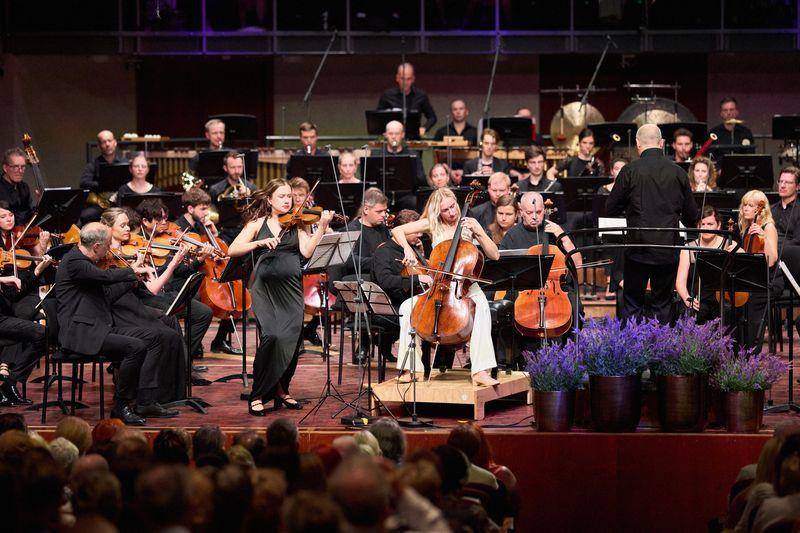
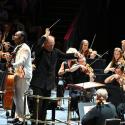
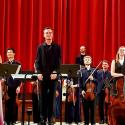
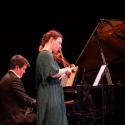
Yet to catch what would have to be the most electrifying interpretation of the festival, of Nielsen's Third. I had to break a rule not to sit through more than 10 minutes of Philip Glass by facing his Double Concerto for Violin and Cello before it. No endurance test, as it turns out; Glass's duets for the two solo instruments are punctuated by colourful orchestral stretches, flashing its roots in a commission by the Netherlands Dance Theatre. What it all amounts to I don't know, but it flowed and flourished in the hands of the Latvian Balanas sisters, Kristīne (violin) and Margarita (cello, the two pictured below by Kaupo Kikkas with Paavo Järvi and the orchestra). Less so their encore, a duet for two version of a Vivaldi seasonal storm, simply not up to scratch.
The Nielsen was dynamite from the first unison, as it has to be, Paavo Järvi pushing the players close to the precipice in the opening dance of life, creating mirth with some of the horn and woodwind commentary, deliriously fairground-joyous in the central waltz. Nielsen's typically unorthodox progress towards open-meadows bliss in the slow movement, strings twice letting rip with their passionate best, was a little sullied by having the soprano and baritone soloists too far forward, either side of the orchestra; Sandra Laagus made too much of an operatic meal out of her wordless melisma. But the ever-unpredictable sequels were simply perfect, and the thrust of this finale made it seem equal to the first movement, not something I've ever found before. The encore was a new one for this team, Sibelius's wistful late Élégie. After I'd gone it would be back to the usual roster, the pieces the regular audience loves to hear.
This year the EFO was missing all its usual woodwind principals - a clash with a wind ensemble engaged in the Kuhmo Festival over the water - but the replacements were equally strong personalities, "Pärnu people", one could say. Nielsen gave clarinettist Lewin Kneisel a chance to shine, while in the rehearsal of Beethoven's Sixth Symphony I caught - and indeed the two performances on film - Doğa Saçılık's clarion oboe tone, Thomas Hancox's ineffable flute and the impact of Clara Manaud's bassoon achieved equal status.
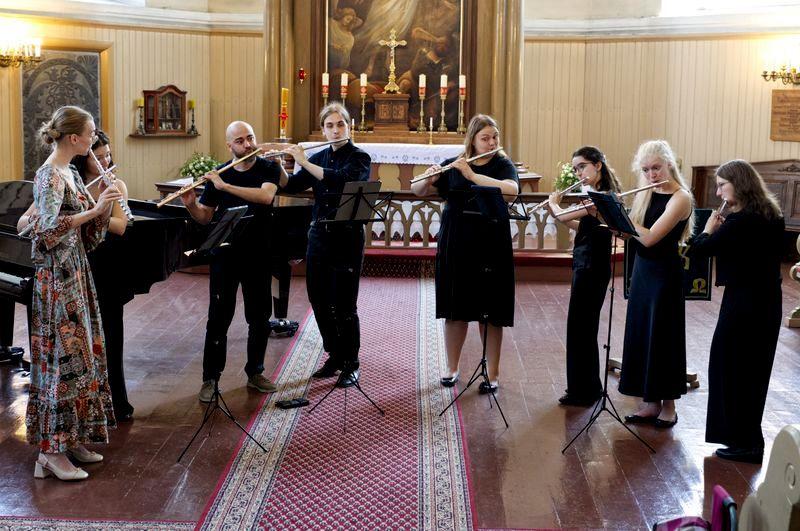
The next day was unusually packed by this festival's standards, six concerts in all, of which I attended four and a half. The young Academy players had a chance to shine in three in the airy St Elizabeth's Church, looking in better shape than on previous yeard. Arriving at 1pm, I had a full hour and a half's music, all of it interesting, though with special novelty value in a headspinning vibraphone/marimbapone duo - as only one of the players was listed, it seems unfair to semi-name - in David Friedman's Carousel and a flute octet in the first of Bozza's Trois Pièces, the seven students' tutor André Cebrián, principal flute of the Scottish Chamber Orchestra, included (pictured above by Taavi Kull).
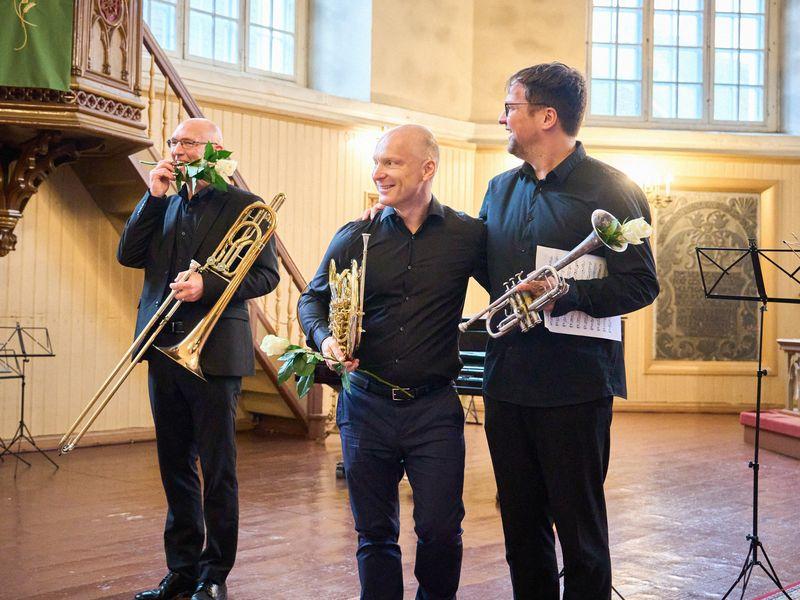
Cebrián kicked off an Academy Teachers' Concert, also in the church, later in the day in the equally lively company of another SCO principal, clarinettist Maximiliano Martín and an equally brilliant pianist, Maila Ladna with a Saint-Saens miniature of typical personality, his early Tarantella. Michael Foyle and Cecilia Zilliacus introduced those of us who didn't know it to Grażyna Bacewicz's untypically genial Suite for Two Violins (all the more remarkable for showing a sunny side in 1943). Raimund Zell, Yazi Fiuza Souto and Christian Jones let rip - some thought too much so - in Poulenc's Sonata for Horn, Trumpet and Trombone (pictured below by Kaupo Kikkas). I departed for a quick drink and snack before the late-night concert and missed the Dvorak String Sextet, thinking I could catch it later on the festival TV, but alas the church concerts were the only ones not filmed.
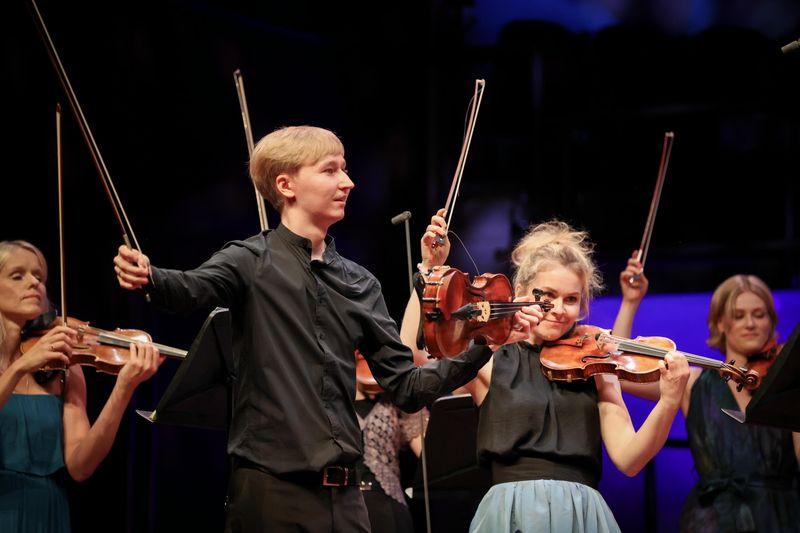
Two other substantial concerts took us back to the concert hall in a celebration of two of Estonia's most remarkable talents, the Aavik brothers. Hans Christian, already one of the world's finest violinists, once again took charge of the Estonian Foundation of Musical Instruments' Gala (pictured below by Tõiv Jõul). Without consulting the programme, I assumed the first-half sequence of very individual music for strings was by one Estonian composer; in fact it segued from Veljo Tormis's gravely beautiful "In Late Summer" from Autumn Landscapes to Kõrvits's Night Music, with similarly unpredictable harmonic turns, and then to the five movements of Jaan Raats's Concerto for Chamber Orchestra, only two of them sounding out of the melancholy remit.
Contrasting vitality in Bartók's Divertimento for Strings could be a little reserved: Estonians are more inward-looking than Hungarians, after all. But the sonorities on the treasurable instruments were never less than gorgeous.
Henri Christofer Aavik, Hans Christian's brother, already has the high confidence and definition of a first-rate conductor, and he has big plans for the Pärnu City Orchestra including Mahler's Ninth, albeit in Iain Farrington's chamber version. Their Night Concert - Öökontsert in Estonian; öö is a memorable component in my very limited vocabulary - offered another imaginative programme, relating its creation theme to the festival's "Forces of Nature". Rebel's "Le cahos" from Les Élémens, very wild for 1737, eased into the quiet prelude of a much later ballet, Copland's Appalachian Spring.
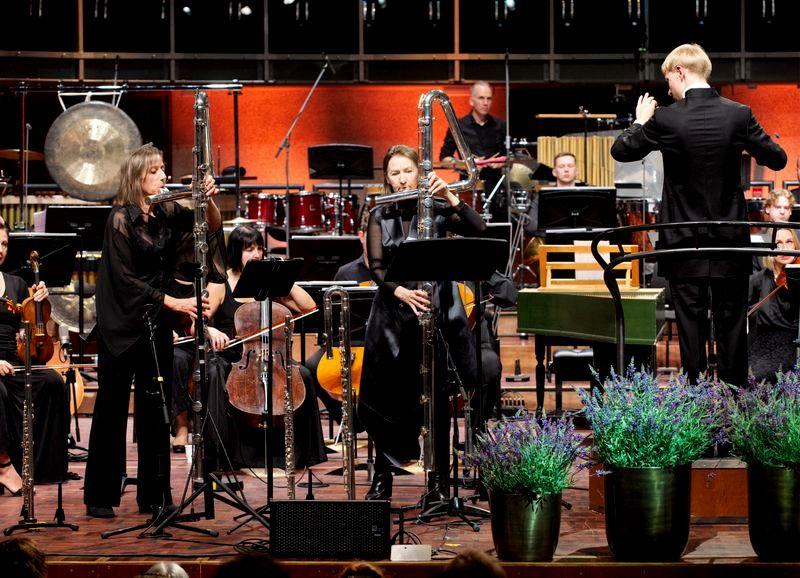
The centrepiece was a new work by Märt-Matis Lill, his Double Flute Concerto Towards the Bottomless Sea. Such an admirable philosophical concept from a true thinker among Estonian composers: the geological rising and falling of the oceans over aeons, requiring a whole ensemble of flutes from standard to contrabass, which you may not have seen on a concert platform. Maarika Järvi and Monika Mattiesen (pictured below by Taavi Kull with conductor Aavik and the PCO), a regular duo partnership here - and the Järvi sister plays in the Estonian Festival Orchestra - mastered them all, and the opening, in which they walked round the back of the orchestra playing, was arresting. So was the first two-thirds of the piece, in which one could trace the rising to earth. After that, what? We were left hanging.
This is a problem with many new works: all process, no hooks. That was also the case with another Estonian world premiere in the EFO concert I attended, Liisa Hõbepappel's Piove (It Rains), mysterious and imaginative from the start but still, though much shorter, outstaying its welcome as a piece of mood music. I'm still glad both works had a chance to be heard, but "sound worlds" need foreground events too.
Unsuk Chin's Subito con forza certainly has those by virtue of its homages to Beethoven on his 250th birth anniversary, starting with a very rude answer to the opening unison of the Coriolan Overture. As with the Glass concerto, this was different from much of a more usually self-limited composer's work. We could have segued, too, into Milhaud's La création du monde, a more familiar but still not-often-programmed way to end. What a rainbow range of ideas and tunes Milhaud finds in his homage to African myth and Harlem jazz. Full credit to the (uncredited) saxophonist in a brave and vivid choice. The encore was a very select slice of Milhaud's "nothing doing" ballet Le boeuf sur le toit.
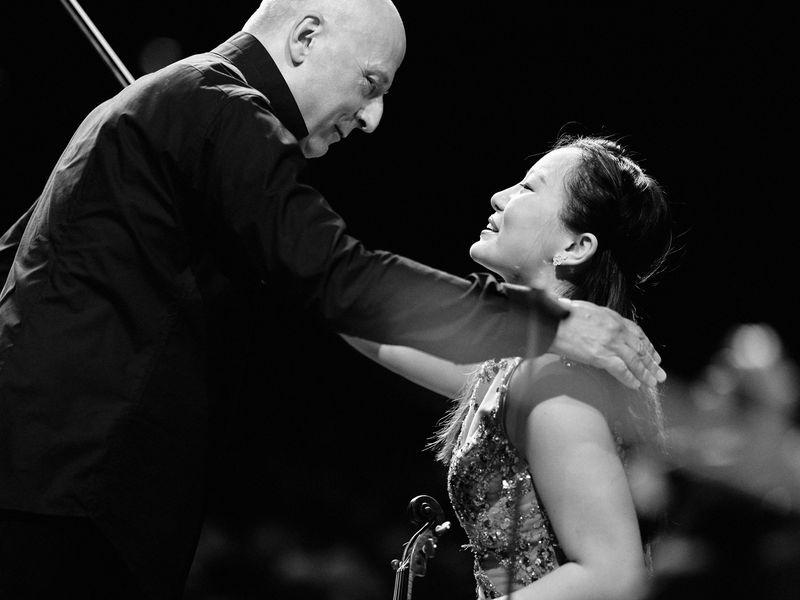
More showcasing of semi-established young musicians came in a new event for the festival, giving students of mine who'd come to the festival - a first! - a chance to hear the EFO (they'd been unable to get tickets for the last two concerts). They were rewarded especially in the roars and poetry of Sibelius's Violin Concerto, very much at one with 20-year-old Paloma So (pictured above by xxx with Paavo Järvi). So is more obviously a virtuoso violinist with astonishing technique than an atmospheric tale-teller, but this work in progress showed her immense promise.
An orchestral member told me that the first rehearsal was hard going, the soloist a million miles from Sibelius's world, but pointed out how transformed she had already become, clearly amazed by the work of her colleagures. Leader Florian Donderer also told me that he's seen Paavo conduct this work so often, and every time he adjusts to the soloist so it's always perfectly together. So's encore was more dramatically ferocious than merely showpiece-standard, so we should see much more of her.
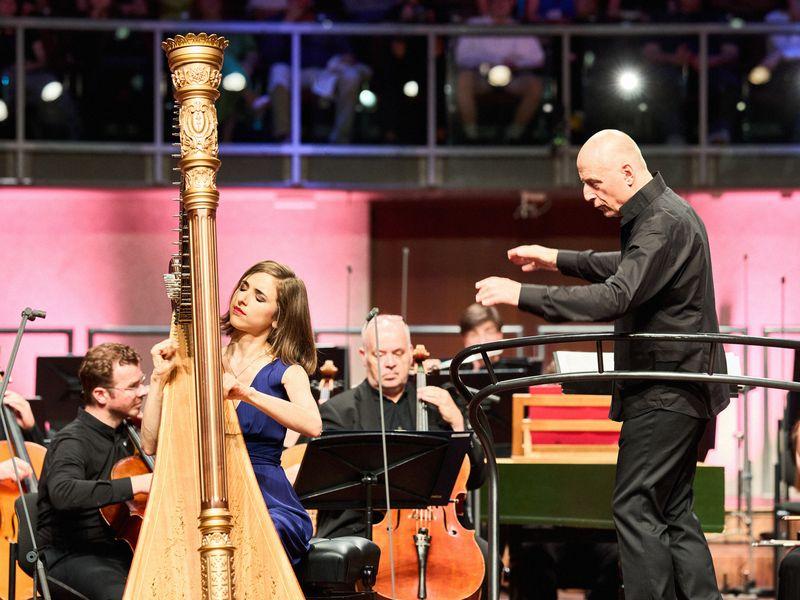
Launching the three-concerto evening was Estonian pianist Tähe-Lee Liiv in Mendelssohn's First. Deliciously fluent in this happy music, she showed more personality in the playing than in her communication with players and audience. But that too can be worked on. There's no doubt that everyone loves harpist Anaëlle Tourret, who's also played with the EFO. I confess I was surprised that Handel originally wrote his B flat major Concerto for harp rather than organ, the more usual solo instrument; it's perfectly concise and spirited. But the absolute winner of the evening was Tourret's encore, her transcription from guitar of Serenata Española by Joaquim Malats.
Daytimes this year were fully occupied by concerts, time at the hall and chance conversations with interesting musicians (some of the young conductors above all). I attended one of the conducting masterclasses mostly taken by Paavo, but Neeme showed up, and Kristjan too, so Claudia Jablonski got triple advice, Neeme launching in himself to show how the slow movement of Mendelssohn's "Spring" Symphony should go before taking her arm - conducting by dual control. The EFO rehearsal of Beethoven's "Pastoral" was a treat, too - in the hour and a half Paavo took the players through it from start to finish, with of course many perceptive stops along the way. The result was profound and always energised; do watch one of the performances.
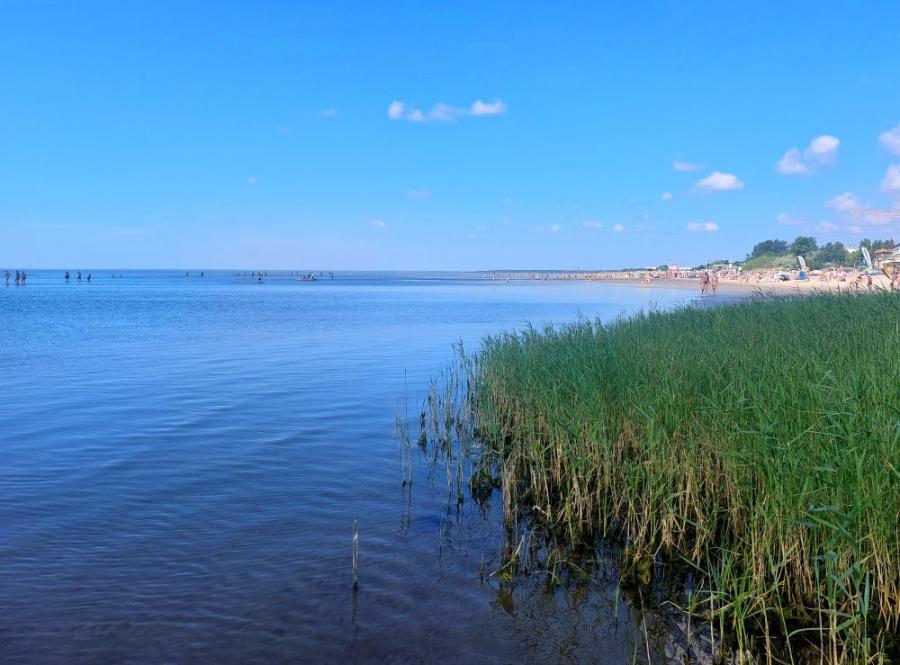
Anyway, attempts to get to the river for a deep swim were thwarted, but I did manage time at the beach on the last morning. Given the shallow waters around the eight-mile bay, I ended up wading for ten minutes only to miss proper bathing; back-floating was the best, Still, it was bliss, with circling terns and small fish coming out from the reeds.
My own concert finale was a totally joyous one. Standards among the conducting candidates have risen over the years. Select participants get to conduct a single movement in a programme shared between the Pärnu City Orchestra (Erkki-Sven Tüür's L'ombra della croce - let's have more of his music again next year - and the frankly rather dull Mozart Fifth Violin Concerto, with a merely adequate soloist) and the Järvi Academy Symphony Orchestra (Liszt's Mazeppa, Schumann's First, "Spring", Symphony). Pictured below by Tõiv Jõul: conductor and additional students/observers with Paavo and Kristjan Järvi and regular associate Leonid Grin.
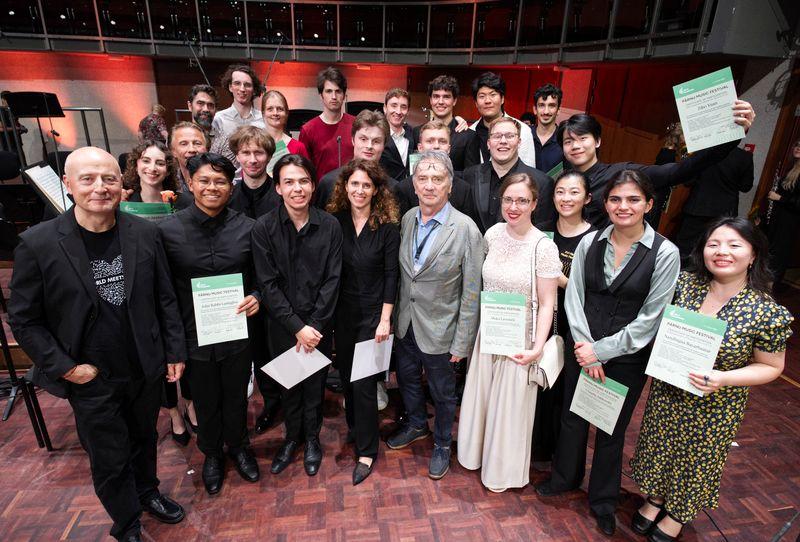
Only one candidate misfired in the movement he'd been given, possibly because he's too inclined to copy the faster tempi of Paavo and Neeme Jarvi. Let's just say that three of the Schumann symphony movements were top quality. None of the collegial conducting students would deny, though, that Swiss Gabriel Pernet was ahead of the game. It's not a competition; the fact that Pernet has already won the Neeme Järvi Prize at the Gstaad Conducting Academy as well as the Paavo Järvi Scholarship and Audience Award at the Zurich Tonhalle Orchestra Conductors' Academy 2024-5 misled some observers into thinking there would be a prize here.
Had there been one, Pernet (pictured below with JASO by Tõiv Jõul) would have claimed it for his fiery-precise interpretation of Liszt's Mazeppa, young strings blazing in full focus. Not perhaps a great work, but definitely a great performance.
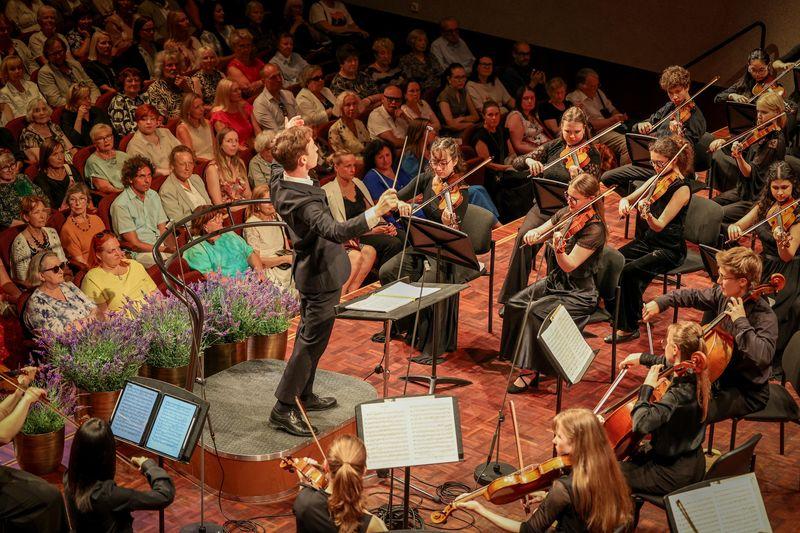
The emotional greeting by the students and orchestra of their great tutors at the end was crowned by a special second encore. Julia Claver had managed to keep a less challenging tempo in Tchaikovsky's Nutcracker "Waltz of the Flowers" than Neeme Järvi in the opening concert. But it seemed the near-nonagenarian was not to be kept from the podium, and he conducted it too. That meant we got a third chance to hear Kaisa Helena Žigurs' majestic handling of the harp cadenza - most imaginative i've ever heard - before we were off on the most insanely speedy waltz proper. To do them credit, the young players kept tabs, but it couldn't go on like that, and Järvi senior eventually eased into a more sustainable tempo, with a vintage coda. Tears, emotion, happiness all round. Now for the 90th birthday celebrations next year.
- Watch all the main concerts, along with an amazing archive from previous years, on Pärnu Music Festival TV (free, but contributions welcome)
- 17th Pärnu Music Festival runs from 8 to 18 July 2027
- More classical reviews on theartsdesk


Add comment