Elgar & Dvořák: Cello Concertos Alban Gerhardt (cello), WDR Sinfonieorchester/Andrew Manze (Hyperion)
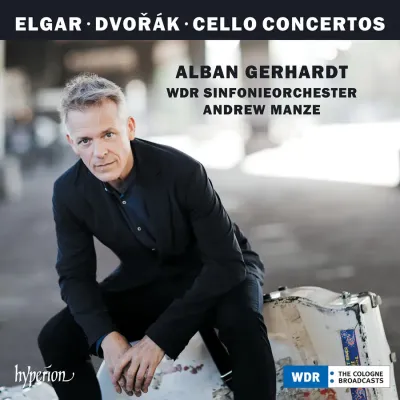
Jacqueline du Pré’s bestselling 1960s LP of Elgar’s Cello Concerto made with Sir John Barbirolli set the template for how modern audiences expected the work to sound, a performance lasting a few seconds short of 30 minutes. Elgar’s 1928 acoustic recording with Beatrice Harrison lasts just over 25 minutes, and this new version from Alban Gerhardt and Andrew Manze is a few seconds shorter still. Do read Gerhardt’s wise and witty introduction to this album’s booklet, questioning the belief that “the slower one plays, the more profound the result must be…”, and that expansive speeds don’t necessarily “deepen the musical argument.” And while I’m sneakily fond of big-boned performances of late-romantic music in the hands of conductors like Bernstein and Barbirolli, it’s refreshing to hear an Elgar recording that pays such close attention to the composer’s detailed markings. The first movement’s 9/8 main section has real momentum without ever feeling rushed, and the scherzo’s faster music fizzes. Best of all is the finale, the reprise of the slow movement impassioned instead of maudlin, Gerhardt tackling the movement’s curt close as if he’s slamming a door shut. It’s tremendous, with sonorous backing from Manze’s WDR Sinfonieorchester.
The coupling is the sublime Dvořák Concerto. Gerhardt’s notes reference Rostropovich, whose DG recording with Karajan plays for nearly 42 minutes; Gerhardt and Manze take just 37. Again, nothing feels hasty, and the orchestral playing is gorgeous, Dvořák’s ripe horn writing rightly prominent in the mix. The huge eruption near the start of the slow movement overwhelms in Manze’s hands, and Gerhardt’s hushed playing is delicious. For me, everything hinges on the finale’s final minutes, Dvořák’s self-quotation of a song loved by his late sister-in-law one of the most affecting things in his output. It packs an incredible punch here, Gerhardt and Manze leading us back into daylight with rare sensitivity before the brusque but upbeat close. Fabulous, in other words: modern reference recordings of two much-loved works, beautifully recorded to boot.
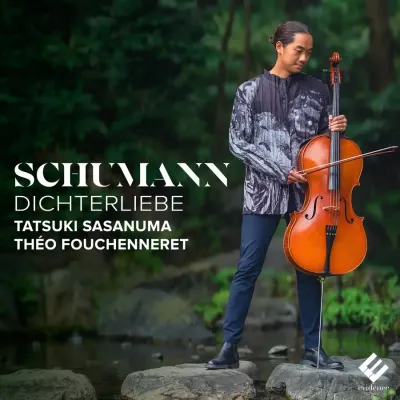
Schumann: Dichterliebe Tatsuki Sasanuma (cello), Théo Fouchenneret (piano) (Evidence Classics)
First, the good news. Performing instrumental arrangements of Schumann songs may not be a new idea, but what this record does is to give the listener the opportunity to appreciate Schumann's astonishing craft in creating a masterpiece out of sequences of pieces, and to hear it in a new and different way, without Heine's words. Cellist Tatsuki Sasanuma and pianist Théo Fouchenneret go with the sequence of the original and give us a programme that takes in anything up to eight songs in their original sequence. That is to say, there would be eight if someone had taken care to notice that we actually hear "Am leuchtenden Sommermorgen" performed twice, rather than "Ein Jüngling liebt ein Mädchen" before it as billed: at the time of writing neither Apple Music nor Presto Music have spotted the error.
Sasanuma plays thoughtfully and elegantly. A straight comparison with, say a recent recording of "Widmung" from the Myrthen cycle by Kian Soltani – played in the same key and at similar tempo – shows the latter to have a more urgent, expressive and interesting way of communicating. But, as I have hinted, there is a problem. During the course of his fascinating programme, Sasanuma's sniffing becomes more and more audible, and by the time we hear “Mein Wagen rollet langsam” from Op. 142, this listener found it pretty unbearable. For a bronchial-interference-free instrumental version of that song - which frees up the piano to find the ending in one of Schumann's finest postludes rather than stealing a bass clef figure to work into the cello part, try Tabea Zimmermann and Thomas Hoppe on utterly divine form in Geneva last year, available on Mezzo TV. Sebastian Scotney
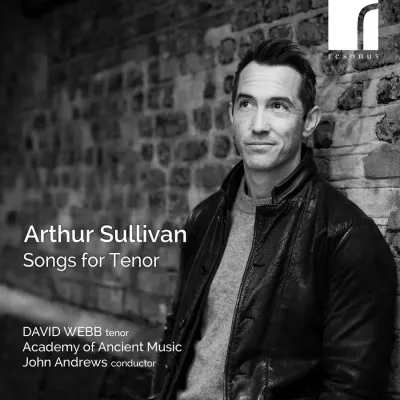
Arthur Sullivan: Songs for Tenor David Webb (tenor), Jennifer France (soprano), Charles Rice (baritone), Academy of Ancient Music/John Andrews (Resonus)
I am not a Gilbert and Sullivan aficionado by any means. I grew up with my dad singing snatches of The Pirates of Penzance around the house, and my first live opera experience (which I adored) was the 1987 English National Opera Mikado, with Eric Idle as Koko. But for the main part G&S is just part of the background British musical culture that I’m aware of without ever really being immersed in. So I enjoyed this album of Sullivan’s songs for tenor by David Webb (who, safe to say, is a better singer than Eric Idle) both for its familiar items, and those off the beaten track. It is also the first recording to use period instruments in this repertoire, rediscovering the restrained and clear orchestral textures that were often used to support but not overwhelm performers who were “actors who sang” rather than straight singers.
Sullivan as a young man seemed destined for success as a “serious” composer, and was famously frustrated by his reputation being shackled to the comic operettas he wrote with WS Gilbert. The earliest piece on this album, dating from Sullivan’s 20s, is an aria from his oratorio The Prodigal Son. It is sung movingly and persuasively. There is an aria from the first G&S collaboration The Sorcerer, “Love feeds on many kinds of food”, which has Sullivan’s trademark melodiousness, but within a heartfelt mood – conductor John Andrews and the Academy of Ancient Music (stretching the terms of their name a bit perhaps) giving David Webb space to let the lines breathe. Also in a serious vein, but for me tipping over into Victorian sentimentality, is The Lost Chord, despite Webb’s best efforts.
Of items from the big G&S smash hits, we start with “A wandering minstrel” from The Mikado, in which Webb’s diction is crystal clear and Andrews keeps the orchestra as strictly accompanimental. This number, as well as six others, have orchestration credited to Andrews, and it isn’t really clear from the liner note why the original orchestrations weren’t used, and how these “re-imaginings” fit with the “scrupulous” period instrument conceit elsewhere. (That said, I couldn’t have told between the Sullivan and Andrews orchestrations, without the asterisks in the track listing.) Soprano Jennifer France joins for three items, of which the vigorous “Stay, Frederic stay” from The Pirates of Penzance is the standout, and baritone Charles Rice contributes to a rousing “We’re called Gondolieri”. The last number, “I am the very model of a modern Major General”, is a delight, showing Sullivan’s skill but also of course Gilbert’s unsurpassable words, and sense of rhythm. Gilbert may have diverted Sullivan from a career as a composer of worthy serious pieces, but he also certainly gave him a place in the musical pantheon Sullivan otherwise wouldn’t have achieved. Bernard Hughes
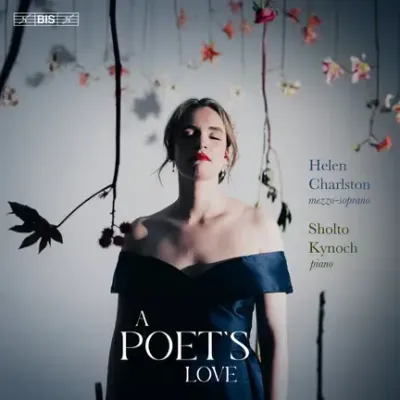
A Poet’s Love Helen Charlston (mezzo-soprano), Sholto Kynoch (piano) (BIS)
The poet in question is Heinrich Heine (1797–1856), whose verse inspired scores of musicians from the early 19th century onwards. Including Schumann, whose Dichterliebe is the main course in this anthology, mezzo Helen Charlston prefacing it with less-familiar Heine settings by other composers. She and accompanist Sholto Kynoch open with Carl Loewe’s deliciously florid take on “Die Lotosblume”. Schumann’s own version is included later in the sequence and can’t help sounding strait-laced by comparison. I’d not heard of Josephine Lang (1815-1880) before now; her setting of “Wenn zwei von einander schneiden” is arresting but Heine’s bittersweet introspection feels at odds with Lang’s declamatory languaget. Fanny Mendelssohn-Hensel’s “Schwanenlied”, with its rippling piano writing, is in another league. Listen to how Charlston and Kynoch tear into Felix Mendelssohn’s “Reiselied”, its narrator careering through a wet and windy forest. Héloïse Werner’s vivid and witty The Knight’s Dream was commissioned in 2023 as a companion piece to Dichterliebe, Kynoch occasionally speaking and tapping the piano, Werner giving Charlston fleeting snatches of English “to guide the listener through the narrative.”
This Dichterliebe is brilliantly characterised, Charlston and Kynoch moving seamlessly from the skittish joy of “Die Rose, die Lillie, die Taube, die Sonne” to an emotionally charged “Wenn ich in deine Augen seh”. The pair nail the desolation of songs like “Hör' ich das Liedchen Klingen” and the closer, “Die alten, bösen Lieder” rightly leaves the loose ends untied, Kynoch’s solo postlude as magical as it’s unsettling. Charlston’s warm, expressive voice is perfect for this repertoire, reminding us that Schumann dedicated the cycle to German soprano Wilhelmine Schröder-Devrient and not to a tenor or baritone. Full texts and translations are provided, and the recording has ample depth and atmosphere.
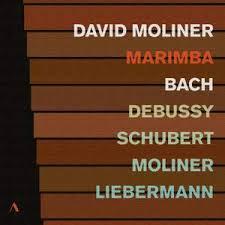
David Moliner: Marimba (Accentus Music)
A useful side effect of reviewing classical albums is the wealth of extra information one accrues. I’d never given much thought to the marimba before, though I love its sound, Hans-Dieter Grünefeld’s sleeve note to this disc explaining that the earliest written reference to the instrument was in 1352, in Mali. The transatlantic slave trade brought the marimba to Guatelama, where it became the country’s national instrument, finding a home in orchestral percussion sections in the 20th century. Equally interesting are the references to marimba technique, particular the Stevens grip (look it up), which Spanish percussionist David Moliner deploys to magical effect in his luminous transcription of Bach’s 1st Cello Suite. Tempi are unusually swift in places, the rhythms given extra point. And Moliner’s control of dynamics is startling, the soft, veiled repeat of the fifth movement’s minuet theme something to marvel at. The marimba’s woody voice suits the D minor Second Suite even better, the overtones adding unusual colour to a rollicking “Gigue”. Suite No. 3 completes the Bach on this disc, its swaggering “Courante” making me hope that Moliner gets to record the remaining suites before too long.
Moliner’s couplings are an inventive arrangement of Debussy’s "Arabesque No. 1" and Moliner’s hushed, seductive reimagining of the opening paragraph of Schubert’s A flat impromptu. Alexander Liebermann’s Jalak Suren takes inspiration from the song of the Javanese Pied Mynah, melodic and rhythmic elements of the bird call transformed into a shimmering arboreal gamelan. Moliner’s own Solo V – Sentir Rapaz! is a spectacular display piece, suggesting “an individual whose physical energy diminishes while their inner ambition drives them towards intense and irrational decisions”. There’s a haunting moment two minutes before the close when the music almost fizzles out, a soft marimba line accompanying Moliner’s whistling.