When it comes to the proletariat taking matters into their own hands, the British working class does not have many spectacular victories to celebrate. There are glorious defeats of course, eg the Peterloo Massacre of 1819, the Miners' Strike of 1984, the Stop The War protest of 2003. Even the broader coalition who marched to support a second EU referendum in 2018 made little impact, though it was a nice day out, with nice people and nice food, to be fair.
Alas for artists with fire in their bellies, the considerable advances won by progressive politics in the UK tend to have been secured by decidedly unsexy middle-aged white men in glasses building the Welfare State or passing the Race Relations Act 1976. The work was done largely in smoke-filled rooms in a language so dull, so deadening that the back of a cereal packet provides more rallying calls. There was nobody on the barricades singing “One More Day” when the Ayes and Noes were reported by tellers, so setting in train seismic changes. If the Church of England has been described as largely non-religious, the traditional Left of England might be described as largely non-confrontational, excluding a Poll Tax stramash or two.
But there is an exception, a potent symbol of local working class solidarity that proved an unequivocal success, a truly iconic moment for us Brits who cheered the fall of the Berlin Wall or, today, admire the enormous outpouring of seething but controlled anger we witnessed on the streets of Minneapolis over the weekend. In 1936, the cosmopolitan, impoverished peoples of London’s East End came together on Cable Street and sent Oswald Mosley’s Blackshirts packing. We won.
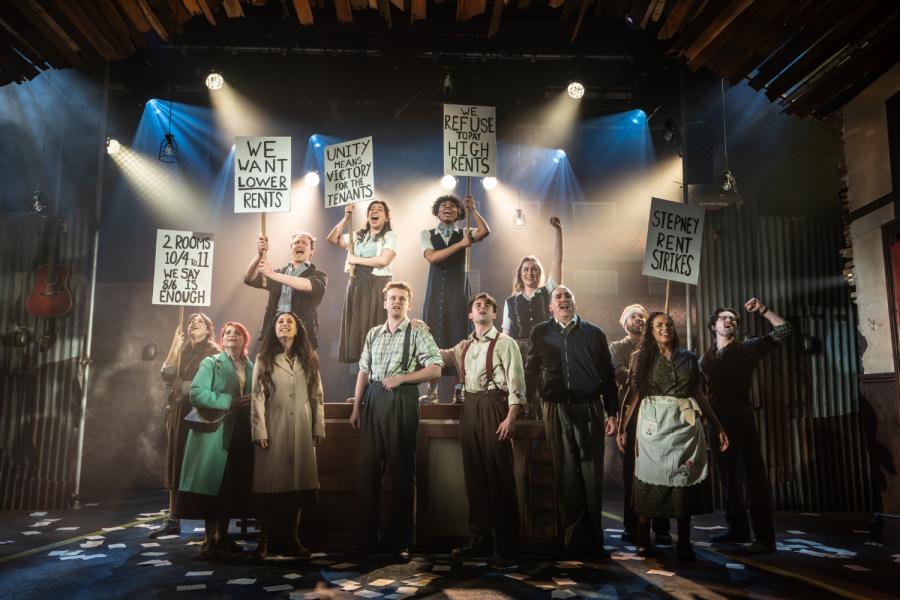
There are plays, including a recent highly successful adaptation of The Merchant of Venice set in the lead up to the battle, books, songs, murals and now, a musical. Tim Gilvan (music and lyrics) and Alex Kanefsky (book) are back with their show for a third run after its 2024 outing at Southwark Playhouse. The timing could hardly be bettered, natch.
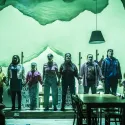
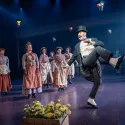
We open on a kaleidoscope of humanity, an evocation of the 1930s melting pot of London’s East End, centuries in the making, the locals laying claim to their communal space in the defiant “My Street”. It’s a significant advantage of the musical over the play that exposition can be packed into a big ensemble number that establishes a foundation for the drama to follow – director, Adam Lenson delivers a fine example of making the most of it.
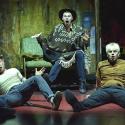
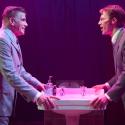
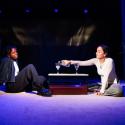
That said, it sows a problem or two that comes home to roost in Act Two, as there are so many characters, with the hard working cast performing some heroic multi-tasking to keep the plates spinning. There’s Sammy Scheinberg (Isaac Gryn), who has to give a false name to get a job; Ron Williams (Barney Wilkinson), down from Lancashire, who feels he’s frozened out by Irish and Jewish employment practices; and Mairead Kenny (Lizzy-Rose Esin-Kelly), the Irishwoman, radicalised and writing. Each comes with a family, and they’re supplemented by the rival factions of Communist Party and British Union of Fascists, members kept busy recruiting and skirmishing, and there’s even a present day group of tourists on a history walk that acts as a framing device. Phew!
The pace and the vivid sketches of events just about holds the narrative in place over a meaty two and a half hours plus runtime, with the losses on any in-depth character work offset by the reflection of just how chaotically diverse Cable Street was back then. Inevitably, some of those we meet become ciphers Lizzy-Rose Esin- Kellyfeisty boxer Sammy has a bookish brother, Ron is a soft touch for the Blackshirts’ lies, Mairead is offered an escape to New York. And you’ll never guess about the walk guide and his enthusiastic American follower (spoiler alert – you will).
The songs are consistently strong, with echoes of Lin-Manuel Miranda’s pop/rap hooks and fast chat lyrices and also of the genius of Lionel Bart, six years old and living a mile or so away on the fateful day, with its use of traditional Jewish music as inspiration, particularly in “Read All About It”. Another standout is “Only Words” and the big first half closer, “¡No pasarán!”, reflecting the international dimension of the anti-fascist struggle. Dan Glover’s band plays with plenty of pep in a space that provides a stage big enough to give the numbers a West End clout, but it's not as sympathetic to the acoustics as it might be.
It’s a show that wears its heart on its sleeve, its faults due to an excess of commitment to doing right by its ambition to paint on a broad canvas. Occasionally, an understandable anxiety to tell, rather than show, the political and moral lessons to be drawn 90 years on, grates a little. It’s perhaps a little too sentimental too, but musical theatre always gets a bit of a pass on that one.
Walking east down Cable Street today, the Tower of London is at your back, but in front of you the sun bounces off the towers of Canary Wharf, as DLR trains pass overhead. The heritage of the locals is more likely to be traced to the Punjab and Bengal rather than the Pale and Berlin these days, but that famous battle, 90 Octobers ago, is not forgotten. How could it be? It’s still being fought somewhere today. And maybe not so very far away at all.