In the long slide from its imperial economic might, it’s hard to make a case for finding a place for “The UK” and ‘“World-leading” in the same sentence. But we’re pretty good at pop music, particularly once you offset Sir Cliff with Johnny Hallyday. C’mon Europe, whaddya got?
It’s taken a while for that to be recognised by The Establishment, eventually getting round to gonging up Sir Macca and Sir Ringo, Sir Elton and Sir Rod, Sir Mick and Sir Tom. But who exactly is Sir Ray? He certainly needs more than one name, so what’s he ever done?
That Knight of the Realm is, of course, Sir Ray Davies (oh yes he is / oh yes he is), principal songwriter and lead singer of The Kinks. They were never quite The Beatles, never quite The Stones, but if you’re only one step down on that particular podium, you’re still pretty high up.
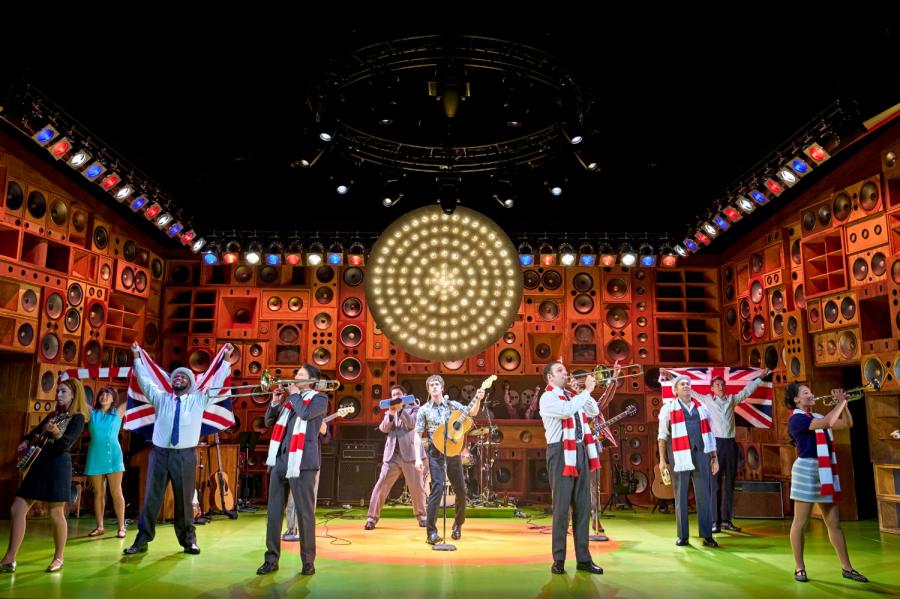
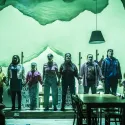
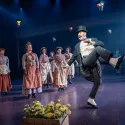
This production of Sunny Afternoon fetched up in Davies’ beloved North London halfway through its UK tour, ten years on from its award-laden run in the West End. Joe Penhall’s book tells the story of the rise of the band from Muswell Hill all the way to Madison Square Garden, spiced up by the jukebox musical trick of interpolating hits into the narrative and signing off with a big ol’ singsong for the finale. “Lola” (the biggest of them all) didn’t fit in anywhere, so was held back and at least guaranteed nobody went home singing the scenery.
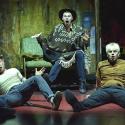
We meet the fab four as a backing band for a posh boy crooner, the lads barely out of school (in guitarist, Dave Davies’s case, he wasn’t), but once the brothers nail the chainsaw intro of “You Really Got Me”, there was no going back and a helluva lot of going forward.
Danny Horn plays Ray as a brooding musical genius, a less extreme British version of the almost mythical Brian Wilson persona, prone to bouts of doubt and depression, but the one who could hear the music in his head and, with a perfectionist’s zeal, get it on to vinyl.
Continuing the analogy, Oliver Hoare gives Dave some of Dennis Wilson’s madcap charm and insecurity, occasionally rebelling against his introspective sibling’s ways, but more interested in the next bottle and the next girl (of whom there were many) and actually swinging from the chandelier at one point!
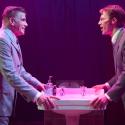
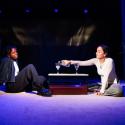
Even at the thick end of three hours run time, there isn’t much room for developing other characters in much depth. Bassist, Peter Quaife (Harry Curley), isn’t suited to life on the road; drummer, Mick Avory (Zakarie Stokes) feels marginalised; and Ray's wife, Rasa (Lisa Wright) is left holding the baby - literally so. There’s room in the tale for the Mr Tenpercenters to rip off the lads, but even they’re largely benign rather than evil, with publisher, Edward Kassner (Ben Caplan returning from the West End cast), teaching Ray a hard lesson about perspective.
All that said, few in the house ascended to one of North London’s highest points in order to get the lowdown on contracts, overrunning studio sessions and stateside kickbacks. We’re here not for shows’ business but for showbiz Baby! And Sunny Afternoon is a show all right!
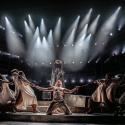
We get dancing girls in their Op Art dresses and Mary Quant miniskirts, bright lights and dark moments and even an onstage Vespa nodding to The Kinks’ Mod heritage. If there’s a little too much existential angst for my taste, such introspective brooding hasn’t put off the punters yet and misery is en vogue in cinemas right now, so…
That melancholy mood also introduces two of the strongest songs of the evening, both hits for Ray’s erstwhile romantic partner, Chrissie Hynde (now what a biopic she would make!), the hearfelt “Stop Your Sobbing” and the soulful “I Go To Sleep”. Roll in a sparse acapella “Days”, the quintessentially English wistfulness of “Waterloo Sunset” - it runs through my head on every visit to the National Theatre - and a barnstormer or two like “All Day and All of the Night” and nobody’s going home shortchanged.
That said, with four Oliviers on its mantlepiece, I had expected the production to transcend the well-established limitations of the jukebox musical, but it doesn’t because it doesn't really try to. It prefers to do the orthodox jukebox musical very well indeed and that was plenty enough to set my toes tapping on the Tube home.
I can’t help but say, “Yeah - it really got them going”.