According to the programme, La bohème is (probably) the most performed opera, by the most performed operatic composer. Ever. So, what is it about this piece that continues to enthral, inspire and intrigue artists and audiences alike?
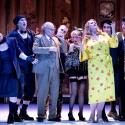
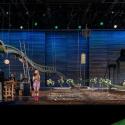
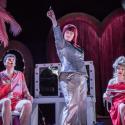
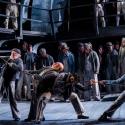
Perhaps it’s that the characters – a group of young Parisians in the mid 19th century – are so relatable to so many, regardless of age, class or nationality. Or perhaps it’s the nostalgic pining for youth that seems to echo throughout the piece (Puccini was nearly 40 by the time he finished composing the work). A more pertinent question, however, may be “how does one find something new to say about La bohème after all this time”? Dutch director Floris Visser achieves just that, yet remains entirely faithful to the work in this brand-new Glyndebourne production, set in Paris around the time of the 1930s/40s.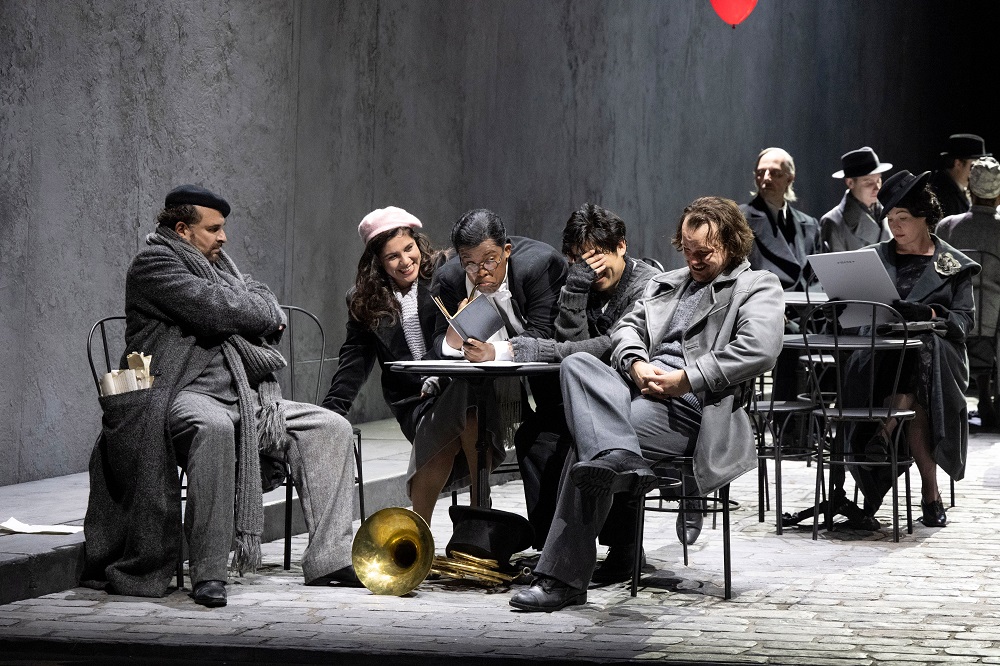 He’s a director who’s known for his minimal style, and this Bohème is no exception. The sparse set contains a single backdrop throughout, an image of a cobbled street that goes over a small hill. As the characters traverse the incline, it gives the impression of them melting in and out of the darkness at the back of the stage. Props are minimal, with a higgledy-piggledy pile of metal chairs pretty much the only piece of furniture that appears on the stage. (Pictured above:: the Bohemians in Act 2).
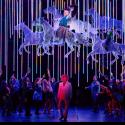
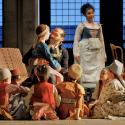
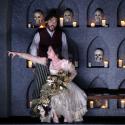
Visser has added a character into the mix, the black-clad Death, visible only to Mimi, who silently stalks her throughout the piece. Played by tenor Christopher Lemmings, the role of the toy seller Parpignol is incorporated into his character, and the red balloons he hands out to the members of the children’s chorus are a stark contrast to the mostly monochrome design, and a haunting reminder that death will, eventually, come to us all. Another clever use of colour, and a particularly macabre moment, comes in the final bars of Act 3. Rodolfo and Mimi have pledged to stay together throughout the winter and part in spring, when the flowers return. As death retreats over the cobbles, Lemmings slowly pulls a dust sheet off the stacks of chairs, revealing them to be adorned with beautiful bright pink flowers. What should be a symbol of life and rebirth is eerily transformed into a haunting omen of the opera’s ensuing tragedy. 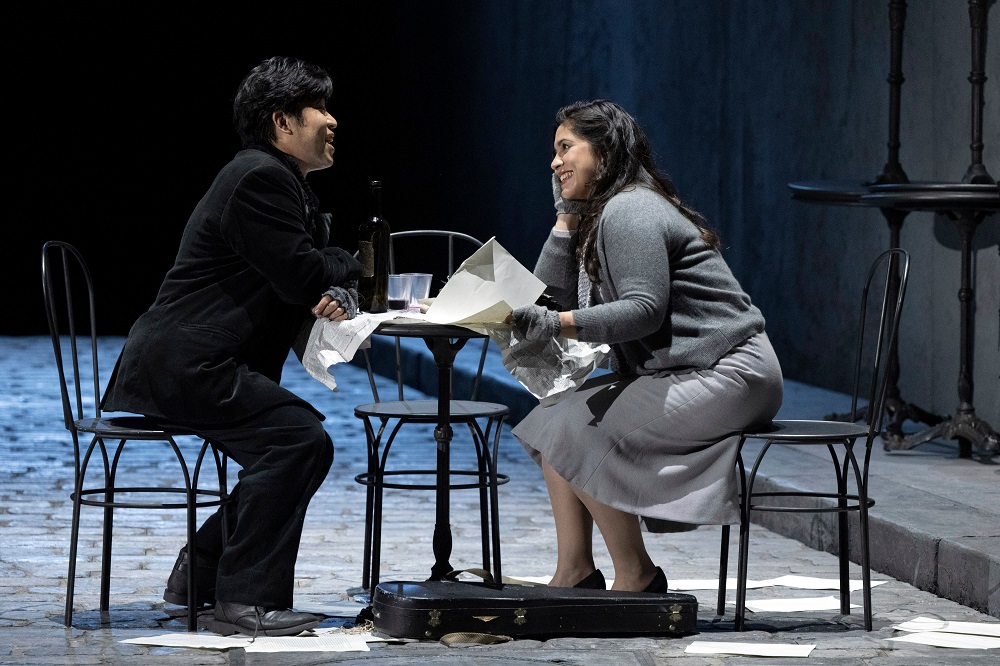 Due to visa complications, Chinese tenor Long Long was unable to make his Glyndebourne debut on Saturday as Rodolfo. Returning to Glyndebourne, the South Korean Sehoon Moon gave an excellent performance in his place, wonderfully capturing the character’s youthful vigour. Vocally, the entire cast was splendid; Bulgarian bass Ivo Stanchev sang the role of Colline with a delicious warmth, and Vuvu Mpofu’s Musetta was smart, sexy and funny, but not without a real human warmth. It was Chilean soprano Yaritza Véliz in the role of Mimi (pictured above with Moon) who was the standout voice of the show though. Her rich soprano conveyed Mimi’s raw emotions, and her interactions with Lemmings as Death gave an intellectual weight to a character who can often be portrayed as a slight and weak femme fragile - a bit part in her own story.
Under the baton of the young Canadian conductor Jordan de Souza, the London Philharmonic Orchestra lent an incredible level of detail to Puccini’s score, with vivid swathes of orchestral colour rising from the pit. Souza’s careful attention to detail and meticulous shaping of the music was deftly done, and a key component to what made this performance really sparkle.