Good Friday and the days before it are times to contemplate Bach's great passions - the St Matthew was performed at the Baden-Baden Easter Festival before I arrived with Klaus Mäkelä conducting the Concertgebouw Orchestra - but not so much another powerful ritual. Britten's War Requiem seared the soul again this Good Friday with the profoundly impressive Joana Mallwitz conducting the Mahler Chamber Orchestra, and it seemed like a masterpiece equal to Bach's. Not quite so much could be said of Wagner's Lohengrin, which I heard on Easter Sunday, though it has stretches of greatness and was performed with astonishing power by all involved, in an often magical production.
In between these epic pillars came a series of chamber concerts from the MCO's players - none more communicative or sophisticated in any orchestra, including the Berlin Philharmonic which visited the spa town in recent years until this Easter - a quartet from the Concergebouw and a recital in which there was no doubt that Lukas Geniušas is among pianists what Asmik Grigorian is among sopranos: simply the best.
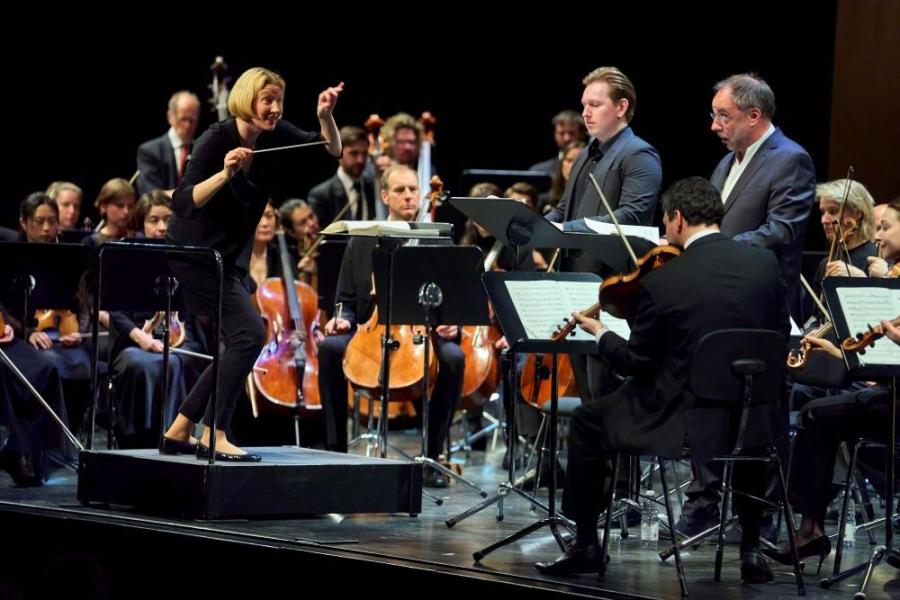
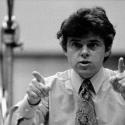
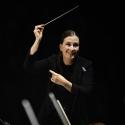
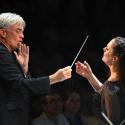
Thanks to the genius of Britten's inspiration and construction, the interweaving of the Latin Mass for the dead with Wilfred Own settings, the effects of War Requiem always move to a greater or lesser degree (here it was undoubtedly greater). But there is also a dialogue with the past, what's shaken the world since the 1962 premiere planned for German, British and Russian soloists (Galina Vishnevskaya wasn't allowed to leave the Soviet Union; Heather Harper took her place). The forces gathered here included an orchestra with players drawn from 22 countries under a German woman conductor of inspirational force, Czech and Viennese choirs and soloists from Ukraine, Germany and Italy. (Pictured above by Michael Bode: Joana Mallwitz, tenor Bogdan Volkov, baritone Matthias Goerne and members of the Mahler Chamber Orchestra)
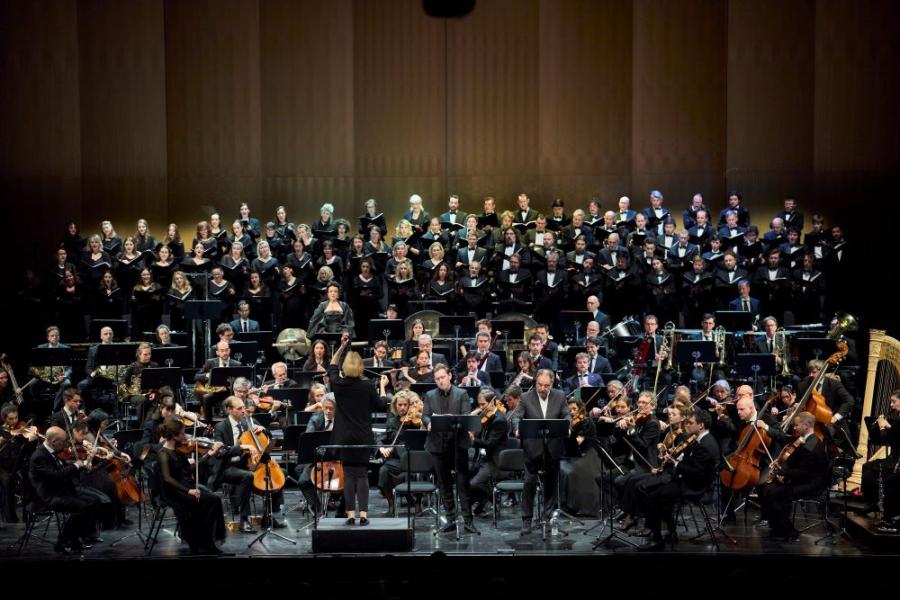
It takes time to adjust to the size of the Festspielhaus, one of the largest venues of its kind in Europe, behind the facade of the handsome former railway station (Wagner, who visited by train, might have had the home for his operas he dreamed of here rather than in Bayreuth had there been the funds). Even 12 rows from the stage on the parterre feels a long way from the action. The one thing that couldn't be expected here was the sheer impact at shattering climaxes of the magnificent Czech Philharmonic Choir of Brno and Vienna's Philharmonia Choir.
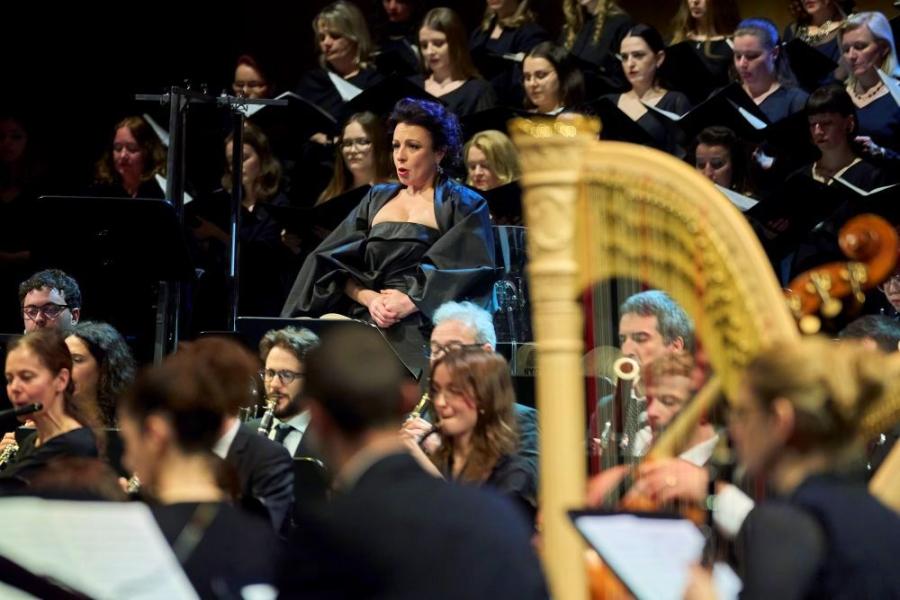
What we did get was the clear timbre of collective and individual voices and every instrument (the children's voices of the Cantus Juvenum from nearby Karlsruhe were perfectly placed above the side where I was sitting). Irene Lungu (pictured above by Michael Bode) projected with perfect phrasing just in front of them. Mallwitz gave brooding space and highly-charged silences from the start in the Kyrie, rightly getting the choirs to resolve their tritone-laden unpeaceful benedictions at the ends of this, the Dies Irae and the Libera me with closed-mouth mmms and nnns, haunting indeed. The kind of razor-sharp cut and thrust we get on her Kurt Weill disc with her Berlin Konzerthaus Orchestra was applied to the chamber orchestra which plays for the male soloists in the Owen poems, situated to her right as close as possible to the tenor and baritone.
The revelation was Ukranian Bogdan Volkov, who has clearly studied Pears's singing with the expressive approach gliding into many of the notes, and his English seemed perfect, but he has his own strong personality. His phrasing was unforgettable in the two soundings of "Was it for this the clay grey tall?", the moment of deepest expression in the setting of Owen's "Futility", and Mallwitz dared him to pause before negotiating the eleven notes of "Dona nobis pacem" at the end of the one sequence where Owen and the Mass actually meet.
"Strange Meeting", though, is the ultimate test. With the audience so intensely quiet throughout that a pindrop would have been heard, Volkov launched the narrative, "It seemed like out of battle I escaped/Down some profound dull tunnel", to take us into yet another sphere. And Matthias Goerne, turning the difficulty he has with some high notes into expressive, perfectly etched drama throughout, took us still further as all those amazingly-written woodwind solos fall away and we're left with "I am the enemy you killed, my friend": time to stifle the tendency to sob.
Many of the Mahler Chamber Orchestra had four significant spots over the next two days, beautifully programmed in the first to offer a rainbow bridge between Britten and Wagner. They chose the 18-year-old Britten's Op. 1 and 2, works of incredible personality if not yet the full inspiration in thematic material. Oboist Louis Baumann from Alsace - his father returned the umbrella I'd left under my seat at the end, and we chatted - joined intense violinist José Maria Blumenschein, viola-player Joel Hunter and cellist Frank-Michael Guthmann, who also presented the programme, in the Phantasy Quartet, which starts as a quirky march and heads off in surprising directions. Personality is also the hallmark of the players, increasing the audience's pleasure in the proceedings; you could tell that Guthmann, who also presented the programme, is the livest of wires and an inspiration to his colleagues.
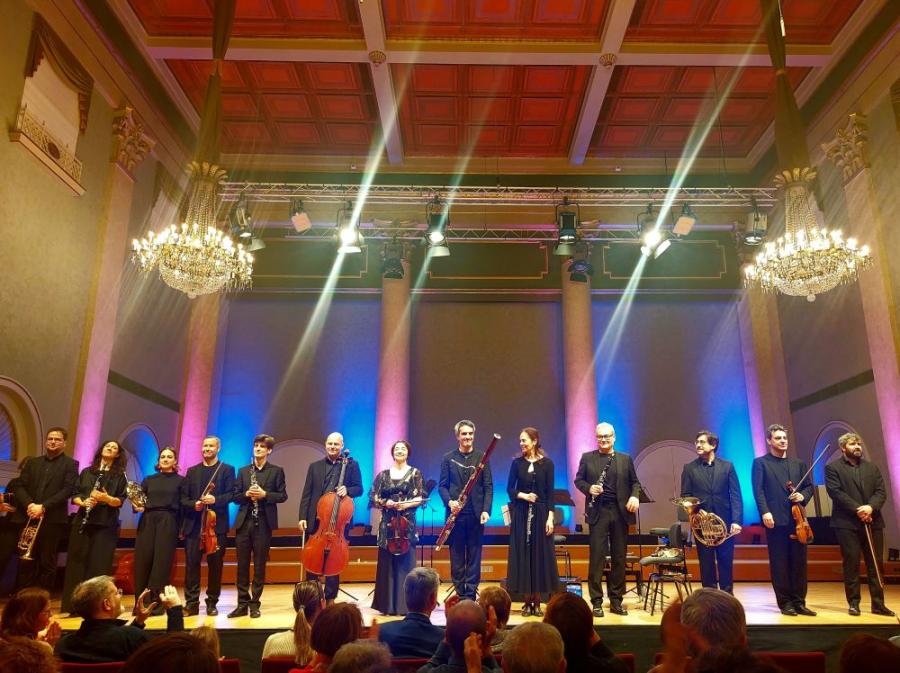
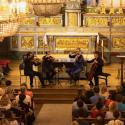
The MCO doesn't have a regular conductor, though it has forged artistic partnerships for special projects with the likes of Mallwitz, Yuja Wang and Antoine Tamestit. It certainly didn't need one for the 13-piece original version of Wagner's Siegfried Idyll (the players pictured above). Starting with inward tenderness from the strings, wind soloists Chiara Tonelli (flute), Baumann, Vicente Albarola (clarinet) and Guilhaume Santana (bassoon) adding birdsong as lovely as that which filled the parks and hills of Baden-Baden during these perfect spring days, and José Vicente Castelló sounding Siegfried's horn call with perfect tone, this was a jewel between hyperactive young Britten's showoffy pieces, the Sinfonietta as sharp and hard-hitting as some of the chamber-ensemble playing in War Requiem.
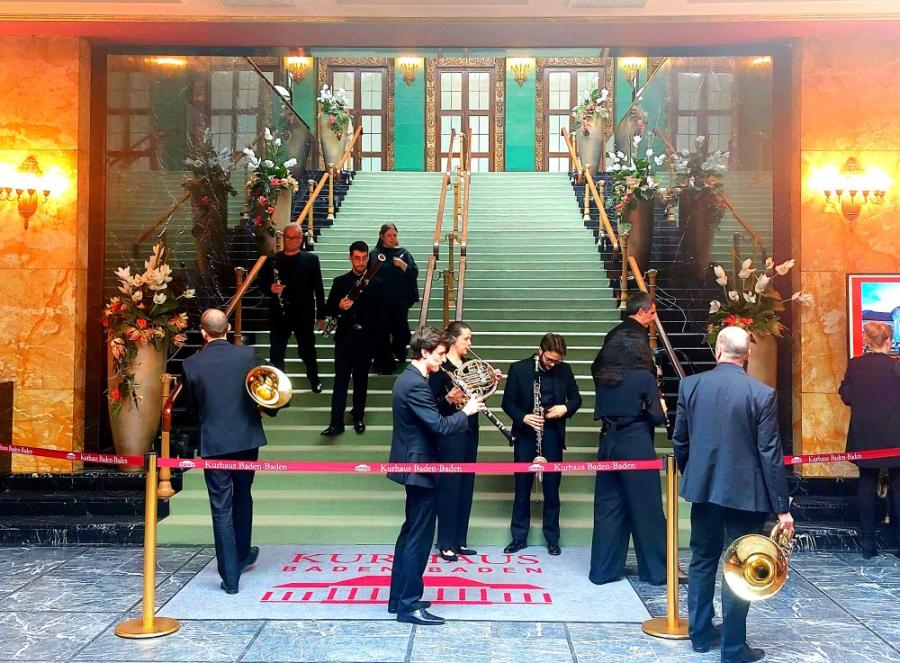
In the afternoon we moved from the handsome space of the Weinbrennersaal in the otherwise flashy Kurhaus along to the more opulent Malersaal of the Maison Messmer, now a luxury hotel (there was never any shortage of money in the 19th century spa town, and there still isn't, though the Russians who have hung around since the "Roulettenburg" of Dostoyevsky's The Gambler are less in evidence than when I first came).
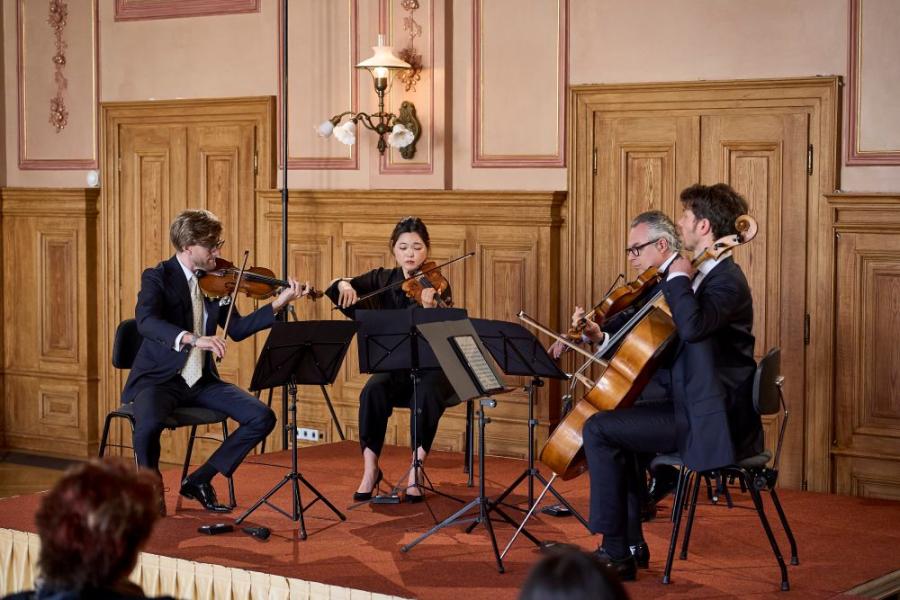
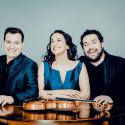
Here the last remaining players from the Concertgebouw Orchestra after their Bruckner 8 with Mäkelä, the Alma Quartet (pictured above by Michael Bode: Marc Daniel van Biemen, Gemma Lee, Jeroen Woudstra and Joris van der Berg), covered another vast expressive and interpretative range: a stern, rough Shostakovich 8 and a sinuous Debussy String Quartet, with a lovely arrangement of "Claire de Lune" as encore. The very good maybe doesn't resonate as much as the exceptional, the hyper-communicative, the domain of all the MCO chamber concerts, but it was still fine and welcome.
How, then, would Grigorian and Geniušas put across a recital programme which has done the rounds in smaller venues - including the Wigmore Hall - in the Festspielhaus? I learned that big star names Cecilia Bartoli and Lang Lang could have sold it out three or four times over, while for two of the finest artists in the world without the same name recognition, 1000 in the audience out of a possible 2500 was just fine.
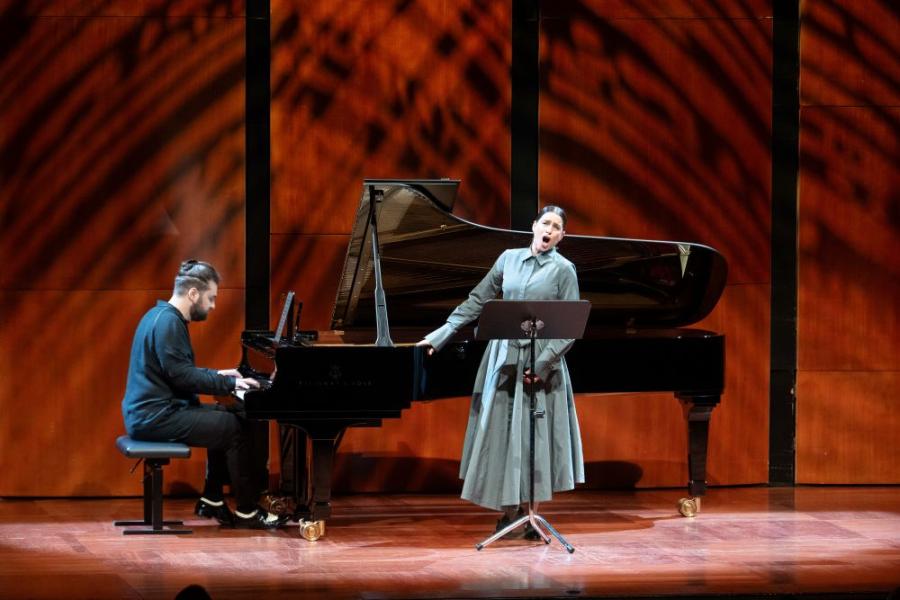
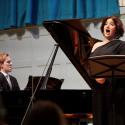
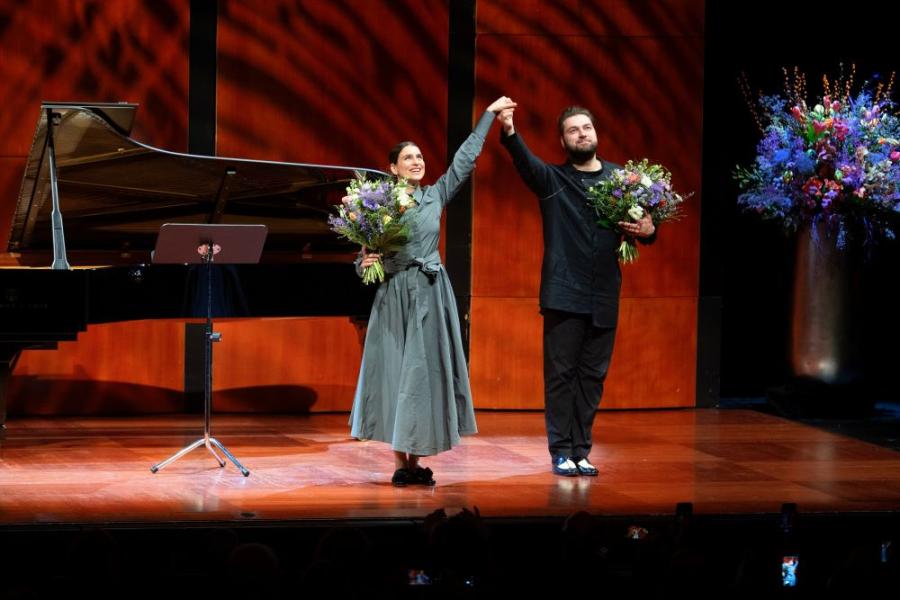
The magic of one of the best voice-and-piano recitals I've ever heard (pictured above and below by Michael Grigonowits) began with Geniušas taking us into another world in the Tchaikovsky first half with the piano introduction to "Amid the din of the ball". Tchaikovsky and Rachmaninov metaphysical? You'd better believe it with these two performers. The first four songs were familiar, though as you've never heard them before; then Geniušas held the stage alone for the chameleonic F minor Romance and the Scherzo humoristique, a fairy intermezzo of incredible refinement (Stravinsky took from it twice in his Tchaikovsky ballet The Fairy's Kiss). The last two songs before the interval led us rapturously into nature worship and mysticism: first time for me in concert "I greet you, forests" and "Do not ask?"
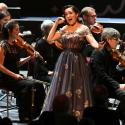
Grigorian unleashed is a phenomenon, full dramatic power above the stave resonating in the Festspielhaus again and again in the Rachmaninov second half, all this coming from what is essentially a lyric soprano of great focus and concentration. Her essential stillness here was striking, allied to the sober dress to give us the image of a Chekhovian heroine whose banked powers have full release at times. Especially so in the Rachmaninov songs, which gave us further context when one of them was the sad and beautiful setting of Sonya's final speech in Uncle Vanya, "We will rest" (the piano's perfectly placed major chord at the end does give the necessary balm). I wonder if any singer-piano partnership has ever given such pain as well as such enchantment in a transfigured interpretation of "Do not sing, my beauty, those sad songs of Georgia".
She was, of course, a match for Geniušas in those spring torrents of arguably Rachmaninov's most popular song. His second solo pair was inspired: the last two preludes of the Op. 32 set, No. 13 sounding the note of supreme nobility in human nature as well as a review of so many different strains in a life - a great masterpiece. The second encore took us back to secret rapture, and out of the Russian realm: Strauss's exquisite "Morgen", where time again stood still. Perfection.
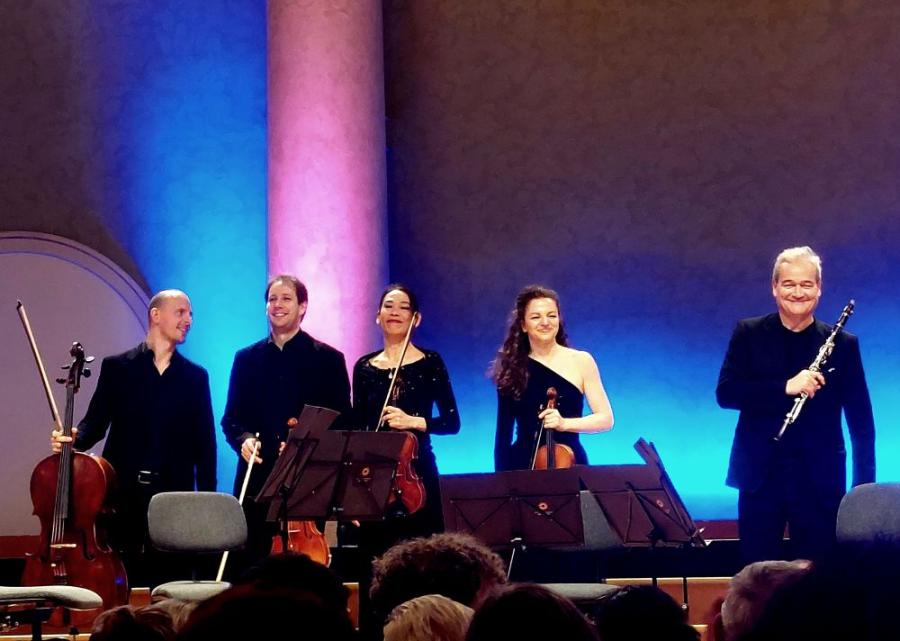
As was the late-night performance of Mozart's Clarinet Quintet, for which we were now ready, back at the Weinbrennersaal, concertgoers mostly distinguishable from the spivvy gamblers gathered in the Kurhaus foyer. Clarinettist Vicente Alberola, like Guthmann, is one of those irresistible communicators who also have the most sophisticated range of colours in their armouries. Soft reprises were no gimmick, but heaven itself; at every point the players put across the joy Mozart must have had in creating this late masterpiece (pictured below: Stefan Faludi, Mladen Somborac, Naomi Peters, Anna Matz and Alberola).
Before it was a delicious mini-programme of duets either written for or arranged for two cellists, Stefan Faludi and Moritz Ferdinand Weigert, who also presented them. Ideal contrasts in Bartók were followed by an earlyish Mozart work of no great import, and high French baroque style in Barrière's Sonata No. 10, Faludi's filigree in the softest possible reprise of the Adagio pure supernatural magic.
The MCO players were on various shifts: late-night for the above, early morning for the Mahler Quartet players (Hildegard Niebuhr-Candan, Fjodor Selzer, Francesca Rivinius and Moritz Ferdinand Weigert). Their location, on a brilliantly sunny Easter morning, was the Museum Frieder Burda, Baden-Baden's contemporary art gallery designed by the American architect Richard Meier and opened in 2004.
It's impressive on the outside, looming white and bright as approached along the start of the three-kilometer Lichtentaler Allee and even more remarkable on the inside, a palace of light with ramps leading to the top floor, after which you work your way down.
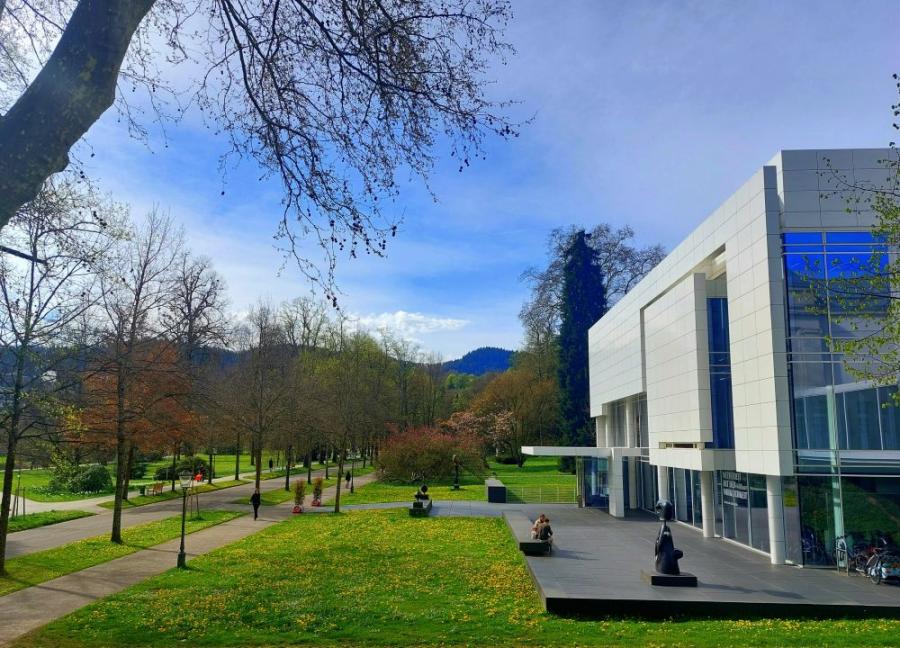
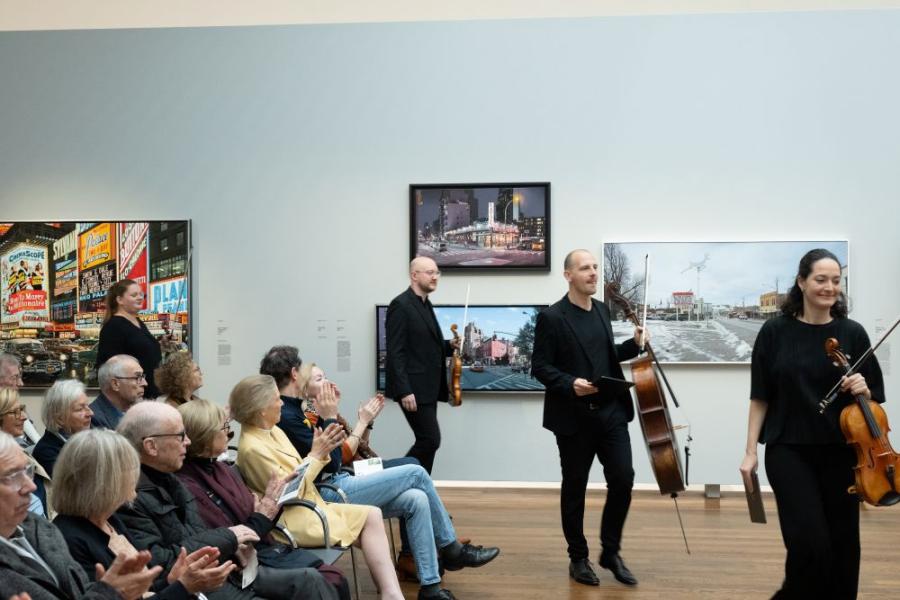
'The current exhibition is "Rivalling Reality: 60 Years of Photorealism". Philip Glass stares up at you as you start ascending the first ramp, in Chuck Closes' gigantic 1969 portrait; the main room on the top floor is devoted to impressions of cities, and this is where the recital was held.
There's no point in trying to connect the programme to the pictures - Glass was mercifully absent - but it did complement the Alma Quartet's Shostakovich Eight Quartet with its more miniaturistic, aphoristic and original predecessor, as finely nuanced as every MCO performance has been (pictured below by Michael Grigonowits, the players walking to the platform).
In less than a year I've also heard the first two Brahms string quartets for the first time - somehow missed in the much more frequent welter of piano quartets and string sextets. The Cuarteto Casals' performance of the C minor Quartet last June at the Dublin International Chamber Music Festival revealed a miracle, and the Mahler Quartet's A minor sequel opened more new vistas for me, not just exquisitely crafted, long-spanning themes but also another fairy intermezzo in the third movement, surely Brahms's tribute to Mendelssohn's aerial fantasies. Brahms's summer residence from 1865 to 1874 is a very pleasant walk along the river Oos. We visited the last time I was here, but it was closed. An Easter Monday opening beckoned, but in the end the thermal baths won out.
Other members of the MCO had one more concert to give before the evening's final performance of Lohengrin, more pure-joy Mozart. Never have I heard an interpretation which shone so much radiant light on the composer's endless inspirations for 13 wind instruments in the Gran Partita, whether in the plump ensembles or in the sectional exquisites - first oboe (Baumann) followed by first clarinet (Alberola) floating above palpitating textures in the Adagio, the first trio section of the second Menuetto for upper clarinets and their gorgeous basset companions, the seemingly endless ingenuities of the sixth-movement variations before the raucous final romp.
In terms of orchestral musicians having such refined fun together in companion chamber ensembles to the supposedly main events, the only comparison I have is with the equally world-class players of the international Estonian Festival Orchestra at the Pärnu Music Festival.
And this main event, the third performance of Wagner's Lohengrin, triggered the same wild enthusiasm in the audience, feeding back to the delighted musicians at the many curtain calls, as the Royal Opera first night of Siegfried in Barrie Koskie's third Ring instalment only a few weeks earlier. It was a big challenge for a much-expanded MCO in their first Wagner opera, and under the challenging adventurousness of Mallwitz. Urging a rich, deep sound in so much of the music, loud enough to overpower less imposing singers, she risked much, but it all cohered and there was never any lack of co-ordination with the stage; the conductor's hands remained high and clear.

You can't have everything in the two taxing main roles, and neither Rachel Willis-Sørensen as poor, isolated Elsa nor Piotr Beczala's knight to the rescue sounded at first ideally like love's young dream. But Willis-Sørensen, like Grigorian, sent out high notes of such radiant power, and Beczala had plenty of stamina left for Lohengrin's last two big sings. Johannes Erath's imaginative and consistent production served them both well.
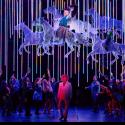
Erath hails from Rottweil between the Black Forest which, of course, stretches to Baden-Baden and the Swabian Alps; he claimed to be transfixed by the idea of wood magic, and a forest is the place where Elsa's young brother disappears (pictured above by Martin Sigmund riding with Elsa in a fantasy wedding sequence during the Act Three Prelude, which Mallwitz launched into the minute she stepped up).
With just a few stretches too far - substituting for the Act One duel a sword in the stage which Lohengrin can remove and Elsa's persecutor Telramund cannot didn't quite come off - Erath told the story with emphasis on the magical side, contemporary costuming for most notwithstanding, and just a bit of bling appropriate to Baden-Baden (the act's final fireworks display, the main couple's wedding night supper on a glittery stepped rake).
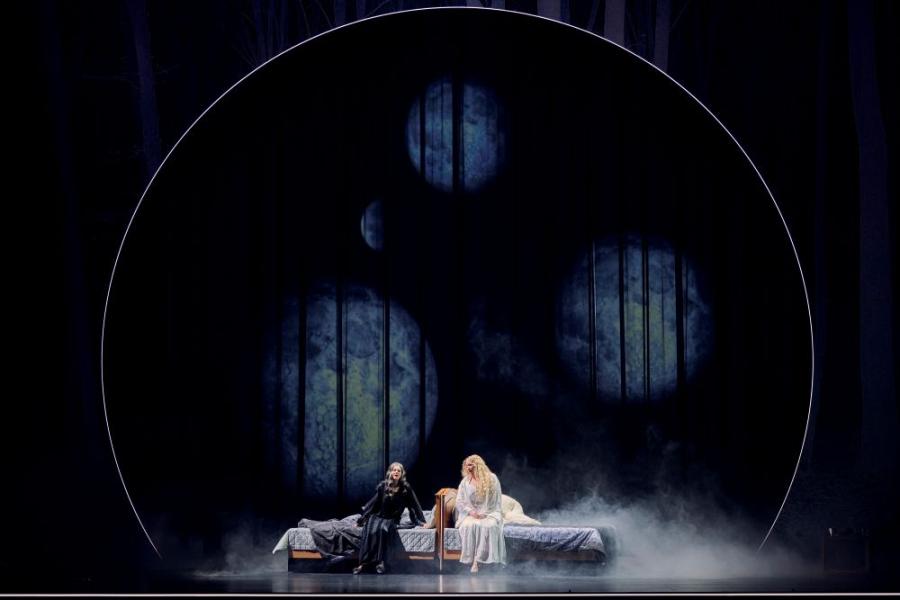
Telramund and his wicked pagan wife Ortrud have a believable if unbalanced relationship going on, she very much the dominatrix and sensual in the riveting portrayal of Tanja Ariane Baumgartner, challenged only a little to cut through in the lower register (unusual for a mezzo), he weak and foolish in the telling quirks of Wolfgang Koch's characterisation. The use of beds on a revolve in Act Two (Baumgartner and Willis-Sørensen pictured above by Martin Sigmund) created a telling and creepy intimacy for both the couple and their intended victim Elsa.
Erath wisely rejected the projection of the crowd as proto-Nazis, tempting though it is in a 20th century approach to a 19th century question of German unity (David Alden's Royal Opera production fell victim here). The Brno and Vienna choirs took over in sonorous power with the orchestra, alongside Kwangchul Youn's Heinrich and promising baritone Samuel Hasselhorn's Herald, both vitally secure, at the moments of ritual padding, never letting them feel otiose (though Lohengrin is a much less concentrated work than its predecessor, Tannhäuser).
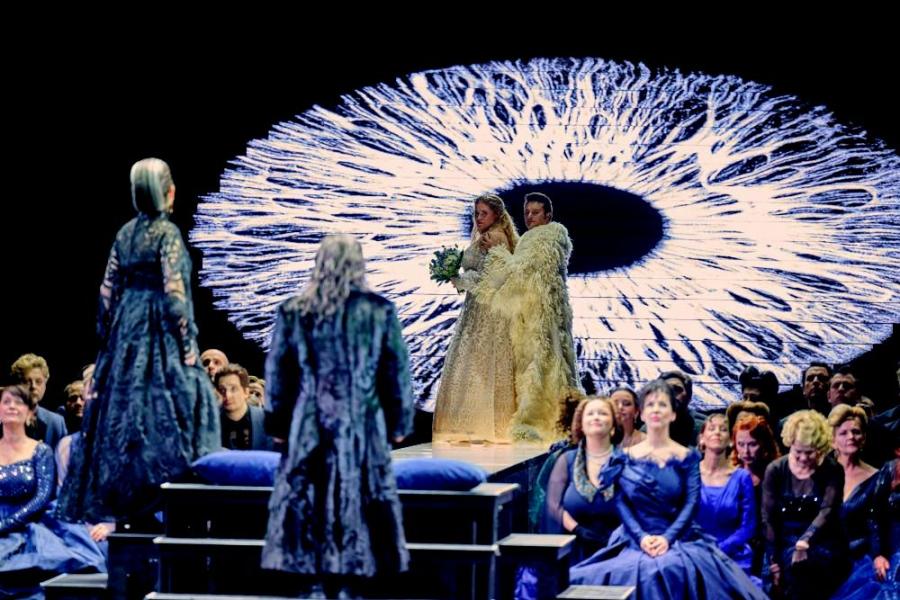
The stage pictures played their part here. Using, at the centre of the circle within the illuminated rectangle, a platform that really creates a sense of magic for Lohengrin's arrival, swan feathers falling on the front rows of the audience, director, stage designer Herbert Murauer and video artist Bibi Abel cleverly made it difficult to see where filmed illusion took over from the set. Elsa's arrival at the minister in Act Two was breathtaking, Ortrud lurking just behind her before letting her accusation fly, the last tableau with the lovers heading in for their wedding and turning to look at the baleful couple unforgettable (pictured above by Martin Sigmund).
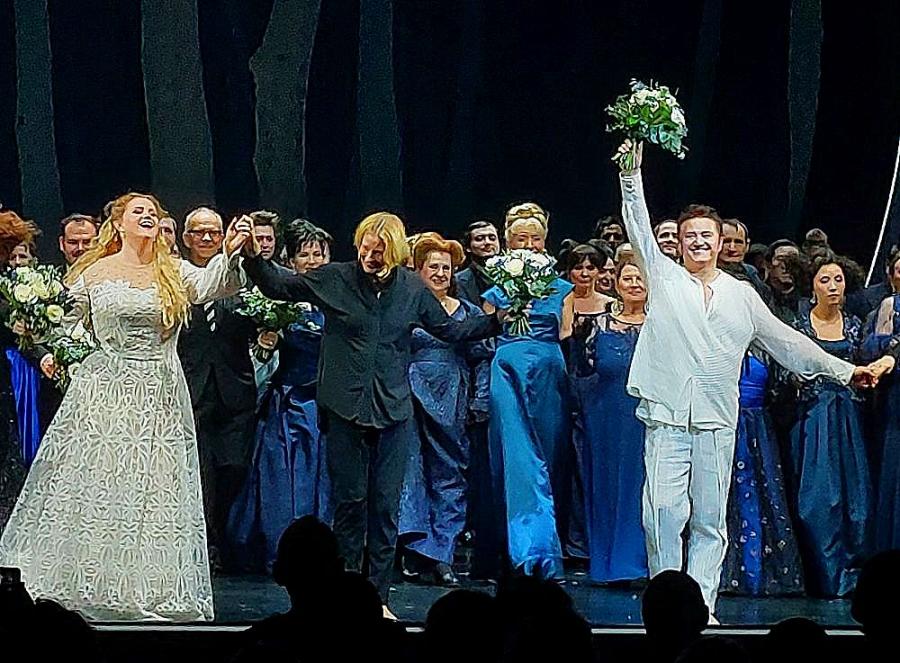
In Act Three, Erath seemed to be dismantling the illusion along with the set, only to let the gripping final resolution take our breath away: young Gottfried, seen at regular points in the drama, lives, and Elsa must give up the ghost. After which, the kind of euphoria you only get after a truly electric Wagner performance. The singers and conductor certainly felt it (pictured above: Willis-Sørensen, Mallwitz and Beczala with members of the two choruses).
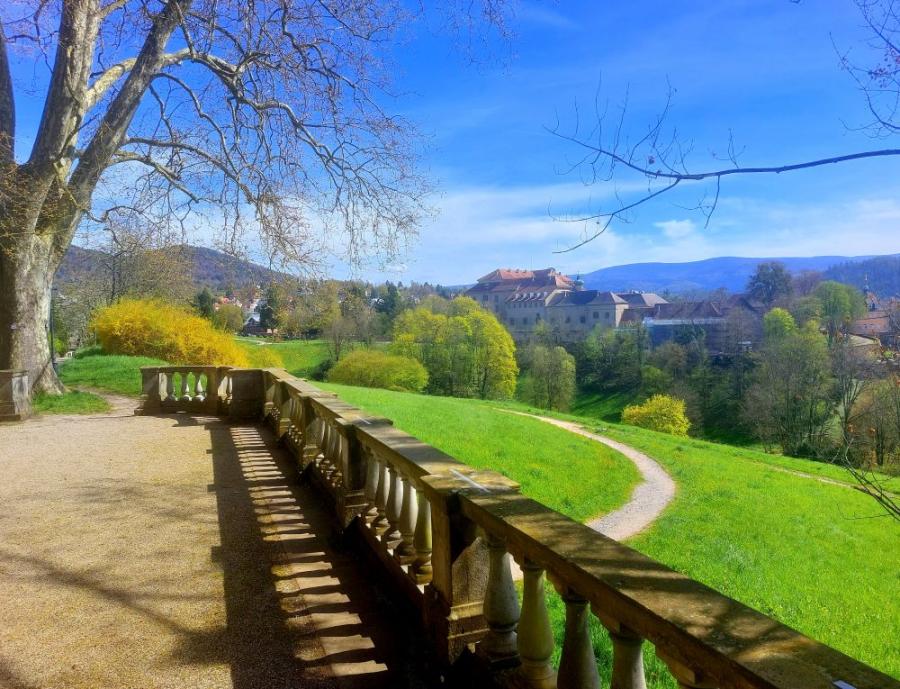
The final event on the morning of my departure was an admirable and intriguingly programmed meeting of the youth orchestra and its jazz counterpart (it's worth pointing out that there were lots of young people in the audiences, especially for Lohengrin - a special scheme supported their presence). But I needed both a walk up to the Black Forest around the town (pictured below) and my thermal immersion, in the luxury of the Caracalla Baths (the older Friedrichsbad was naked bathing only and pleading a stoma to keep my trunks on didn't wash).
It's quite something to have seen three Wagner productions in so many weeks which pull off the sheer ambition of it all: after Siegfried and the Met Tristan und Isolde, which absolutely worked on screen, this was no disappointment. The Mahler Chamber Orchestra/Mallwitz special project, along with the Concertgebouw/Mäkelä partnership, seems to have been a total success. Both will continue next year, the 200th anniversary of Beethoven's death.