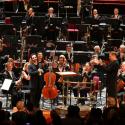
Concertos where the soloist is a member of the orchestra are something of a Scottish Chamber Orchestra speciality. They’re always among their best-sold concerts each season, and there are obvious gains of warmth and communication when the band are playing to support one of their own. This week, the honour fell to Philip Higham, the SCO’s principal cello, and he played Robert Schumann’s Cello Concerto with so much involvement and quasi-operatic intensity that it was easy to forget how low down the priority list Schumann’s concertos were until very recently.
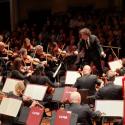
Higham clearly believes in the work completely, playing the opening like an intense canzonetta, bringing seamless beauty to the slow movement’s chocolaty river of sound, and leading a finale that was curt but never severe. The orchestra moved from supporting character in the first movement to co-equal in that finale, where they brought out the playfulness and variety of Schumann’s textures, led with elfin wit by their Principal Conductor Maxim Emelyanychev.
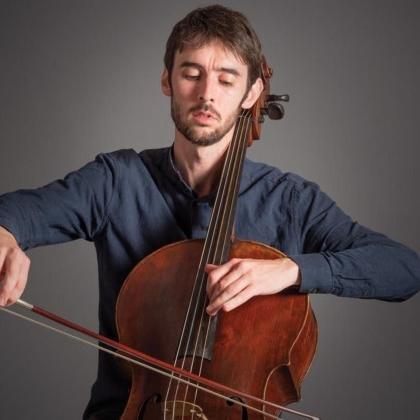
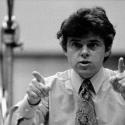
As if that wasn’t enough for one night’s work, Higham (pictured right by Gordon Burniston) then played the solo part for the UK premiere of Jörg Widmann’s Funf Albumblätter. Any Schumann superfans might recognise from that title that this is Widmann's tribute to Robert S, and any Widmann superfans might then make the link to that composer’s most famous piece, Con brio, which is Widmann’s tribute to Beethoven. In this case, however, the result is much more likeable than Con brio (about which, I confess, I’ve never understood the fuss).
Here Schumann’s voice is refracted by Widmann’s but it remains recognisable, and there is a sense of dialogue between the 19th and the 21st centuries rather than the latter dominating the former. Higham’s cello was much more a part of the overall texture here rather than the dominant solo voice, and the orchestra sounded as though they were really enjoying the rotating kaleidoscope of colour, all the way from the disarmingly lyrical opening to the raucous humoresque of the ending.
There was colour aplenty in Mendelssohn’s Calm Sea and Prosperous Voyage, with a bass-heavy languor to the opening and a riotously lively conclusion, and there was even more in Debussy’s Petite Suite, be it in the gorgeously airy opening movement, the sprightly cortège, or the exuberant finale. Debussy is a long way from being this orchestra’s staple diet, but they played this wonderfully, perhaps helped by the fact that this is early Debussy, before Monsieur Claude really learnt to sound like himself. Never mind: Emelyanychev had a tight hold on the direction of this ship, and the orchestra had a whale of a time throughout.