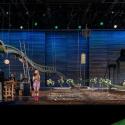
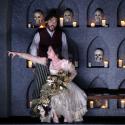
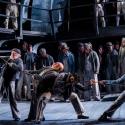
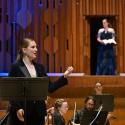
“Fear death by water,” says the fortune-teller in TS Eliot’s The Waste Land. There were a few moments in Natalie Abrahami’s new production of The Turn of the Screw when I worried that the fine musicianship and otherwise smart direction in evidence all around might founder irrevocably beneath the sodden weight of its core conceit. For long sections, especially in the second act, the singers stand or splash around a waterlogged stage.
Yes, the fatal lake of Bly that so attracts little Flora in Benjamin Britten’s 1954 opera (as in Henry James’s incomparably unsettling novella of 1898) must exert its scary pull. But here “the ceremony of innocence is drowned” – Myfanwy Piper's superb libretto nods to Yeats’s “The Second Coming” – in a drenchingly literal fashion. For sure, a liquid medium makes sense for a work that dissolves identity, security and truth into a fearful, shape-shifting flux. Still, as the first-rate singers waded and splashed through key encounters, stray thoughts of burst pipes and Met Office flood warnings did intrude. Metaphors made too visible can sink a show.
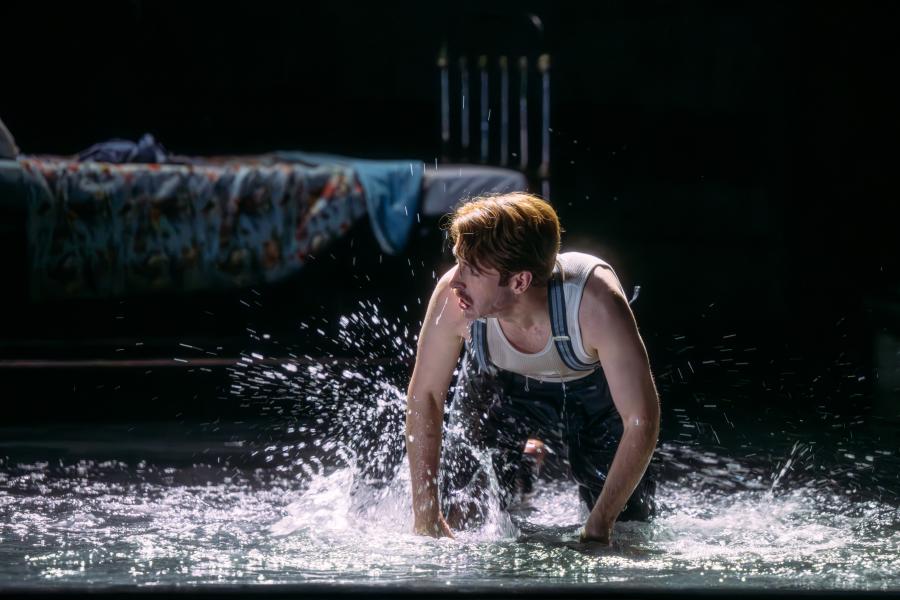
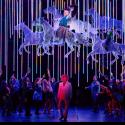
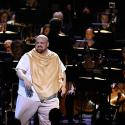
Thankfully, it’s not all ponds and puddles at Covent Garden’s Linbury Theatre. For the Royal Opera, Abrahami and designer Michael Levine enhance a production etched in gloom and shadows with extensive, and ingenious, video projections. They open out or re-balance a closed, even claustrophobic, space, as well as nodding to the many filmed interpretations that James's story has inspired. We begin in utter darkness, as Elgan Llŷr Thomas (pictured above, who also plays Peter Quint) commandingly sings the Prologue that tells us of the new Governess’s mission to tend Flora and Miles at the remote house, Bly, owned but spurned by their mysterious absent guardian. Accompanied by Patrick Milne’s piano, he moves invisibly around the performance area as he sings: the first of many disorienting touches that leave us to question the frail evidence of our senses.
Supported by Duncan McLean’s video projections and Guy Hoare’s lighting design, Abrahami and Levine soak every apparent certainty in doubt. The story’s, and the opera’s, irresolvable debate over the status of the dead Peter Quint and former governess Miss Jessel (“ghosts”, hallucinations, fantasies, doppelgängers?) becomes not a clinical but a metaphysical issue. We don’t know, we will never know, about much more than the existence of phantoms.
A pervasive darkness suggests this endless night where truth and selfhood go astray. Beds – the Governess’s, the children’s – are rotated and displaced, as mobile as the nocturnal dreams, desires and fears they incubate. The video scenes (close-ups of faces, glimpses of woods and water, church and cemetery, a tracking camera that races up the stairs and through the house) bring movement but not much relief. Filmed images split, divide or confuse our perspective: the audience shares the Governess’s deepening perplexity.
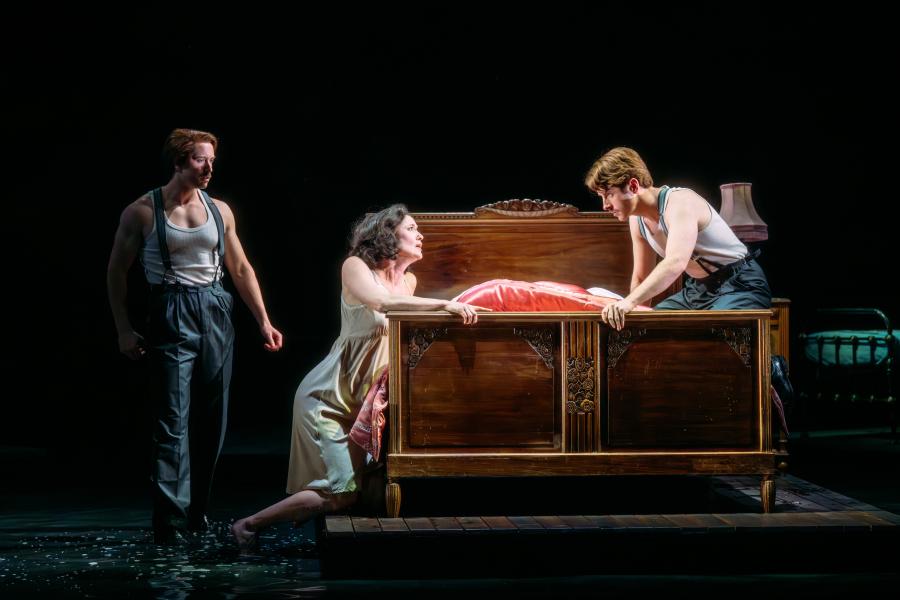
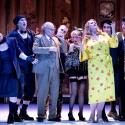
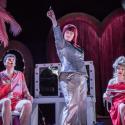
Less wholly effective, to my mind, were the silent actor doubles (Peter Willoughby, pictured above with Kate Royal and Egan Llÿr Thomas, and Clare Kate O’Brien) who bring an additional level of physicality to the Governess’s meetings – actual or imaginary – with Jessel and Quint. Spectres of spectres, alter egos of alter egos, doubles of doubles, they moved well but could sometimes overcrowd the claustrophobic scene.
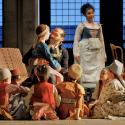
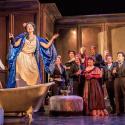
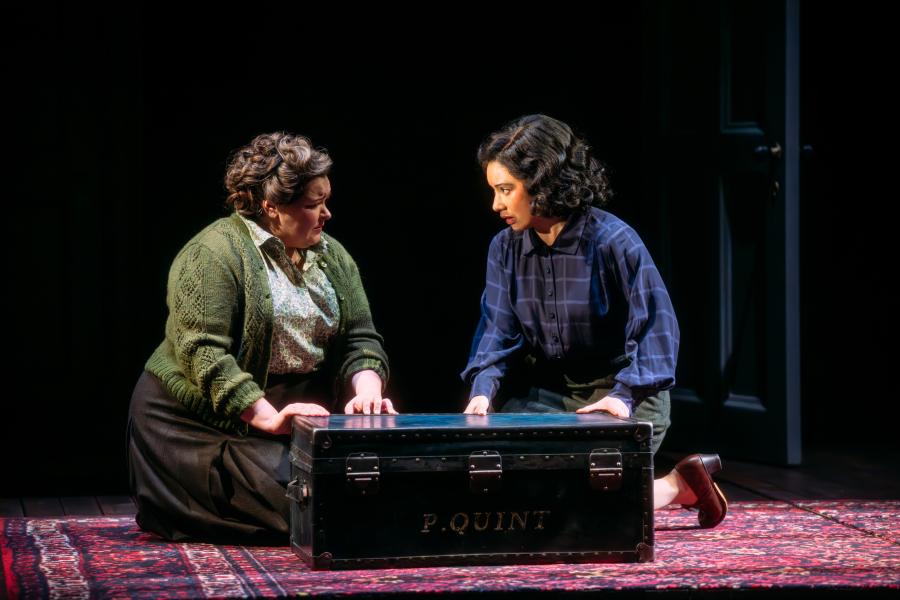
Nothing, however, diluted the musical qualities of this production. Isabelle Peters’s Governess projected a warmth and strength that made her descent into panic and dread all the more compelling, with her avowals of unmoored solitude (“I am alone”) a credible, permanent state of soul. Claire Barnett-Jones’s strong-voiced housekeeper Mrs Grose (pictured below with Isabelle Peters) shifted audibly from robust practicality to needy complexity, even culpability, while, as Miss Jessel, Kate Royal made an imperious, sinister echo or answer to the Governess’s terror. As Quint, Llŷr Thomas had the agile, charismatic charm and fluency as master of “all things strange and bold” that made his attraction for the children easier to grasp. A manifest monster will never convince; both apparitions, or illusions, sang with infinite sorrow as much as menace. After all, we must decide at the close who the “devil” Miles curses is.
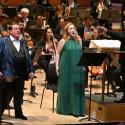
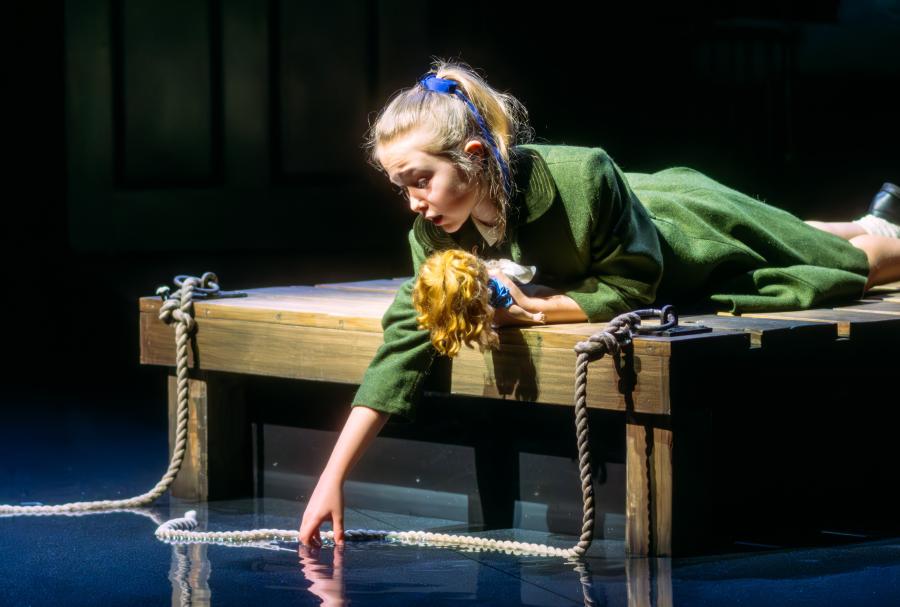
Both of the children I saw were outstanding, as vocal presences and actors (another pair, Emilia Blossom Ostroumoff, pictured below, and Phoenix Matthews, will sing on some dates). Fleur Maxion’s Flora and Glenn Tong’s Miles sounded absolutely assured in the most demanding scenes and conveyed that sense of apparent knowingness allied to sheer vulnerability that makes their exposure to evil of some shape (we have to determine that) so raw, so lacerating. As with the refusal to offer any cut-and-dried “diagnosis” for the Governess, the precise harm done by Quint’s “dreadful ways” remains open. In Abrahami’s shadow world of murk and dusk and seep, the erosion of truth becomes a grave crime in itself.
Conductor Bassem Akiki drew an intensely vivid and varied palette of colours and textures from the mere 13 players that Britten makes sound like a full-strength orchestra. From Katherine Baker's flute and Cara Doyle’s clarinet to Emma Granger’s harp and the ever-present spookiness of the celeste (Patrick Milne), we could appreciate every fine nuance of this perfectly judged score built around its inescapable, screw-turning note-series.
I left fully persuaded that The Turn of the Screw ranks in the rare, tiny company of operatic masterpieces fashioned out of literary masterpieces, aided by the blessing of Piper’s taut and tough libretto. And, in music that itself sounds faintly but perpetually haunted by the ghosts of the past, from psalms and bell-peals to Schubertian salon elegance, I heard one echo more strongly than ever before. Miles‘ strange, bittersweet “Malo” ditty, as it returns in the Governess’s mouth, seemed to me to channel the fathomless desolation of Desdemona’s willow song (in Otello). “Together we have destroyed him,” sings the Governess towards Quint, whoever or whatever he is. In this dark, dank night of the soul, music may still shine.