

The prospect of adventuring from one unpredictable day to the next in the course of Michael Tippett’s Triple Concerto, and from dawn to twilight in just over an hour’s orchestral music from Wagner’s Ring, seemed very much weighted in the English composer’s favour. Frankly, had Mark Wigglesworth only conducted Siegfried’s Funeral March in this concert’s second half, he would have consolidated an already glowing reputation as a top-notch Wagnerian. That he and the BBC Symphony Orchestra burned their symphonic way through Dutch percussionist Henk de Vlieger’s audacious, unbroken “orchestral adventure” turned this from an odd-looking programme on paper into a great one in practice.
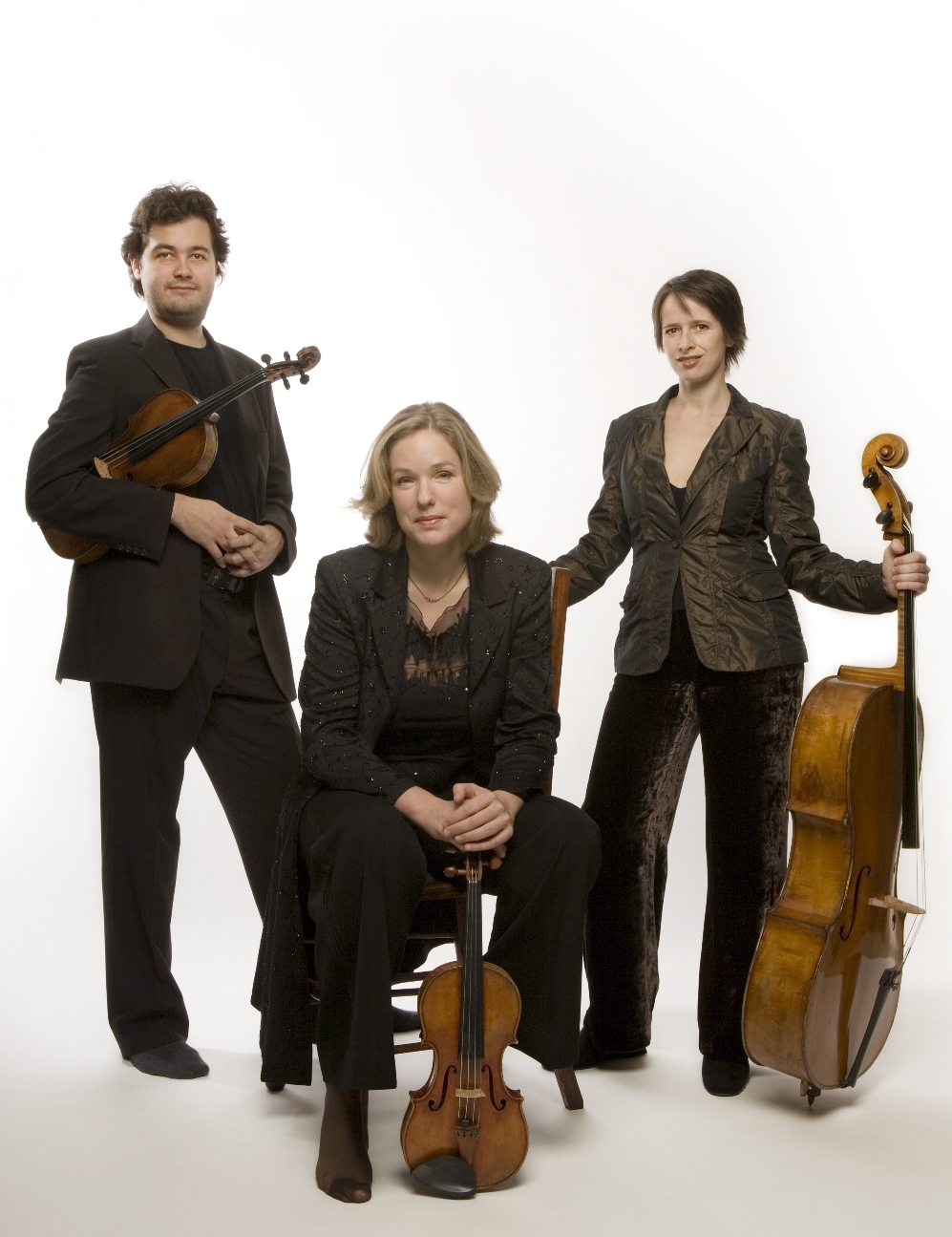
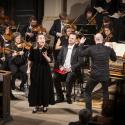
Tippett’s quizzical, late-ish synthesis of his jumpy and lyric styles marked the launch of the BBCSO’s attempt throughout its season to regain him some of the ground lost since his death in 1998, just before Britten steps into the centenary limelight next year. This was also the swansong of violinist Isabelle van Keulen, viola-player Lawrence Power and cellist Kate Gould as the Leopold String Trio (pictured below by Ben Ealovega) before they go their separate ways.
Wigglesworth should be Covent Garden's next choice of Ringmeister And what a swansong. Tippett gives each player a cadenza right at the concerto’s difficult birth – compellingly played here, but uningratiating material to kick off with, and no more transparent when it returns, still knotted up, at the end. The obvious plum, the only point at which all three players sink into one another’s arms, is the gamelan-inspired unison melody of the central slow movement – voiced with dream-like remoteness by the Leopolds, and better stitched than I’ve ever heard it to the respective duets of cello with bass oboe and of violin with alto flute.
 This is where Tippett goes, to quote his first and greatest opera The Midsummer Marriage, "within the shadow of the wood", and the interlude which steers us through layers of sleep towards it, a magical equivalent of the island noises marvelled at by Shakespeare’s Caliban, was exquisitely handled by Wigglesworth and the orchestral percussionists. I can’t say I always understand the connection between the daylight carnival floats that whizz past us either side of the night-music, but the momentum projected by both soloists and conductor here kept the listener hanging on Tippett’s rapidly shifting textures.
Dreading, on the other hand, de Vlieger’s connections in his symphonic Wagner odyssey, I found myself pleasantly surprised by their aptness and occasional playfulness. Of course there’s no fair deal for Wagner's storyline here: Siegmund and Sieglinde appear only in funereal reminiscence, and the curse on the ring crops up rather late in the proceedings. But the elements have their head: Wigglesworth conjured a watery luminescence at the start as well as searing brilliance for the air through which the Valkyries fly, and there was a breathtaking transition from magic fire to forest murmurs.
Liberation from the pit helped make Wagner’s selective orchestral genius visible. Throughout, stage spotlights on the strings made you appreciate just how much he asks of every desk. There, large as life and handsomely present, were the four Wagner tubas and an equal number of harps (Wagner’s ideal six would be asking just a bit too much). The horns came into their resplendent prime with the firework-display music for Siegfried – the celebrated solo taken with aplomb by Martin Owen – while it was a joy to get the journey up the mountain and the liberation of Brünnhilde linked rapturously to more than orchestral excerpts usually give us of the lovers’ dawn duet.
De Vlieger also surprises by paving the darker road to Siegfried’s death with a snarling chunk of Brünnhilde’s fury. It was tempting to spring up and proffer the missing soprano lines for her immolation, but once she’d leapt into the flames, Wigglesworth did not disappoint in pacing the final cataclysm and unfurling the last great theme – Sieglinde’s apostrophe to her Valkyrie saviour – with all the assurance of a Knappertsbusch or a Furtwängler. No doubt about it, this was the white heat which has mostly eluded Haitink and Pappano, for all their sterling virtues, at Covent Garden. Wigglesworth should be the house’s next choice of Ringmeister, by which stage there may be a production worth looking at too.



Add comment