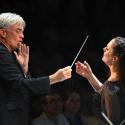
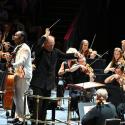
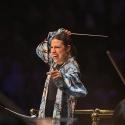
After the myriad intricacies and moodswings of Janáček's The Makropulos Case on Tuesday and Thursday - I was lucky to catch both performances, the second even more electrifying than the first - the London Symphony Orchestra and Simon Rattle seemed to be enjoying a relative holiday last night. They could leave the most fiendish element in Bartók's Second Violin Concerto to the astonishing Patricia Kopatchinskaja, delivering every aspect of a work that might have been written for her, and other poetic extremes to mezzo Rinat Shaham, before letting their hair down in Falla's complete ballet score for The Three-Cornered Hat.
The Bartók concerto I've previously found diffuse, hard to concentrate on throughout, but not here where a perfect collaboration between violinist, orchestra and conductor lived every moment. The Magyar dance elements had all the earthiness they really need, but rarely get, with totally justified barefoot stamping from Kopatchinskaja matched to spot-on intonation; the dreamier aspects had visionary intensity; and there was plenty of humour, especially in the scherzoid variation just before the end of the Andante tranquillo. Kopatchinskaja wittily mimed the brass rasps which threaten to disrupt the first movement, and dovetailing with collective and individual LSO players was impeccable throughout.
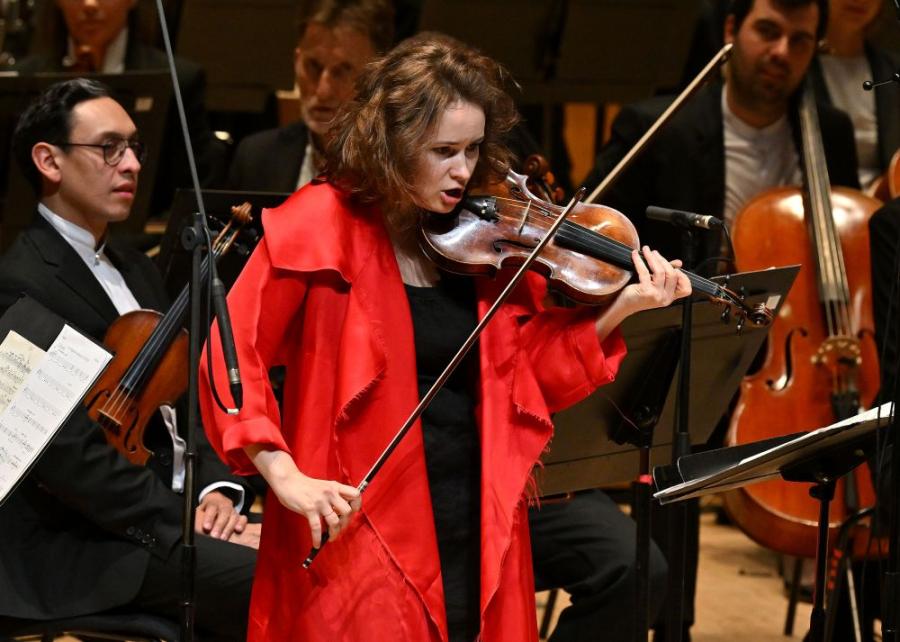
Acknowledging the wild enthusiasm of the audience, she returned to remark how the dark times in which Bartók lived were with us again before launching into the compressed ferocity of one of Kurtág's Kafka Fragments, "doing" both the voice and the violin. 1933
Not to be overshadowed in dramatic expression, albeit of a different sort, mezzo Rinat Shaham bridged the Magyar and Iberian worlds of a brilliantly successful programme. Bartók transcends the simplicity of his rural settings in the 1933 orchestration of Five Hungarian Folksongs. The tears of the inmate lamenting his fate "In Prison" are represented by discreet woodwind blobs of colour, harking back to the tragic lake of Bluebeard's Castle; full orchestra is unleashed between short verses for "Virag's lamps are burning brightly". Like Kopatchinskaja, Shaham used facial and bodily expression to back up luminous colours, taking us vividly from sorrow to joy.
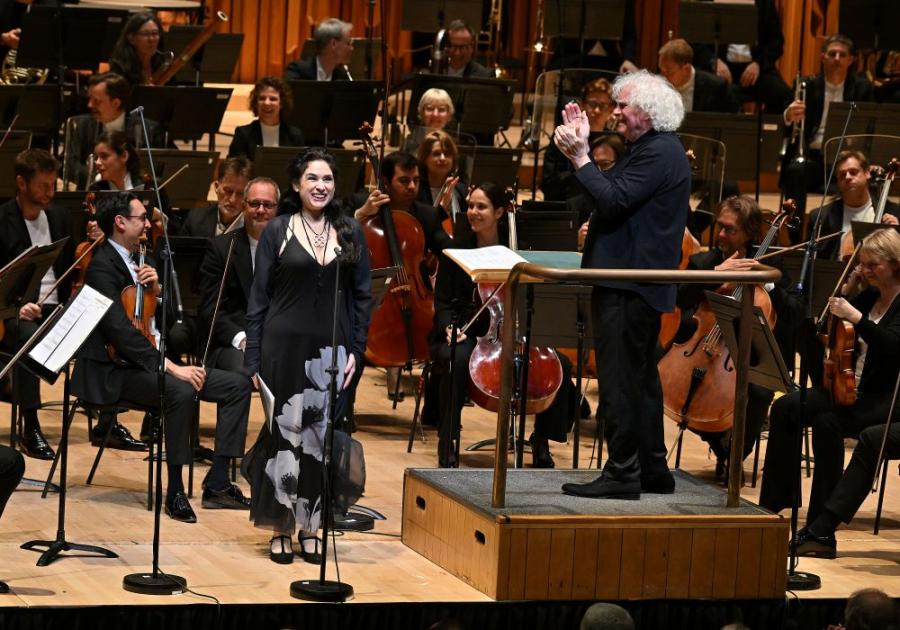
A celebrated Carmen, she turned bailarina in the brief but vivid vocal contributions to Falla's The Three-Cornered Hat, framed by trumpet fanfares and castanetty percussion. I wondered before the performance if we wouldn't have been better off with Philharmonia-style supertitles to illuminate what was going on in Massine's Ballets Russes action (there were none for the Bartók songs, so it was back to the free printed programme for those).
I needn't have worried. Rattle excelled in momentum, so that even the mimed stuff between what we know best from the second suite as the leap from the Miller's Dance - testosterone personified in music - to the Final Dance didn't pall (incidentally, I first came to love this music in former LSO Chief Conductor André Previn's account of that suite on his Music Night 2 LP - "certainly not playing to the gallery", as a review put it at the time).
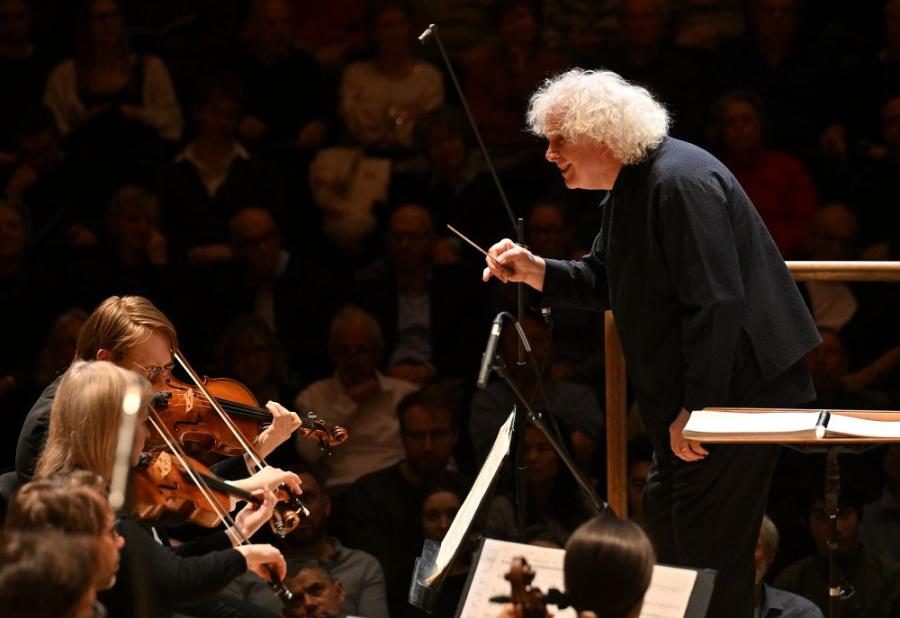
Those co-principal woodwind players who hadn't got a shot at Makropulos excelled in the second act solos - chiefly clarinettist Sérgio Pires and oboist Juliana Koch - while bassoonist Rachel Gough had a field day characterising the lecherous magistrate, wearer of the eponymous hat, who lusts after the miller's wife. There was great joy here, too, in the playing and conducting, though never underrate the difficulty of threading the various episodes in the riotous final jota. Rattle achieved it all superbly, and the musicians looked happy to have undergone the jolly journey with him.
- Patricia Kopatchinskaja returns for her next concert with the LSO on 29 January
- More classical music reviews on theartsdesk