Gustav Mahler and Richard Strauss are not the composers you'd hear at a typical chamber music concert. Their early efforts at piano quartets made up the first half of an evening at the Queen Elizabeth Hall with Benjamin Grosvenor and friends that was, in any case, far from typical. Topped off with the mature Brahms’s Third Piano Quartet, wasn’t it going to be too much rugged Alpine rocky road? In the hands of these youthful musicians, it wasn’t. The audience couldn’t get enough of them.
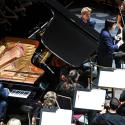
The four performers, who have recently been touring together, are soaring individually towards the top of their game. None is older than 28, but their award-studded CVs are all as long as Benjamin Grosvenor’s concert grand. Let’s meet them quickly, because these are musicians you will need to know.
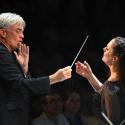
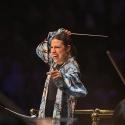
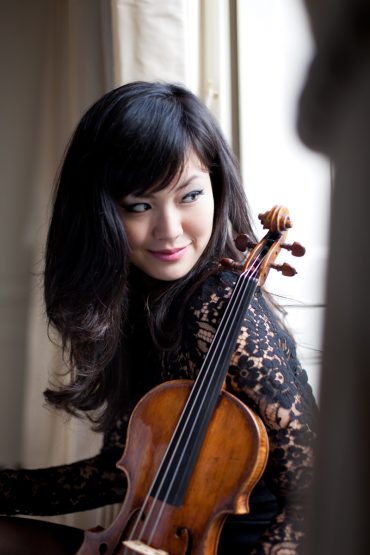 Korean violinist Hyeyoon Park (pictured right by Benjamin Ealovega) and British pianist Grosvenor are an established duo (in life as well as music); Park’s seemingly effortless virtuosity and natural charisma ideally matches Grosvenor’s humming-bird fleet fingers and minutely-attuned ear for sonic balance. It was notable that in a programme with heavy-duty piano parts by composers some of whom were more at home writing for a hundred-piece orchestra, Grosvenor never overstepped the mark, instead blending with, supporting and showing off his splendid colleagues to just the right degree.
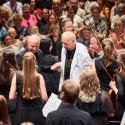
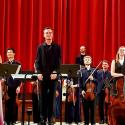
Cellist Kian Soltani used to be the lead cellist of Daniel Barenboim’s West-Eastern Divan Orchestra and by the time his big tune in the Brahms’s slow movement arrived it was clear he was going to offer us a serious treat: he is the kind of player who simply seems born with his instrument in his arms. Yet if there was a revelation (though it seems invidious to single anybody out), it was Timothy Ridout, the violist (pictured below by Jan Hordijk). Occasionally Britain breaks the mould of this much-maligned instrument and produces a truly great exponent of it; here comes the next, a performer whose touch could not be surer and whose musical instinct inspires confidence on every level, all conveyed through 24-carat dark-gold tone. Ridout won the Lionel Tertis Viola Competition a few years back and I think Tertis himself would be proud.
Putting four top soloists together is not always a recipe for triumph, but the collegial atmosphere within this ensemble was further proof of their musical intelligence. All of them settled happily into the conversational requirements of chamber music and the group unity of thought and expression. 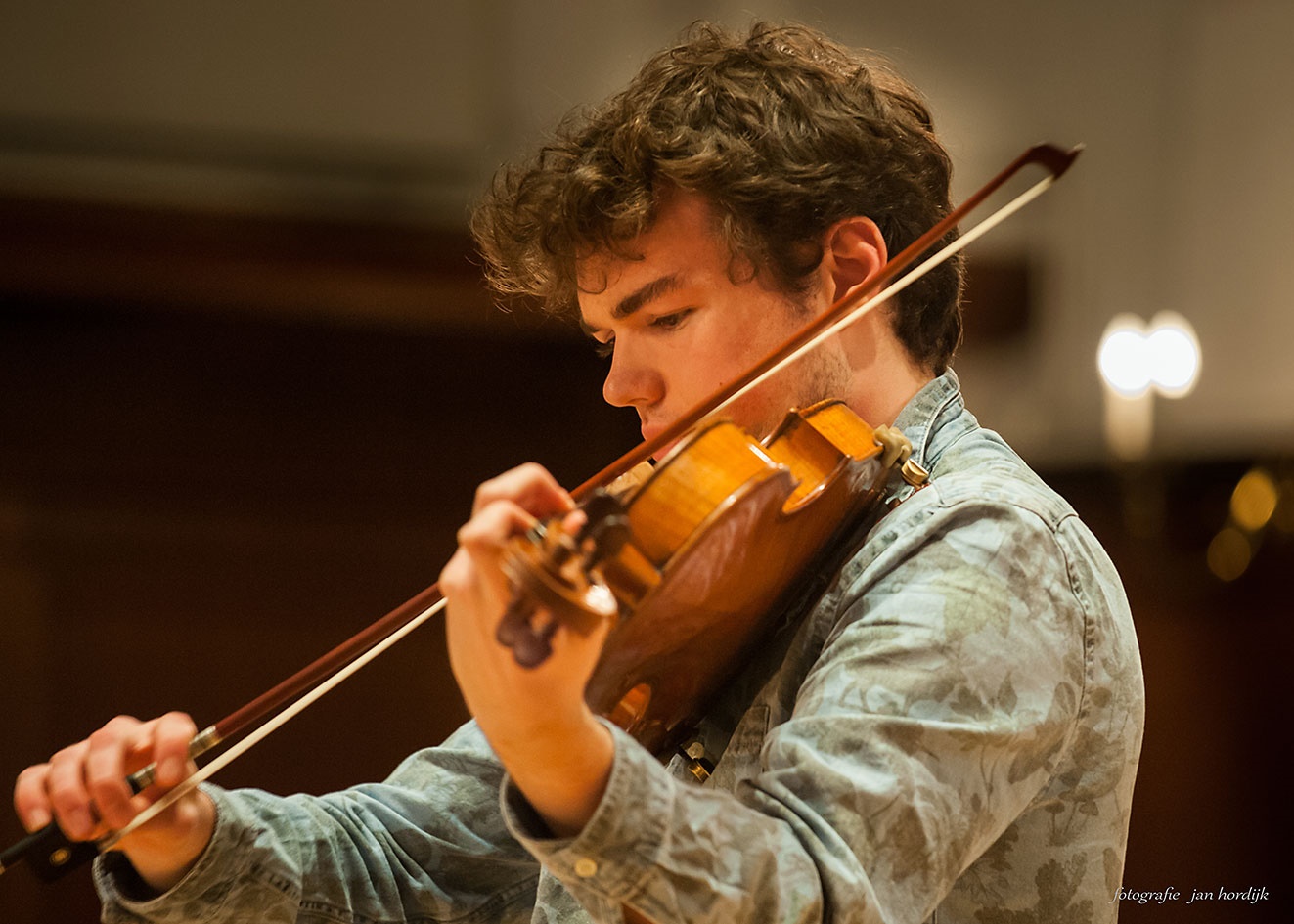 Mahler’s Piano Quartet in A minor was written when the composer was only 15-16, but it is a perfect opener for a programme of late romanticism, full of gathering stormclouds and gloomy atmospheres, which the ensemble milked with rich and glowing tone. It’s just a pity that Mahler abandoned the piece after one movement. Not so Richard Strauss, aged 21 and in thrall to Brahms: his Piano Quartet Op. 13 is an ambitoious, four-movement work that places considerable demands on its performers. It’s not quite vintage Richard, but the scherzo audibly gestures forward towards the (OK, sometimes galumphy) wit of Till Eulenspiegeland the slow movement contains an occasional shiver of figuration that slightly resembles one in Ariadne auf Naxos.
Brahms's Third Piano Quartet, though, shows its composer at the peak of his powers and beside the Strauss his concision, originality and variety of imagination are all the more breathtaking. Sometimes in a chamber concert that is going especially well, the musicians can start to “fly”, feeding off the inspiration of one another’s performances, and if that was happening here, it is no wonder. As for too much Austrian and German late romanticism, they gave us more still: an encore of the "Rondo alla Zingarese" from the G minor Piano Quartet, in which they had got it, and flaunted it at high speed, and brought the house down. With these four around, no amount of notes would be too much.