

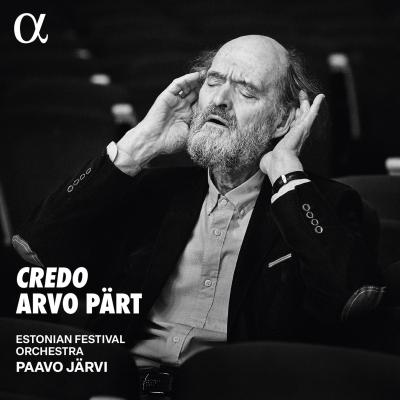
My album of the year came as a real surprise to me, Arvo Pärt’s output hitherto not leaving much of an impression. But Credo (Alpha Classics), from the Estonian Festival Orchestra under Pärt's long-term friend and collaborator Paavo Järvi (Alpha Classics), is a stunner. This collection of mostly orchestral pieces was recorded at last July’s Pärnu Music Festival, and the communicative power of works like Credo and Swansong knocked me for six. Birthday tributes (Pärt recently celebrated his 90th birthday) don’t come better than this, and the album is stunningly recorded. Another important celebratory release appeared last month, Gianandrea Noseda’s nicely-packaged Shostakovich symphony cycle (LSO Live) issued to mark the 50th anniversary of the composer’s death. Noseda’s intense, clear-sighted readings consistently hit the mark, and he draws powerfully expressive playing from the London Symphony Orchestra.
Sir Mark Elder’s studio recording of the original 1857 version of Verdi’s Genoan drama Simon Boccanegra for the enterprising Opera Rara label is electrifying, the cast including baritone Germán Enrique Alcántara and soprano Eri Nakamura. Plus, the Chorus of Opera North and the Hallé, giving it their all. This is a brilliantly produced and engineered studio recording, so there's no stage noise or audience coughing. Find a comfy armchair, listen with the libretto and you’ll be gripped.
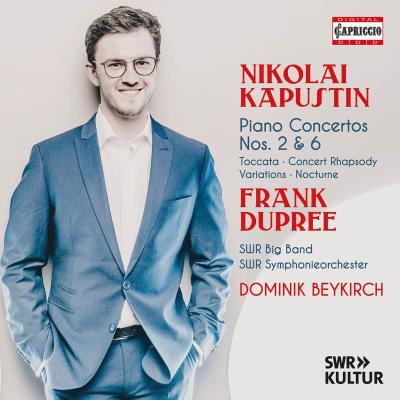
I finally caught up with Capriccio’s ongoing series celebrating the music of Donetsk-born Nikolai Kapustin, pianist Frank Dupree’s latest instalment containing his 2nd and 6th Piano Concertos. Listen blind, and you’d assume that Dupree was improvising, though Kapustin notated everything in painstaking detail. This is seriously enjoyable music, wonderfully performed: sample Piano Concerto No. 2’s slow movement if you don't believe me. Two other piano/orchestra discs caught my ear, one being Tomáš Vrána’s colourful set of Bartók’s three piano concertos accompanied by the Janácek Philharmonic Ostrava/Gábor Káli. You need this for their version of the gnarly Concerto No.1, Vrána and Káli’s attention to detail highlighting the work’s quirkiness and wit, the orchestral percussion brilliantly captured by Supraphon. I also loved American Dreams (Alpha Classics), where Ludmilla Berlinskaya and Arthur Ancelle perform rarely-heard concertos for two pianos by Dana Suesse and Victor Babin, both composers new to me. Amy Beach’s Suite for Two Pianos founded upon old Irish melodies makes for an intriguing, virtuosic filler. Persuasively performed and intelligently annotated, this is a keeper
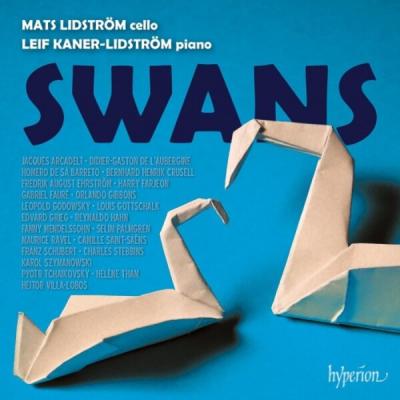
Discovering Leopold Godowsky’s intoxicating Java Suite through Tobias Borsboom’s new recording on TRPTK was a treat. Touring virtuoso Godowsky’s epic pianistic response to a six-week visit to Java in 1923 was to compose this colourful 12-movement suite, his detailed transcription of gamelan sounds predating music by Poulenc, McPhee and Britten. Boorsboom relishes the technical demands and brings Godowsky’s assorted monkeys, temples and crowded streets to vivid life. Favourite chamber albums included Swans, from father/son cello-and-piano duo Mats Lidström and Leif Kahner-Lidström on Hyperion. They give us 24 short swan-themed miniatures which span nearly five centuries, exquisitely played and warmly recorded. The Miró Quartet gave us Alberto Ginastera's three string quartets on the Pentatone label, works which span this intriguing Argentinian composer's career. To move from the folk-inspired pungency of 1948's Quartet No. 1 to the free dissonance of No. 3 (1973), is quite a journey, the latter work including a prominent part for solo soprano. The Mirós' bold, gutsy playing is terrific throughout.
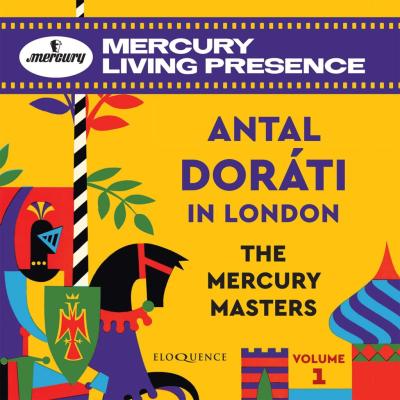
Finally, a pair of box sets. Terry Riley: The Columbia Recordings (Sony) celebrates another 90th birthday, the pioneering minimalist’s four CBS albums assembled in a handy package. A 1968 taping of In C still delights, eleven musicians cleverly overdubbed to create 28 voices, Riley helping out on saxophone. A Rainbow in Curved Air and Shri Camel are equally enjoyable, the latter reflecting the composer’s fascination with North Indian classical music. And Decca Eloquence released two boxes collecting the Mercury Living Presence LPs recorded in London by conductor Antal Doráti from 1956 onwards. Volume 1 features just the London Symphony Orchestra, back then viewed as the poor relation to the Philharmonia and Royal Philharmonic. Horn player Barry Tuckwell jokily compared working with Doráti to being in a boot camp, but the results clearly justified the means. These LSO versions of Prokofiev’s Scythian Suite and Stravinsky’s Firebird still sound stunning, the Mercury engineers deploying just three well-placed microphones and trusting Doráti's acute ears to do the rest. Eloquence’s presentation and packing are exemplary, each album’s original sleeve art retained.
And, from Bernard Hughes:
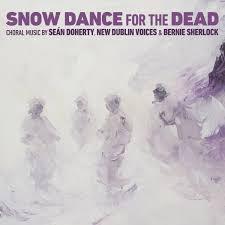
It's difficult to whittle down the more than 50 albums I reviewed for this column in 2025 to a small best-of selection. But, working chronologically through the year, here I go. My favourite choral album of the year was Irish composer Seán Doherty’s brilliant and varied Snow Dance for the Dead, sung by New Dublin Voices, conducted by Bernie Sherlock. Also in February I loved Quartets Through a Time of Change by the Brother Tree Sound string quartet, pairing Ravel’s evergreen quartet with less-known pieces contemporary to it, by Durey, Tailleferre and Milhaud. I am a big Thomas Adès fan, and there were two excellent recordings this year, by the LPO of suites from his stage works, and by the Hallé, putting his recent orchestral pieces
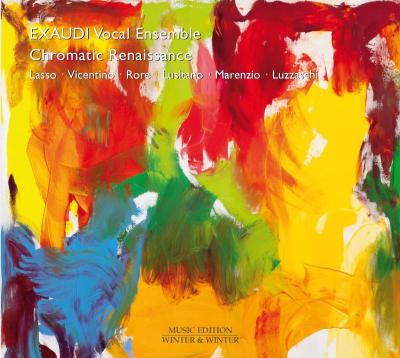
alongside music by younger composers Oliver Leith and William Marsey. I covered two albums by the extraordinary British vocal ensemble EXAUDI, one of vanishingly quiet music by Jürg Frey, and – showing the group’s range – an amazing collection called Chromatic Renaissance, showcasing the experimental side of 16th century music. Lastly, my vocal album of the year was Mary Bevan’s moving Elegy, with pianist Joseph Middleton, which came out on Signum Classics in September: a beautifully sequenced collection, sung with complete conviction and emotional intensity.
Here's Seb Scotney's pick:
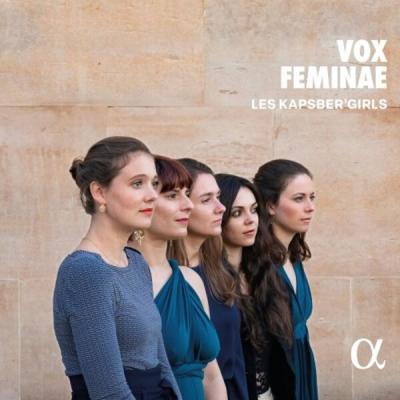
One album I wrote about in April has pulled me back again and again to revisit it: Vox Feminae (Alpha) – with music by Barbara Strozzi, Antonia Bemba, Hieryonymus Kapsberger – is the third CD in ten years from the French group Les Kapsber’girls led by lutenist Albane Imbs, a decade in which they have now completely and commandingly outgrown their silly nickname. They had a week in rural Southern Norway to make the recording at the home studio of producer, fellow lutenist, mentor and ECM regular Rolf Lislevand. For the Strozzi masterpieces as well as for its discoveries, it is just glorious.
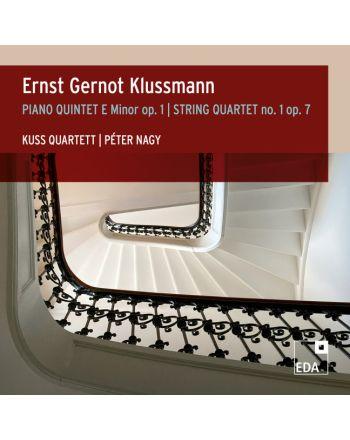
That spirit of discovery, and some combination of curiosity, research and advocacy has been the driving force in making some great things happen on disc this year. Ernst Gernot Klussmann, “one of the outstanding personalities in the musical life of Hamburg from the late 1930s until his death in 1975” was very well served by the Kuss Quartet with their extrovert urgency and the sad story of life, buffeted by mighty currents of history, was well told in essays commissioned by label EDA.
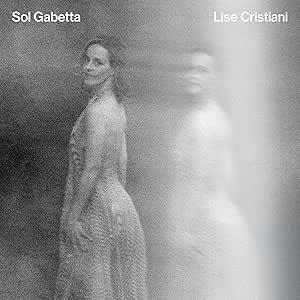
In that same spirit, Sol Gabetta followed on from the 2024 book Cello: A Journey through Silence to Sound by Kate Kennedy, which tells the stranger-than-fiction life story of 19th century cellist Lise Cristiani, and made an excellent double album makes a strong case for getting to know Cristiani in her bicentenary year. These are works by unknown composers – especially by François Servais. We hear repertoire that Cristiani herself played, although it is sadly ironic that a crowning little masterpiece which Cristiani’s playing ushered into existence, Mendelssohn’s “Lied ohne Worte” Op.109, is not in the collection.
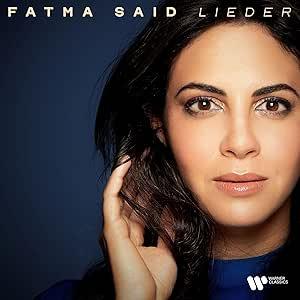
Egyptian soprano superstar Fatma Said’s album Lieder (Warner), dedicated to the principle of making music with (and as far as possible only with) friends, has some real joys in it, not least Schubert’s “Der Hirt auf dem Felsen” with the now officially retired Sabine Meyer, in which both give the extended structure a surprisingly coherent dramaturgy. Another song highlight was Canadian mezzo Marie-Nicole Lemieux starring on her album in the excellent and definitive Donizetti songs collection from Opera Rara.
Albums which get widely overhyped bring out the rebel in me: Alice Sara Ott’s account of the John Field Nocturnes led me to spend far more time listening appreciatively to Benjamin Frith’s flowing and poetic 1990s account. I also had reservations about Yuja Wang’s album of Shostakovich concertos. And on the continuing subject of strong advocacy, my New Year Resolution is to make sure I take the time to follow up the recommendation in this column of a 29-CD set of Antal Doráti Mercury Living Presence miracles from London.


Add comment