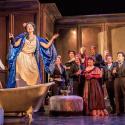
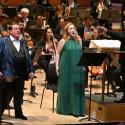
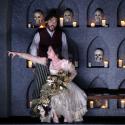
Opera spends so much of its time killing off female protagonists that it's refreshing to come back to The Makropulos Case. In it Janáček, in one of his many moments of generosity, imagines what might happen if you allowed a woman not just to live but to live forever. The answer? They become a bloody nightmare.
It's a funny old opera, The Makropulos Case. Nihilistic to its core in the thrust of the libretto, but curiously life-enhancing musically. The first act should knock you out with boredom, so heavy is its tread (one initially thinks) through the obscurities of a probate case. That it didn't last night is down to the brilliance of three people: conductor Richard Armstrong, director Christopher Alden and Janáček.
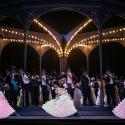
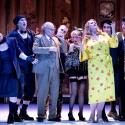
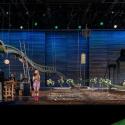
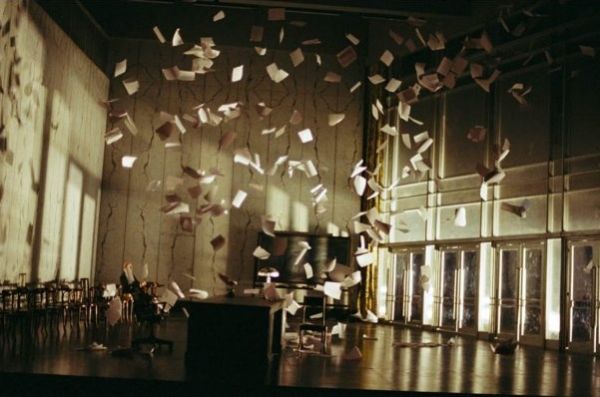 Alden's production (seen here in revival) ratchets up the nihilism. We are confined to one of those (rather ravishing to my eyes) 1920s Soviet foyers - never-ending expanses of marble, glass, metal and geometry from set designer Charles Edwards (pictured right) - perfect expressions of Communist power, uniformity and eternity, for the duration of the grim tragicomedy. Characters enter hunched, slouched, sagging, shuffling; they pop pills, they drink, they shout, they rape, they worry and they commit suicide as they wrestle with the mysterious diva Emilia Marty and the even more mysterious Makropulos case. These are the familiar shapes and patterns of mortal life, of a life of drudgery, responsibility, anxiety and nastiness. Living forever might be a bloody nightmare but living full-stop isn't exactly a barrel of laughs.
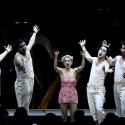
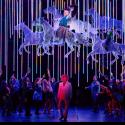
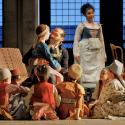
Symbols and surrealism are interleaved delicately into this unnervingly plausible world. An army of flower-bearers arrive. A room-full of documents fall from the sky. It is theatricality of the highest order: engaging, provocative, mysterious, memorable. The singing is extraordinarily fine, through to the smallest roles. Alasdair Elliott's Vítek was a beautiful character study of a man in love with boredom (watch him munch his sandwich as the ceiling of papers falls to the ground). Albert Gregor, a perfect mess of a man, was sung with great vigour and acted with immense skill by Peter Hoare. Laura Mitchell was the model attention-seeker and fantasist as Emilia Marty-hanger-on Kristina.
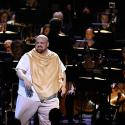
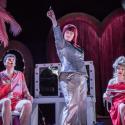
Tenderness rears its head in the form of Ryland Davies's sleepy Hauk-Šendorf, a former lover of the fearsome 327-year-old Emilia. Amanda Roocroft was incredible as Emilia Marty, both vocally and physically, capturing the fragility of this well-travelled soul as perfectly as the mania. This vulnerability at Marty's core is constantly breaking through the textures of the orchestra on strings and woodwind, conductor Richard Armstrong doing a brilliant job of both flinging the orchestra at the score and reining them in for the introspection.
Then there are the unforgettable final seconds, which see director, conductor and Roocroft engaging in one final terrifying idea. I won't spoil it for you. This is as near to a perfect evening of opera as you are likely to get.
- The Makropulos Case is at the London Coliseum until 5 October
- See what's on at English National Opera this season