

You don't have to be mad to enjoy Gerald Barry's methodically berserk approach to Wilde, but your wits might have begun to turn by the interval and you'll question your sanity by the end. Director Jack Furness has extra ideas the composer would surely like - Australia? Kangaroo! - and marshals the carefully choreographed antics of a musically and dramatically spot-on cast, while Douglas Boyd, game to be ritually humiliated, gets select Philharmonia players to pack a punch and even offer an occasional if brief dose of tenderness from the side of a dazzlingly composed stage.
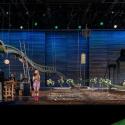
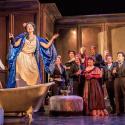
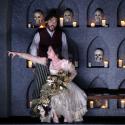
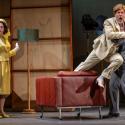
This is the equal triumph of set designer Francis O'Connor, complemented by the wacky and always unpredictable costumes of Hannah Wolfe and Paul Pyant's lighting - virtuoso in Act Three when "ExPLOsion" warrants rapid changes. A divan crowned by the Hon. Gwendolen Fairfax (Holly Brown) is stretched to become a slide, eventually easing her down to earth (literally), while Jack Worthing (Seán Boylan) essays the craziest of études on a very high piano ("Did you hear what I was playing, Lane?" - "I didn't think it polite to listen, sir" therefore becomes the first extra joke of the opera.) Jack says he doesn't play accurately, and that's not Barry's intention in his opening keyboard cacophony. (Pictured below by Richard Hubert Smith: Holly Brown's Gwendolen, Henry Waddington's Lady Bracknell, Seán Boylan's Jack and Zahid Siddiqui's Algernon)
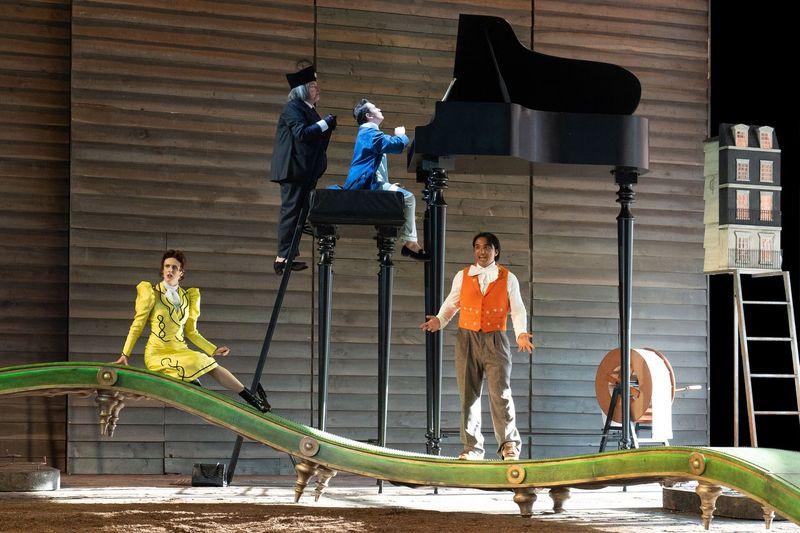
Lady Bracknell, less the pinstriped gent of the first London production than an outlandish and ferocious semi-dragster in Henry Waddington's clarion and - as far as I can tell - note-accurate characterisation, emerges from a hole in the ground, later subjecting Algernon (Zahid Siddiqui) to its discomfort as a cardboard guillotine pops up and Lane pelts the poor young man with cabbages.
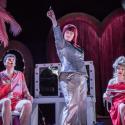
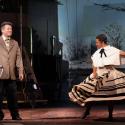
An even poorer chap in front of me was not amused, which was part of the amusement as the rest of us howled at times with laughter. Never more so than at the bitchfest between Cecily and Gwendolen, declaimed through megaphones while butler Merriman (Peter Lidbetter) executes the smashing of plates (pictured below by Julien Guidera), mallet on platform and tramping boots, inter alia.
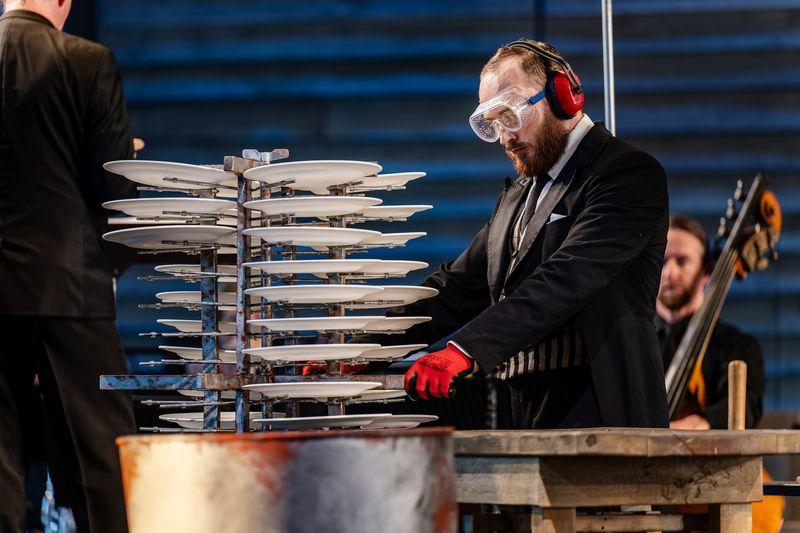
Lidbetter's performance as the two butlers is as consummate as anything in this savage parade - first time I've seen a character do the tricky percussion stuff between Gwendolen's clipped syllables. Somehow this most cry-with-laughter sequence in Barry's cavalcade never wears thin. And a third viewing reveals infinite pleasures in the scoring and timing.
Furness enriches the score's outbursts with perfect musicality: the noisy brass squalls when Cecily writes Jack's words in her diary or paces furiously in objection are spot on. Barry hears anarchy under the surface of Wilde's epigrams and Carrollesque nonsense, and you have to admit it's there. Act Three after the interval - as long as the entire opera, by the way - shows us that things fall apart, the centre no longer holds, but it's not laid on with a spade; the acid comedy continues to the bitter end. I'm glad I'd forgotten what happened to the unsmashed remainder of the 64 plates.
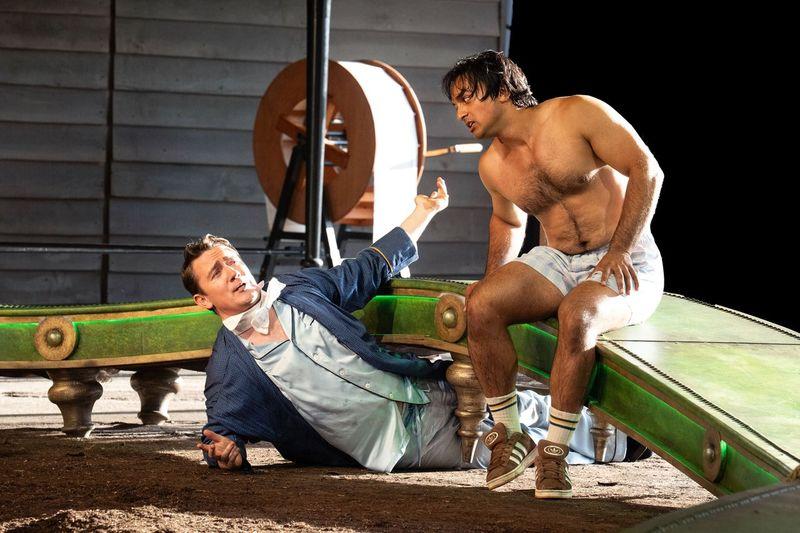
It's a lovely touch that Miss Prism, who has done the craziest things, seems like the most mild-mannered and sanest person on the stage - a subtle performance from Susan Bickley. Kevin Whately has been drafted in as a Scottish Chasuble, happily beset by monster bees. Waddington manages not to upstage the young people, who gamely undergo removal of clothes (mostly the men), spraying with water and covering themselves in earth.
Fine baritone Boylan manages a series of sometimes horrifying fixed grimaces, while Siddiqui (pictured above, right by Richard Hubert Smith with Boylan) follows up a winsome Tamino at the Royal Academy of Music with a rather more manic turn. France shows she's the best high soprano in the business, following her hundred-plus top Cs in Barry's Alice's Adventures Under Ground; her renditions of "I love his hair so muuuuuuch" and the multiple mechanical high-wire "Thank you, Aunt Augustas" will not be forgotten. And if newcomer Brown was the least vivid of the four, she certainly looked the haughty part.
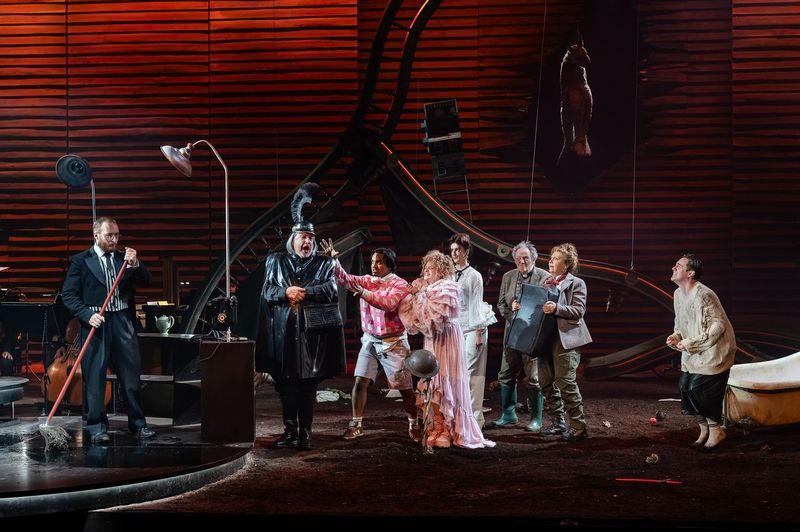
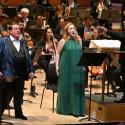
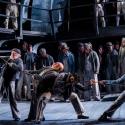
Game professionalism is also required from the three actors - Nikki Cheung, Samuel Collins-Webb and Jonathan Milton - in movement to wonky interludes and as tables for tea, perfectly choreographed by Rebecca Meltzer. Given that each of the characters needs constant observation (the ensemble pictured above by Julien Guidera), it's easy to turn the ear away from the orchestra, but when the brass and wind make their presence felt, the effect can be overwhelming, and it can only be Barry, the greatest living composer-with-a-voice. This has to be filmed and it has to return.

Add comment