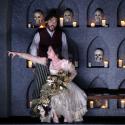
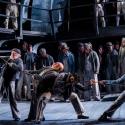
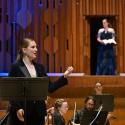
It's an uncanny coincidence that two operas about pain relief which goes wrong should premiere at Irish and Scottish festivals at the same time. Today also sees Simon Thompson's review of Missy Mazzoli's The Galloping Cure, imaging the American opioid crisis, at the Edinburgh International Festival, and I'll take his word for it that Mazzoli does a better job on this subject than she did in a flat operatic adaptation of Lars von Trier's Breaking the Waves at a previous EIF. Irish composer Michael Gallen's work was new to me - he's already had success with Elsewhere (2021), and The Curing Line won the 2025 FEDORA Prize for best opera. Deservedly so, it would seem, with this layered kaleidoscope of a take on Ireland's tradition of indigenous cures.
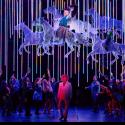
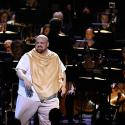
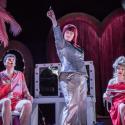
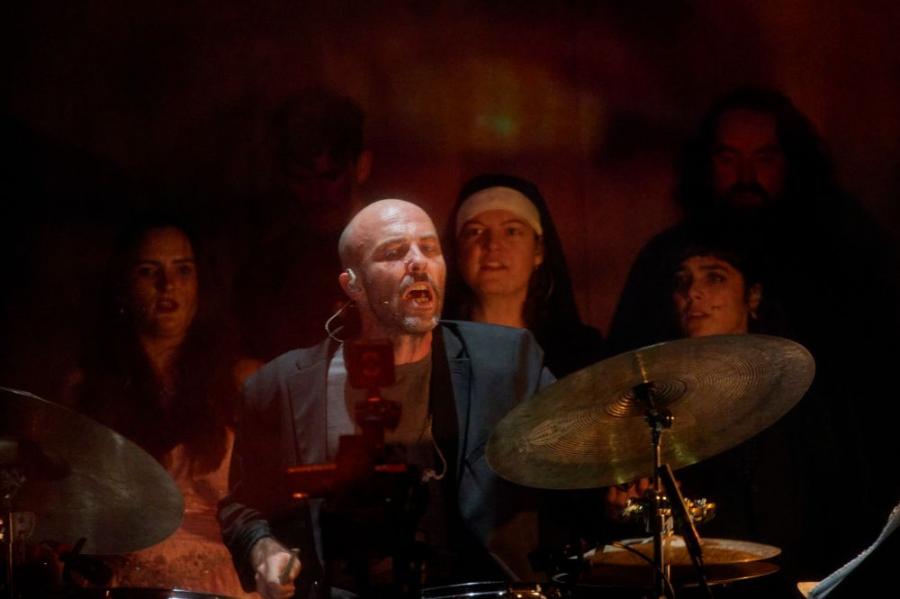
It's never predictable if you haven't read the synopsis before you see the work. I hadn't, and the compelling way in, with the charismatic Romain Bly promising televangelical wonders between drumkit tattoos and joined by a near invisible chorus (pictured below), continues with mysteries within realities. Who are these foul-mouthed girls who mock the winner of a local beauty queen competition - she turns out to be the violinist of the ensemble, Maria Ryan - and what is the racy invocation of "Crow" all about that they share in a brilliantly written duet? Both Gallen and the director, Shawn Fitzgerald Ahern, demand much from their performers, with powerful results.
Amy Ní Fherraigh's Cora and Sarah Shine's Eileen turn out not to be the sisters we thought they were. Crow is their ostensible dad, the real father of Eileen and the spiritual one of Cora, to whom, while dying, he passes on the ancestral gift of healing people with breathing difficulties (he grew up without a father; so did she). The casting highlights the differences: Ní Fherraigh, previously extraordinary as Rosemary Kennedy in the brilliant Irish National Opera success Least Like the Other and as Donna Anna in the Blackwater Valley Festival Opera production of Don Giovanni, has the otherworldly dimension and the poise for the gifted one; Shine, the more cautiously lyric of the two sopranos, is the increasingly jealous observer. It's their story, but Gallen and his co-librettist Annemarie Ní Churreáin tell it from so many angles that the trajectory is never straightforward. The libretto moves from poetry to prose in a way that sounds as if it's analogous to the work of Royce Vavrek for Mazzoli.
Each scene is separate and in a different musical style from the ones before and after it. Six instrumentalists also play different parts and sing, There's a visceral interlude where they strike various percussion and sing the scientific symptoms of breathing illnesses, another where Bly plays a visitor seeking the cure who also articulates his difficulty with the French horn. The two girls branch out until their apartness is epitomized in the final appearance of Crow (Colm Breathnach) on the big scene, singing a beautiful incantation for Cora to take up.
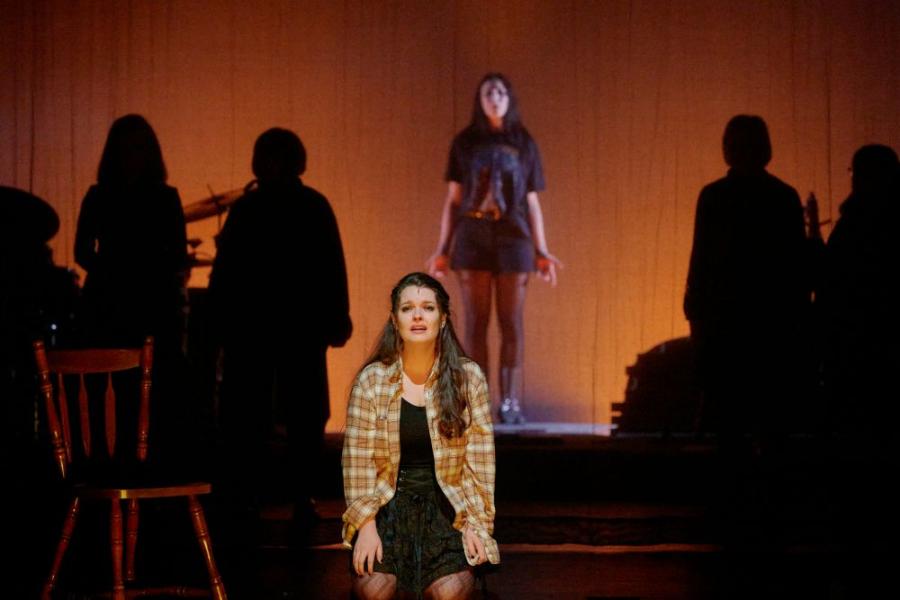
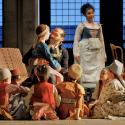
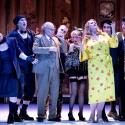
It's a pity that the filmed singers don't get programme biographies, for they are just as great a part of the overall success as the live performers. Breathnach's Irish song moves us to tears, while there are two crucial scenes in a slightly artificial form of recitative for two suppliants who tell us their story: Aaron O'Hare as Paul McKenna and Ruth McGill as an older person, Janet Horan. Both make their contributions natural and live their characters movingly. Local Kilkenny people also sing and act.
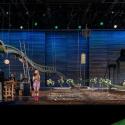
Eventually there's unity in diversity. The incantation is a thread, and there are two very different car journeys which keep us in a state of suspense. It's perhaps a spoiler to say that Cora loses her power after Crow's death, but that seems to be on all the publicity. Ní Fherraigh rises to the challenge, and we take our leave of this enclosed world reluctantly. Pai Rathaya's set could lose some of its components (the screens need a lot of manipulation and aren't strictly necessary); there is some paring down to do before the promised tour. But don't miss it if you get a chance to see it. If KAF set out to appeal to audiences of all ages, it has succeeded without contrivance.