

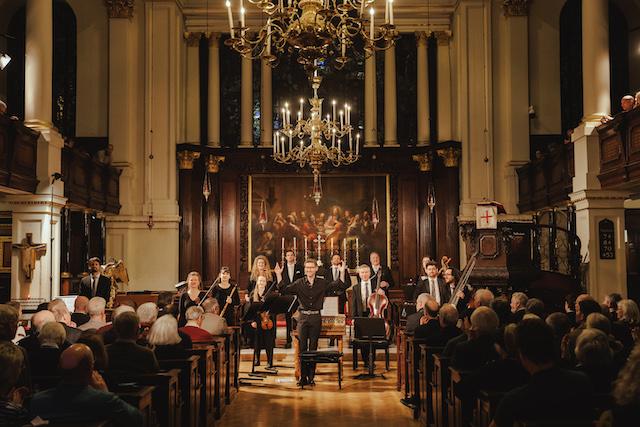
Famously Handel and Bach never met, despite being born in the same year in the same country. So it was fun to see the programme for the English Concert’s delightful, vivacious performance in St George's Hanover Square playfully pit the two composers against each other by presenting works that they both composed in their thirties.
When he wrote his Chandos Anthems, the still relatively fresh-faced Handel was working for the fiercely ambitious James Brydges, first Duke of Chandos, who established a chamber ensemble that became known as the Cannons Concert at his estate in Middlesex. Though there is some debate about when exactly the Brandenburg Concertos were written, Bach was working as the Kapellmeister of the opera-obsessed Duke Leopold von Anhalt-Kothen, and sent the concertos to the duke’s friend Christian Ludwig, Margrave of Brandenburg.
Was Bach pitching for work with the Margrave, or simply showcasing his versatility for broader reasons? That question has still not been answered, but what was indisputable three centuries later was the intellectual energy and vitality both of the Chandos Anthems and the Brandenburgs. Kristian Bezuidenhout, conducting from the harpsichord, led a dynamic ensemble that was fiercely committed to delivering the music as a vigorous declaration of style, sophistication, and philosophical elegance.
The evening began with Handel’s My Song Shall Be Alway, the anthem inspired by Psalm 89. Though the latter ends up stridently challenging God for his failure to protect his “anointed” king, David, the anthem focuses on the section that praises God to the heights for his loving omnipotence. After the stately detached chords of the largo opening, lead violinist Nadja Zwiener and Clara Espinosa Encinas on the oboe whirled the ensemble into a more dynamic tempo, nimbly handing the theme back and forth as they navigated Handel’s joyous cascade of notes.
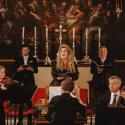
The Andante movement introduced a more lyrical mood, along with the mellifluous delights of Hilary Cronin’s soprano voice, which seemed to effortlessly fill the church as she sang of the loving kindness of the Lord. Then, after the male singers joined her from the pews, tenor Hugo Hymas gave a sumptuous, polished rendition of the movement which asked defiantly “For who is he among the clouds that shall be compared unto the Lord?”
Hymas and Cronin were the vocal highlights here – though countertenor Nathan Mercieca delivered many exquisitely shaped phrases, there were moments when it felt as if he could project a little more. Matthew Brook’s warm, textured bass provided the requisite oomph, not least when all the singers joined together for the vigorous staccato assertion of the Lord’s “righteousness and equity”.
After this stylish opening, we were swept up in the gold-flecked brilliance of Bach's Brandenburg Concerto No. 2, a true showstopper with Mark Bennett's shimmering trumpet lead offset by the translucent beauty of Tabea Debus's equally dynamic recorder playing. This is famously one of the most difficult pieces in the trumpet’s repertoire – performed at high speed at an extraordinarily high pitch, and made even more challenging here through being performed on a period instrument. There were a few split notes, but overall Bennett acquitted himself with spirit and panache. From the harpsichord Bezuidenhout skilfully managed the balance, so that all four lead instruments – trumpet, recorder, oboe and violin – could weave in and out of each other with the speed and exhilaration of horses galloping through a field in the early morning.
In the yearning second movement, Espinosa Encinas especially stood out with her expressive sustained notes on the oboe. Once more Debus distinguished herself with the melancholic clarity of her recorder playing. Then we were back at a gallop again for the third movement, with golden stripes of noise from the trumpet underscored by thrillingly intricate passages from the ensemble’s strings.
The first half of the evening finished with As Pants the Hart, originally composed by Handel for the Chapel Royal of Queen Anne and updated for James Brydges in 1717. After the graceful sweep of the sonata’s opening, the violins in particular distinguished themselves in the elegantly pacy semiquaver passages that followed. In the vocal sections, Cronin’s voice seemed to ascend like a lark, while Hymas captivated with his wonderful, resonant tenor.
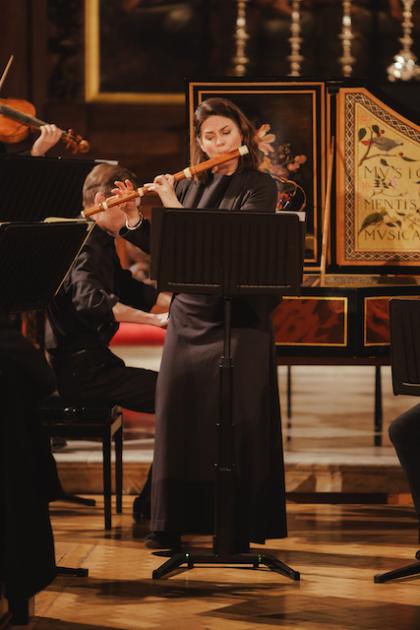
Following the interval, it was back to Bach for Brandenburg 5. Here flautist Georgia Browne brought a velvety richness to the otherwise sparkily transcendent first movement. It was here too that Bezuidenhout’s harpsichord playing really came to the fore, with flawless demi-semiquaver runs leading to an avalanche of silvery sound that cascaded through the church. This virtuosic flourish contrasted with the soulful intimacy of the second movement, with particularly exquisite echoes between the lead violin and flute. Then, in the ebullient dance-like final movement, they embarked on a whirligig of triplets that sped the concerto to its carefree conclusion.
This being Handel’s festival, it seemed only right that the final item on the programme should belong to him in the form of the Chandos Jubilate. The opening instrumental movements began with a real sense of space and grandeur in the Adagio before the celebratory briskness of the Allegro. In the third movement, Hymas introduced the verbal element “O be joyful” with an exuberant crescendo. When he was joined by Cronin’s soprano and Brook’s bass there was a real sense of blazing triumph.
A duet between Cronin and Brook eked out all the longing in the music, gloriously heightened by the oboe. The later song, “For the Lord is gracious,” in which the three singers came together again, was marked by some gorgeous descending chromatic passages from Hymas. In the penultimate “Glory be to God”, the ensemble injected richness and drama into the harmonic shifts. Then we were on to the assertive ebullience of the “As it was in the beginning is now and ever shall be…”, delivered as a rousing proclamation that brought the evening to its sonorous end.




Add comment