

Time was when the principal conductor of a top orchestra could afford to refine mastery of a small and familiar repertoire, covering a century and a half of music at most. The rest he (always he) would leave to loyal or youthful lieutenants. The days of such podium dinosaurs are numbered. The likes of Valery Gergiev, Mariss Jansons and Riccardo Muti are outflanked by colleagues, mostly a generation or two younger, who have been trained to view the entire history of Western ensemble music – at least three centuries’ worth – as the right and duty of an orchestra to promote.
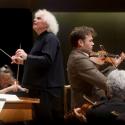
Daniele Gatti has always focused on the big Romantic composers, but he has maintained an often-overlooked commitment to the composers of the Second Viennese School who can still be relied upon to empty concert halls as fast as Brahms and Tchaikovsky will fill them, in the UK at least. That may be one reason for the empty seats dotted about the Barbican for a much-anticipated visit of the Royal Concertgebouw Orchestra in a high-fibre programme of Wagner, Mahler and Berg. The awkward mid-afternoon start-time and the steep asking price for tickets may count as two more.
Always the waltz-rhythm lingered on in Gatti’s supple way with the Prelude and Round-Dance
Just over a decade ago, well before he was elected the seventh chief conductor in the Concertgebouw’s history, Gatti led the orchestra in a superbly involving performance of Berg’s Op.6 pieces, later released on RCO Live. Very few musicians can claim to have this teeming music under their fingers, but with familiarity came breathtaking impact and apparent, insouciant ease of execution under the most intense pressure from Berg’s coagulating chords. The air hangs thick with terror and anguish in Op.6. Forget the abstract concept and titles: this is 30 years of Central European culture in 20 minutes, bloody and enthralling. Always the waltz-rhythm lingered on in Gatti’s supple way with the Prelude and Round-Dance, like a sick spectre at the feast of Expressionism. The gait of the final March was as slack and sleazy as a bedraggled parade of hungover soldiers back to their barracks after a night on the lash, exerting a queasy fascination with the underbelly of militarism so incisively eviscerated by Carrie Cracknell’s production of Wozzeck at English National Opera.
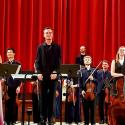
Such insights were more thinly spread in the rest of the concert. It had begun promisingly with the Prelude to Die Meistersinger, uptempo if strangely subdued, which was shared between musicians from the Concertgebouw and the National Youth Orchestra. The British teenagers slotted impressively into their places alongside modern-day masters of their art, and meshed happily with the oiled gears of the Concertgebouw at work.
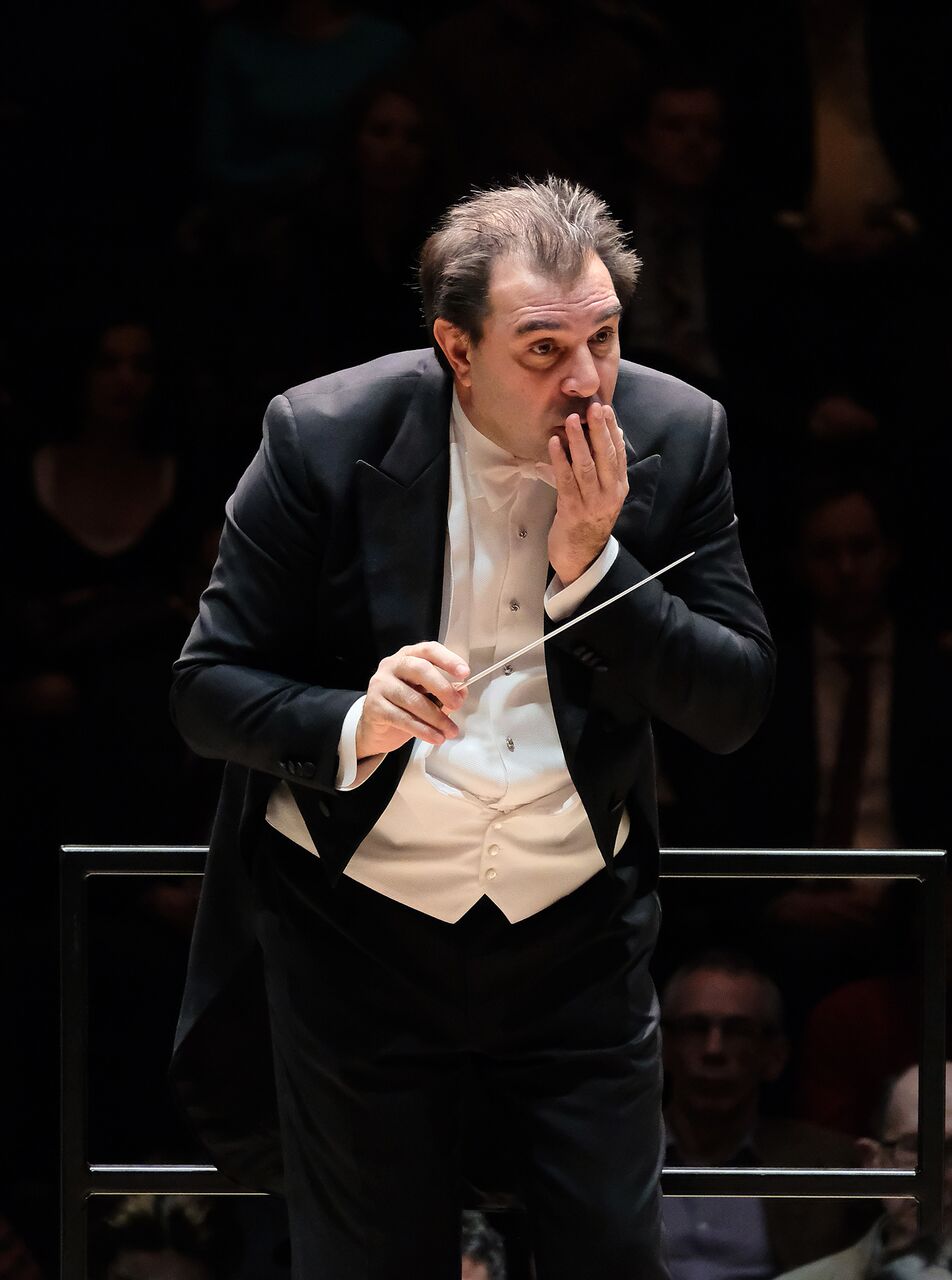 If the wheels didn’t quite come off the following excerpts from Götterdämmerung, the structural bolts were badly loosened by Gatti’s tendency to indulge in lethargically drawing out "atmospheric" passages and over-compensating with massive italicisation of motifs that Wagner’s scoring brings out loud and clear in the first place. There was dramatic sense to the novel idea of moving from Dawn and Rhine Journey to the Funeral March via an instrumental-only Siegfried’s Death, but the hero himself would have expired long before his last phrase, and his pall-bearers would have sunk to their knees in exhaustion.
A similar, enervated lassitude pervaded the Adagio from Mahler’s Tenth Symphony. Hitherto the Concertgebouw had at least sounded magnificent, but Gatti’s meandering pulse created uncertainty in the violas’ opening statement. More than a few split entries and chords broke the flow of an effortfully achieved legato, which in itself muted the movement’s sharp contrasts between high-flown hymn and lonely waltz. Will the Concertgebouw’s rich Mahler tradition continue to be nurtured as it was under Mengelberg, van Beinum, Haitink and Chailly? The outlook is not hopeful.




Add comment