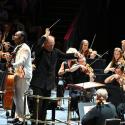
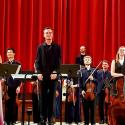
Until 2022, the lovely 18th century church of St Mary-le-Strand was a traffic island, ignored and unloved and rarely visited. Then came the pedestrianisation of the section of the Strand outside Somerset House, transforming the area from somewhere polluted and dangerous, to a walkable piazza, and transforming the church into what is now dubbed “The Jewel in the Strand”. In recent times its musical offering has been similarly revived, both liturgically (there is now a regular Choral Evensong) and as a concert venue, under the auspices of Warren Mailley-Smith, as both impresario and pianist.
There are now concerts on most Thursdays, Fridays and Saturdays, mainly user-friendly hour-long concerts that allow people to dine before, or get home comfortably after. They are largely in the style that used to predominate at St Martin-in-the-Fields: lots of Vivaldi Four Seasons and Moonlight Sonatas, mainly “by candlelight”. And there is clearly an audience for this kind of programming, as witness the 80-odd people filling the church last night for the latest instalment of Mailley-Smith’s Beethoven piano concerto cycle – inevitably “by candlelight”. (The candles are, it should be said, artificial – both a disappointment and a bit of a relief.)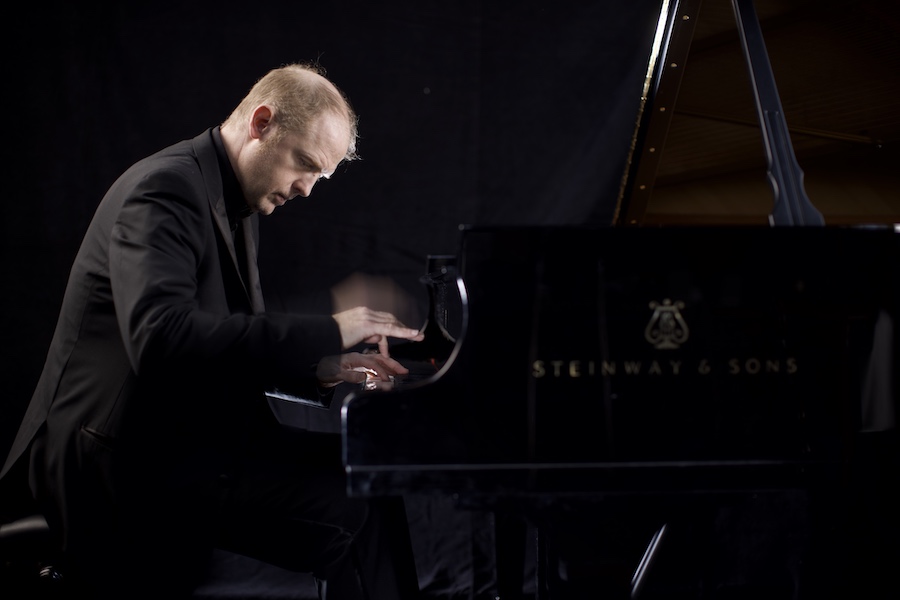 The concerto in question was no.2, actually the first Beethoven wrote, designed as a vehicle for the teenage composer as pianist. It is a charming and lightweight piece – quite Mozartian, and a world away from the heroic no.5 – heard here in the chamber arrangement by Ignaz Lachner. I am a fan of this arrangement (there is a good recording on Naxos) and no.2 works particularly well in this combination, much better than the massive later ones.
Mailley-Smith (picture above by Benjamin Ealovega) was soloist, on his own Steinway, which he has loaned to the church. His playing was suitably chamber-scale, neat and unfussy, never overwhelming the 8-strong Piccadilly Sinfonietta. There was a no-nonsense second movement, the strings sounding warm and belying their small number, Mailley-Smith introspective in the lyrical main theme. The quiet last two minutes had the best playing of the evening, still and impassive, strings and piano speaking with one voice. The finale is a brilliant romp with a catchy main theme, which I would have liked Mailley-Smith to project with a bit more brilliance.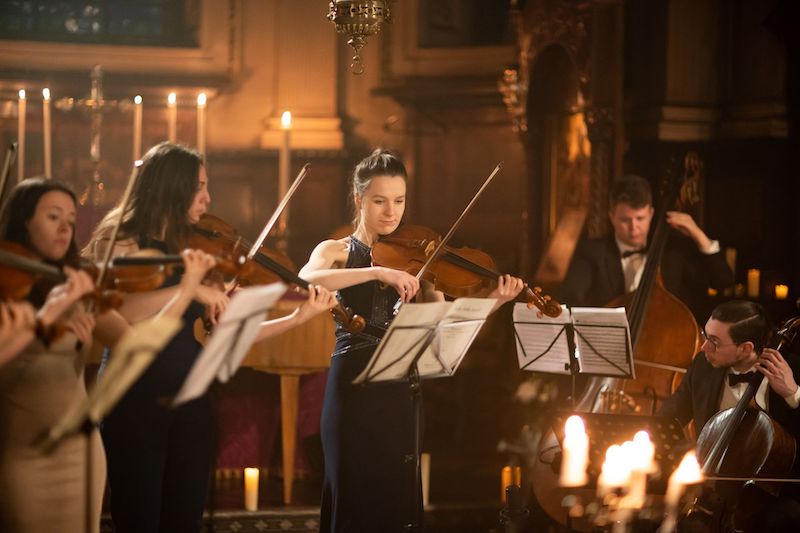 Before the Beethoven we heard Gustav Holst’s evergreen St Paul’s Suite, written for the school where he was director of music for 30 years. Here the eight players of the Piccadilly Sinfonietta (pictured above) were terrific: leader Julian Fish led the group with assurance, and the intonation – notoriously difficult with two players on a part – was mostly spot-on. I enjoyed the vigour of violists Matt Johnstone and Gosia Zwierzchowska in the second movement, and the fourth built to a whirl of activity, double bassist Danny Cleave powering the music from below.
I was pleased to visit the church and to see its musical resurgence in action. It is a tough time for the arts in the UK, so hats off to Mailley-Smith for bringing off this project without any external funding, providing the kind of concert that clearly people want to go to. Interestingly, the one-hour concert is also the model of the new Bechstein Hall: perhaps people don’t want to devote a whole evening to a concert any more?