

Last night saw the official unveiling of 33-year-old Finn Santtu-Matias Rouvali as Principal Conductor Designate of the Philharmonia Orchestra, an appointment that has been widely welcomed, not least on theartsdesk. And while I enjoyed Rouvali’s work I had some reservations, and I would like to see him again before coming to a firm judgment.
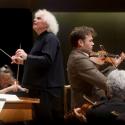
Rouvali’s conducting is extrovert, with flamboyant left-hand gestures and a right-hand which is more about the upbeat than the downbeat – indeed at times he abandons the down entirely in favour of a circular beat when building momentum. This gives a weightless quality to the performance that carries it across the barlines. At times, though, I felt he overegged things, and perhaps needs a bit more restraint, without losing his expressiveness.
The opener, John Adams’ The Chairman Dances was excellent. An offshoot of the 1987 opera Nixon in China it depicts a fantastical scene at a Chinese state banquet where a portrait of Mao Zedong comes to life and he proceeds to dance with Madame Mao. It is a delightful piece, ironic and allusive, offering a glimpse of Broadway through a minimalist lens. Starting with gently chugging strings it works through a long-term crescendo that was beautifully paced by Rouvali, eventually bursting into a big tune on the trumpets. A good performance tends to point up details not heard before, and here I enjoyed the off-beat punctuations in the basses and the decorative glockenspiel gestures
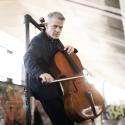
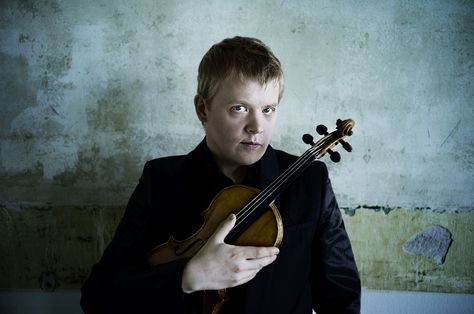 The Violin Concerto is among my favourite Stravinsky, but I spent the first movement at least not sure if I loved or hated Pekka Kuusisto’s (pictured above) take on it. Laid back to the point of insouciance, he seemed determined to free the piece from the spectre of the strict ‘no interpretation’ school of Stravinsky playing (advocated originally by the composer himself). But this piece, with its motoric underpinning that made an interesting link with the Adams, needs a certain rhythmic edge and attack in the sound. I couldn’t decide whether I found Kuusisto’s approach a refreshing new reading of the piece, or simply mannered. It wasn’t until the third movement, Aria II, that I really warmed to him. I am not a lachrymose person, but there is something about this movement – with its fragile, poignant melody and aching nods to Bach – that in a good performance makes me tearful. It did here, as I felt Kuusisto put aside his theatrics and found a real engagement with the composer.
Stravinsky’s Petrushka made up the second half, its mercurial character and wealth of orchestral detail making it an ideal conductor’s showpiece. The performance was not flawless – there was some infelicity of ensemble in the tuttis of the first scene and a slightly unconvincing piano in the “Russian dance” – but also lots to love: the notoriously exposed trumpet solo was dispatched brilliantly and the basses and tuba in the “Coachmen’s dance” were fruity and fabulous.
Rouvali had a tendency to micromanage the solos when they could have been given free rein, but his textures were beautifully balanced, especially the collage passages where Stravinsky overlays several ideas. The only really questionable decision was using the concert ending of the piece, which replaces the final four minutes of music – including Petrushka’s death and final appearance as a ghost – with a sudden loud chord, missing the pathos and tragedy which put much of what went before into context. This was a shame and I would have liked to know Rouvali’s reasoning for dispensing with one of the most magical of endings.
But he redeemed himself. After warm applause he announced an encore with himself on percussion. Saying “leave it or take it!” he launched into an astonishing, lightning-fast rendition of Monti’s Czardas on marimba, that wowed not only the audience but – visibly – the Philharmonia’s percussion section sitting behind him. If the conducting work ever dries up (which it won’t) there will always be a berth in an orchestra’s back row.





Add comment