

Range, I decided on Monday night, was what makes for great performances: range of emotions, dynamics, pitches. It was as true of Abel Selaocoe and his fine fellow musicians (★★★★★) as it had been of the Belcea Quartet with Tabea Zimmermann at the Wigmore Hall last week. The Wigmore also welcomed this team on Friday, and you can be sure that the programme and approach were different; you could also add to the various ranges the gamut from timeless improvisation to the tightest of shared rhythms.
Those of us who've followed Selaocoe's progress for some years now know there are regular components in his programmes, and yet each seems to transcend human boundaries in different ways. When Selaocoe came to the DICMF in 2024, he had us all humming to a universal vibration. Though we'd been drawn into his unique communicative world immediately then, this was more of a group collaboration.
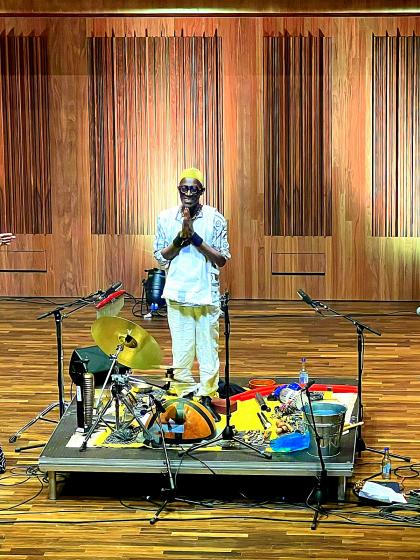
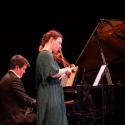
Selaocoe is, as we know by now, a multi-tasker: excelling in cello cadenzas which find new sounds, singing from high and soft to deep-throated, percussive clicks and pops. His colleagues in the Bantu Ensemble are both consummate musicians and highly imaginative partners. Pianist Fred Thomas can fashion exquisite sounds in the upper range of the piano but also stomp with rhythmic precision in the depths and on percussion. Bass guitairst Alan Keary from Limerick - big cheers in the Royal Irish Academy of Music's Whyte Concert Hall - is not only "the ground on which we walk", but made some extraordinary hallucinogic sounds to match the cellist's. Dudù Kouaté (pictured left by Robert Read) stretches the possibilities of traditional African percussion, making water-flute sounds in the haunting improvisation and others Selaocoe swore he hadn't heard until Monday night.
Some numbers were familiar but different: "Qhawe" ("Hero"), a hymn to children; "Hlokomela" or "Take Care", the sense extended to mutual nurturing; to end, the ubiquitous but always welcome "Ka Bohaleng", saluting the mothers who are always remembered, not least when holding the knife on the sharp side; and above all "Ancestral Affiliations".
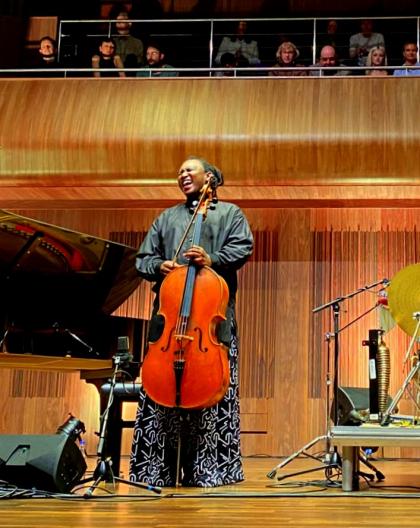
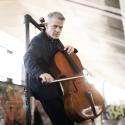
Selaocoe (pictured right by Sheila de Courcy), in his soft and sincere spoken words, by telling us how of the many bright-coloured buildings in the settlements, many were churches where his parents encouraged him to linger. The worship could be fierce or soft; we got all sorts, in a kind of key to the evening. And we sang and clapped, fierce or soft, perfectly controlled by Selaocoe as master musician. Did anyone come out of the hall less than thoroughly invigorated? I hope not.
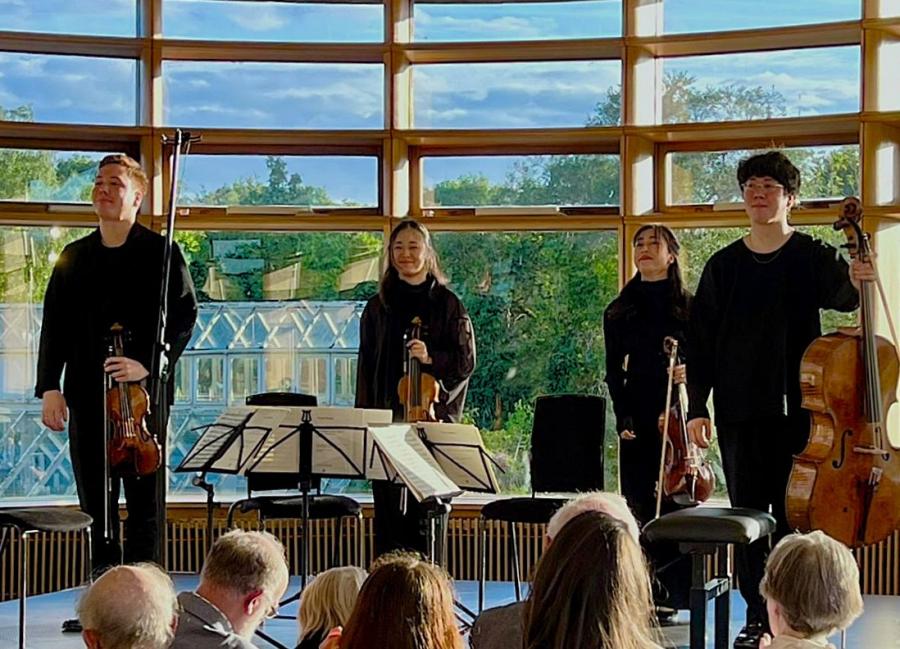
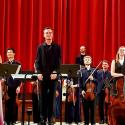
The festival had begun on the previous Thursday with a pioneering programme from the Maxwell Quartet (I missed so much, including works by Nono, Héloïse Werner and Errollynn Wallen, by returning to Dublin more than halfway through). It ended with a more conservative one from the multi-award-winning and still young Leonkoro Quartet (★★★★). As their collective biography tells us, "Leonkoro - from Esperanto: 'lionheart' - is no accidental reference to Astrid Lindgren’s children's book about two brothers, a story that sets a heartfelt sense of comfort against the weighty reality of death". Two brothers, Jonathan (first violin) and Lukas (cello) Schwarz, frame Emiri Kakuchi (second violin) and Mayu Konoe (viola, the four pictured below surrounded by Glasnevin Botanic Gardens by Robert Read).
Their focus and emotional commitment are never in doubt, though for the range (that word again) to match Selaocoe's and the Belceas', there needs to be a hinterland, a sense of what's deep behind the notes, in Schubert's "Death and the Maiden" Quartet, its variations on the song especially. That will surely come in time. They certainly tore, vibratoless, into the opening gambit, and the finale was flawlessly impassioned, as good as any I've heard.
The concert began, sun slanting through the many windows and on the trees and palm house of the Botanics, with Henriëtte Bosmans' 1926 String Quartet. What I'd heard of the Dutch composer's music up to this point suggested a well-crafted talent rather than an individual voice, and the Quartet reinforced that view: a mix of pentatonics, whole tone scale and "exoticism" a la Debussy and Ravel before a tautly rhythmic finale. The chief virtue here was brevity, a good work to choose as a starting point.
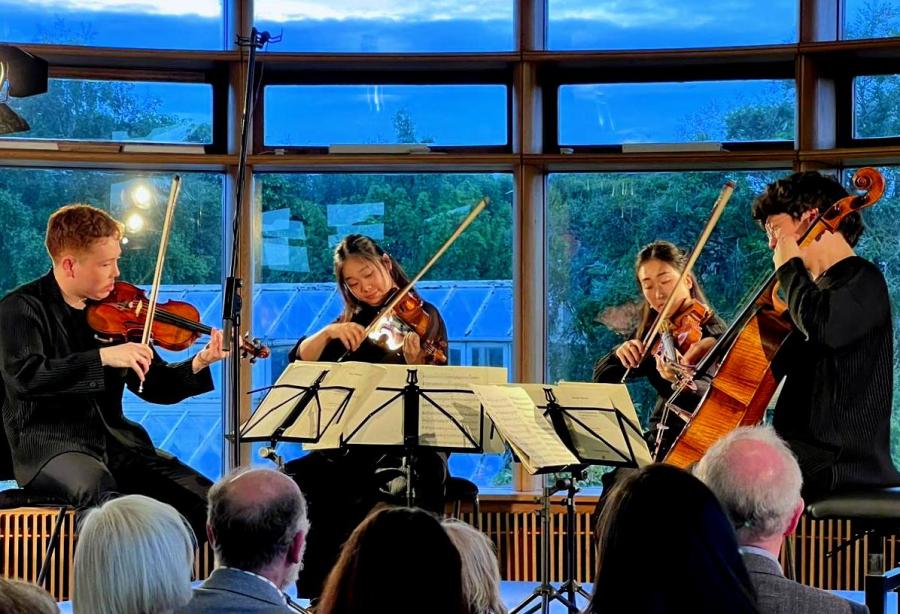
Mendelssohn's Second String Quartet, on the other hand, was a revelation: new to me, unlike three of the other five and like the Brahms First the Cuarteto Casals played in the same venue last year. Mendelssohn's own First Quartet is probably the most perfect every composed by a genius still (just) in his teens. The Second is actually earlier, to set alongside the Overture to A Midsummer Night's Dream and the joyful Octet. Its home key, A minor, hints at why it's not throughout in the same league. Happiness was young Mendelssohn's fundamental home, and the Allegro vivace of the opening movement plays at pain rather than feeling it profoundly; by the time of the Sixth Quartet, composed shortly before his untimely death and mourning that of his sister Fanny, suffering was total.
Even so, when the second after a meaningful silence viola-player Mayu Konoe so expressively introduced a fugato into the Adagio non lento, the originality was fully reflected in the Leonkoros' playing. Their timing in the shifts between the Intermezzo's simple main theme and its middle-section fantasy as well as its rounding-off was perfect. Likewise the return to the quartet's sunlit introduction at the very end after more dark drama was especially magical to those who, like me, had never heard the work before. Like all good chamber music festivals, the DICMF never ceases to introduced us to the unfamiliar, ancient as well as modern.


Add comment