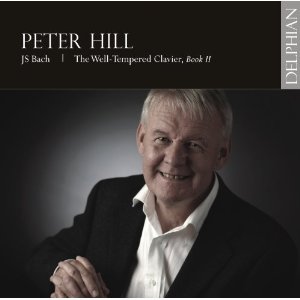
Book 2 of Bach’s Well-Tempered Clavier doesn’t often appear without Book 1. It’s sometimes unfairly perceived as drier, more academic than its predecessor. Bach’s didactic aim for Book 1 (“for the profit and use of musical youth desiring instruction”) remains apposite. Sensible pianists won’t underplay this, and what you want to hear is something akin to an interesting lecture delivered by a charismatic guru. And Peter Hill fits the bill – hearing him play Bach is a little like listening to a friendly primary school teacher relating a stream of fascinating anecdotes. Hill’s outstanding technique need never be questioned – this is a musician who has recorded Messiaen’s complete piano output – but there’s no flashiness, no Gouldian ego distorting the music’s shape.
Mentioning all the high spots would require too many words. Hill’s lyrical way with the preludes is a consistent joy, and the gentle, unobtrusive control of tempo makes some of them sound like baroque improvisations. He can play with delicacy and humility. Each fugue is so carefully voiced, each entry so perfectly weighted. It’s easy to feel slightly oppressed and overwhelmed by this magisterial work; Hill makes it approachable without underplaying the compositional mastery. Along with Roger Woodward’s recording, this is essential listening. Hill’s sleeve notes combine erudition with accessibility.
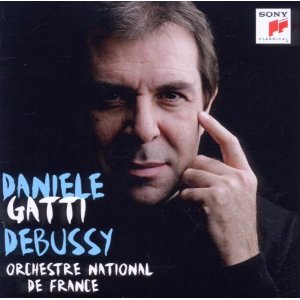
Debussy’s La Mer was completed in the unlikely surroundings of an Eastbourne hotel. Good readings can still surprise and delight - how can an orchestra be made to produce sonorities so liquid, so unpredictable? It’s all in observing Debussy’s carefully calculated details, without overwhelming the momentum. Daniele Gatti’s performance never sacrifices the sense of forward movement. You get the wood and the trees. And the results are wonderfully exciting – the brashness, the aggression of the noisier climaxes comes as a welcome shock. This is Debussy painted in bold acrylics rather than insipid watercolours. Pay attention to the brass playing as the work finishes- those crucial fanfares excised by Debussy are reinstated before the chorale, and there’s something extraordinary going on in the trumpet parts in the stormy closing seconds which I’ve never noticed before. Have a towel ready.
Perhaps it was a mistake to follow such an extrovert La Mer with the gentler Prélude à l’après-midi d’un faune. But Gatti catches the sweaty heat of the piece and the wind solos are effortless. Debussy’s Images aren’t heard enough in their complete form. Here, Gigues is suitably foggy and damp, and Ibéria’s cod-Spanish colours are painted with affection. Rondes de Printemps sounds ebullient. Is this the best-played, best-conducted collection of Debussy’s orchestral music to appear in recent years? Probably.
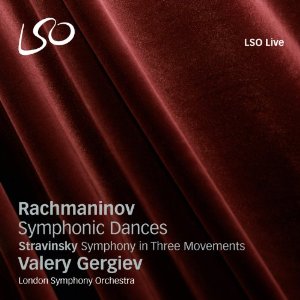
Stravinsky’s Symphony in Three Movements isn’t a symphony in the usual sense. Stravinsky didn’t "do" conventional symphonic development. Its constituent parts were cannily assembled from fragments of an abortive film score and sketches of work for piano and orchestra, with a last movement composed partly in response to news footage of WW2. Not that the casual listener would notice. It’s a thrilling work; disturbing, violent and ultimately exultant. Gergiev’s reading is a satisfying one and the LSO are on superlative form. The first movement’s dark energy is seductive; close your eyes and this could be a film noir soundtrack. Every rhythmic lurch is handled securely, without sacrificing the essential sense of danger, the feeling that things might collapse at any point. The jazzy closing minutes of the finale prefigure Bernstein, and that surprisingly juicy final chord is overwhelming.
And it’s a neat idea to couple the Stravinsky with Rachmaninov’s last work, another three-movement proto-symphony composed in early 1940s Los Angeles. Gergiev’s truculent, measured opening comes as a surprise, lending the music a darker, more subdued tone. The bass clarinet-led build up to the recapitulation is nicely handled and the nostalgic quote from the composer's First Symphony is mournful, almost desolate. There’s plenty of black humour in the second movement’s danse macabre, and Gergiev’s forces correctly observe the gear change to a slower tempo in the third dance as the Russian Orthodox chant gains the upper hand over the Dies irae. Punchy, powerful stuff, in close-up, vivid sound.