Leopold Godowsky: Java SuiteTobias Borsboom (piano) (TRPTK)
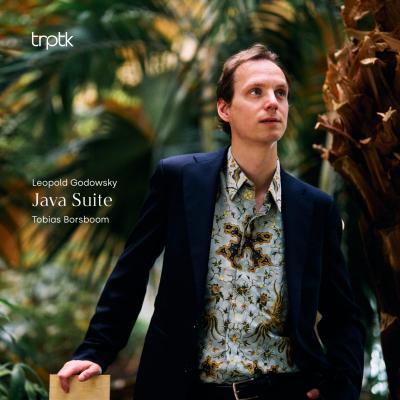
There’s surely a thick book to be written about the influence of Javanese gamelan on western classical music. Debussy famously made several trips to the 1889 Exposition Universelle in Paris specifically to visit the Dutch East Indian pavilion, where a gamelan orchestra accompanied scenes from a recreated Javanese village, the sounds he heard later recreated in his piano piece “Pagodes”. Gamelan sounds crop up in Poulenc’s Concerto for Two Pianos, and the chiming Sunday morning bells heard in Britten’s Peter Grimes derive from a gamelan transcription. Polish-American composer and pianist Leopold Godowsky (1870-1938) had also visited the Exposition Universelle, later travelling to Java in 1923 where he found the music he encountered overwhelming, recalling that “on listening to this new world of sound I lost my sense of reality, imagining myself in a realm of enchantment.”
Godowsky spent just six weeks in Java, giving recitals of Chopin and Liszt and immersing himself in local culture whenever he could. His Java Suite was written between 1924 and 1925, a twelve-movement work in four sections which was never meant to be consumed in a single sitting. If he’d heard Dutch pianist Tobias Borsboom’s ripely-recorded account, he might have changed his mind. Though technically demanding, Godowsky didn’t set out to write a showy display piece. Borsboom understands that: there are passages here which will make your windows rattle but the delicate moments carry as much weight here. Try the soft opening of “Borobudur by Moonlight” and contrast it with the extroversion of numbers like “Hari Besaar, The Great Day” or “The Bromo Volcano and the Sand Sea at Daybreak”, the pedal notes ringing out like cathedral bells.
Monkeys, temples, crowded streets – all life is here. These pieces aren’t simple transcriptions, Godowsky filtering what he heard through the ears of a late romantic virtuoso. Jan Brokken’s sleeve essay suggests that he must have known Saint-Saëns’ playful 5th Piano Concerto, that work’s middle movement quoting a melody overheard in Egypt. Enormous fun, then, a superbly entertaining 65-minute musical travelogue which moves and delights in equal measure. Poor Godowsky suffered a debilitating stroke in 1930 and was unable to fulfil a plan to write similar suites based on music he’d heard in Japan and China, but he did manage to make an atmospheric if fragile private recording of “The Gardens of Buitenzorg” in 1935. Sample it on YouTube and you’ll be hooked. Then listen to Borsboom’s widescreen update.
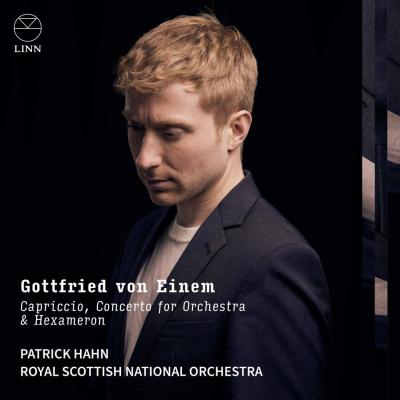
Gottfried von Einem: Capriccio, Concerto for Orchestra & Hexameron Royal Scottish National Orchestra/Patrick Hahn (Linn Records)
I didn’t know anything about the Austrian composer Gottfried von Einem (1918-1996) beyond having played and liked a couple of his piano pieces as a teenager. It turns out he had an interesting life. A student of Hindemith in 1930s Berlin, he had a traumatic run-in with the Gestapo and was denounced by the Nazi party in reaction to his Concerto for Orchestra, but he was saved by the end of the war. After the war he gained popularity for his operas, and was on the staff of both the Vienna Music Academy and Vienna State Opera, but his compositional style – a fusion of jazz, expressionism and a Stravinskian neoclassicism – fell foul of the avant-garde orthodoxies of those years and he was always writing against the fashionable grain.
But his music, as represented on this disc, has an infectious energy, a slightly Waltonian kind of abrasive charm, and a harmonic directness that I found very enjoyable. There are two early pieces – the 10-minute Capriccio that made his name in 1943, and the Concerto for Orchestra that prompted his cancellation a year later – plus Hexameron from 1969, commissioned by the Los Angeles Philharmonic and Zubin Mehta. The Capriccio is engaging and nicely proportioned, with a youthful exuberance. The Concerto for Orchestra, has some echoes of the Bartók, written almost simultaneously, in its clean orchestration and lightly-dissonant tonal language. The slow movement is languid and lovely, played with poise by the RSNO and kept on the straight and narrow by Patrick Hahn. Hexameron is six short, highly-characterised movements, lovingly painted by the orchestra, which move from the swaggering confidence of no.1, the prancing dance of no.2, the touching quiet of no.5 – before ending with a balletic scurrying and brassy drama. Bernard Hughes
Holst: The Planets, Elgar: Introduction and Allegro, Salut d’Amour Tessa Uys & Ben Schoeman (piano duo) (Somm)
Gustav Holst’s The Planets began life as a work for two pianos, the first draft performed by Nora Day and Vally Lasker, colleagues at St Paul’s Girls' School in Hammersmith. They later assisted Holst in completing the 198-page full score before Adrian Boult conducted the premiere in 1918, the composer’s chronic neuritis making the process of writing physically painful. The piano version was subsequently forgotten, the seven movements only published in a single volume as late as 1979. My go-to recording remains the one by San Francisco’s ZOFO duo on the Sono Luminus label. If that proves hard to track down, try this well-recorded new disc from Tessa Uys and Ben Schoeman. As usual, you notice a lot of stuff that’s often inaudible, like the harp notes at the start of “Mars”, the two pianists alternating octaves. Tempi aren’t always what you might expect: this “Mercury” is a tad more relaxed than usual, sounding like piano music and not a transcription, and the big tune in “Jupiter” has room to breathe. “Saturn” is austere and parched, “Uranus” sharp and witty, the organ’s upward swoop near the close wonderfully audible on piano.
The coupling, a piano-duet transcription of Elgar’s Introduction and Allegro, was made by one Otto Singer II, a German-born composer whose achievements included piano reductions of the complete symphonies of Beethoven, Brahms and Bruckner. Alas, four hands on a single piano can’t replicate Elgar’s dialogue between solo and tutti strings. It’s good to hear the big fugue’s different voices so clearly delineated but there’s a lack of light and shade, despite the players’ best efforts. Still, transcriptions like this were made for music lovers to enjoy works at home, so it feels mean to complain. An anonymous arrangement of Elgar’s Salut d’Amour is included as a bonus, sweetly performed and ideally paced. Buy this for the Holst.
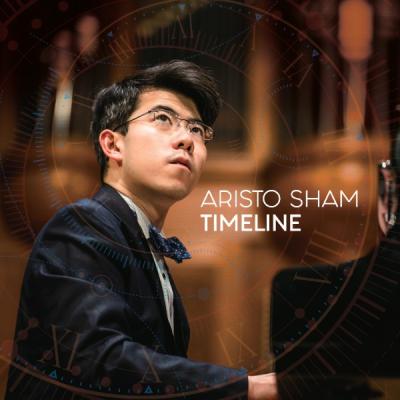
Timeline – music by Bach, Brahms, Busoni and Grieg Aristo Sham (piano) (Universal)
Debut albums from prizewinners can be underwhelming. This one, from 2025 Van Cliburn Piano Competition gold medallist Aristo Sham, is a delight, a shrewdly planned anthology playing to his strength. Try the “Air” from the keyboard version of Grieg’s Holberg Suite, Sham’s unfussy elegance completely disarming. Move on to the closing “Rigaudon” and it’s like stepping into bright sunlight, the crystalline articulation something to marvel at. I love Grieg’s string orchestra transcription, but performances like Sham’s convince me that the original is the way to go. The other ‘pure’ work here opens the album, Bach’s Toccata in C minor and the Grieg bookending pieces transcribed by Busoni.
Especially interesting are arrangements of six of Brahms’s valedictory Chorale Preludes, pieces intended for solo organ. They sound warmer and more consoling on solo piano, and I’d urge the curious to seek out Virgil Thomson’s orchestral versions. Sham’s thoughtful, introspective approach suits these potent miniatures: "Herzlich tut mich verlangen" is stark and declamatory, the soft F major close of “O Welt! ich muss dich lassen” deeply moving. Two Busoni/Bach pieces are better known. “Wachet auf, ruft uns die Stimme” is sweetly done, and his jaw-dropping take on the chaconne from the D minor Violin Partita is sensational here, Sham conjuring up a dizzying range of colours. New to me was Busoni’s compact, outlandish 10 Variations on Chopin’s Prelude in C minor, its finale both terrifying and bleakly comic. A superb disc, brilliantly engineered.
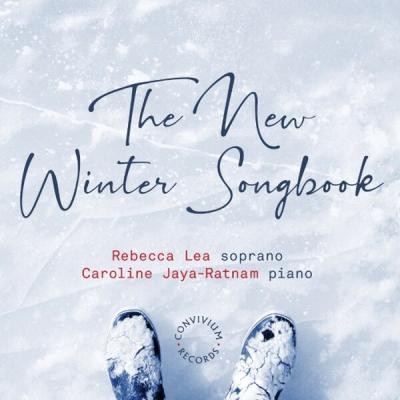
New Winter SongbookRebecca Lea (soprano), Caroline Jaya-Ratnam (piano) (Convivium)
This is a collection of 21 new songs by contemporary British composers, many specially commissioned for the project, responding to the winter season. Soprano Rebecca Lea, stalwart of the BBC Singers, I Fagiolini and EXAUDI (quite the list) and pianist Caroline Jaya-Ratnam, a leading collaborative pianist, have put together a sequence of music that celebrates a range of musical and poetic voices and has something for everyone, all performed with exceptional sensitivity and freshness.
It's impossible to mention all the songs, so I will pick out some favourites. Jamie W Hall, who is a fellow member of the BBC Singers, kicks the album off with the delicate and restrained “Dust of Snow”, setting a Robert Frost miniature with the utmost sensitivity. From a completely different world is Ben Nobuto’s moving “Sundowning”, depicting his father’s dementia-induced confusion through obsessive repetitions and near repetitions of fragments of dialogue from Frank Capra’s It’s a Wonderful Life. Lea’s performance is extraordinary and virtuosic, and highly impactful.
Eoghan Desmond’s “The Darkest Midnight”, one of the few overtly Christmassy pieces, has a classic simplicity and eloquence, and Helen Neeves (another BBC Singer) taps into an almost-Ravelian harmonic world in her “Cradle Song”, Jaya-Ratnam’s chord-weighting sublime. I liked James Weeks’s icy, minimalist “Natural State”, his own words evoking a landscape of “McDonald’s wrappers [and] vape cartons” with the chilliest of musical material, and Michael Betteridge also created his own text, workshopped with young people in West Yorkshire, setting it to light and skittering, joyful music. Anita Datta similarly workshopped her text for “Seasonal Clothing” and the music transmogrifies an Indian raga into contemporary art song textures.
These are my highlights but all the songs are worth hearing, and the performances utterly committed and convincing. The project was masterminded by Rebecca Lea from soup to nuts with love and dedication, and makes for a refreshing listen at a time of year of wall-to-wall Wham!, Mariah Carey, shepherds watching their flocks and herald angels singing. Bernard Hughes