

Stravinsky and Bartók both escaped Europe at the start of the second world war to live in the USA. For Stravinsky it was the start of 30 years of mostly happy exile, while Bartók was to survive for only five years. Works from their time in America featured in Valery Gergiev’s penultimate concert as principal conductor of the LSO last night.
Stravinsky’s neoclassical Symphony in C is not often heard in concert – it was the first time I had heard it live – and this performance was not a great advertisement for the piece. Written half in Europe, at a time when the composer’s wife, mother and daughter all died in quick succession, and completed in America on a visit that became permanent, it belongs to the only time in the composers long career when he seemed to be treading water compositionally. It is, whisper it, a bit dull, a shocking thing for so inventive a composer.
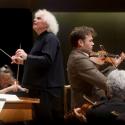
The beginning is tricky, but was an unforgivably messy start to the concert, and the orchestra took several minutes to settle down. The players were not helped by Gergiev at his most wilfully eccentric. Although using a baton, there was nothing really discernible as a beat, hand gestures all quivery flutters, eyes buried in the score. In places the sound was out of balance, the accompanimental figures in the second violins overwhelming the woodwind solos, even from the far side of the stage. Only the final chorale, all growling bassoons and glowing brass, came to life, tapping into the vein of the Symphonies of Wind Instruments of two decades earlier.
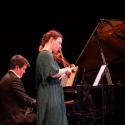
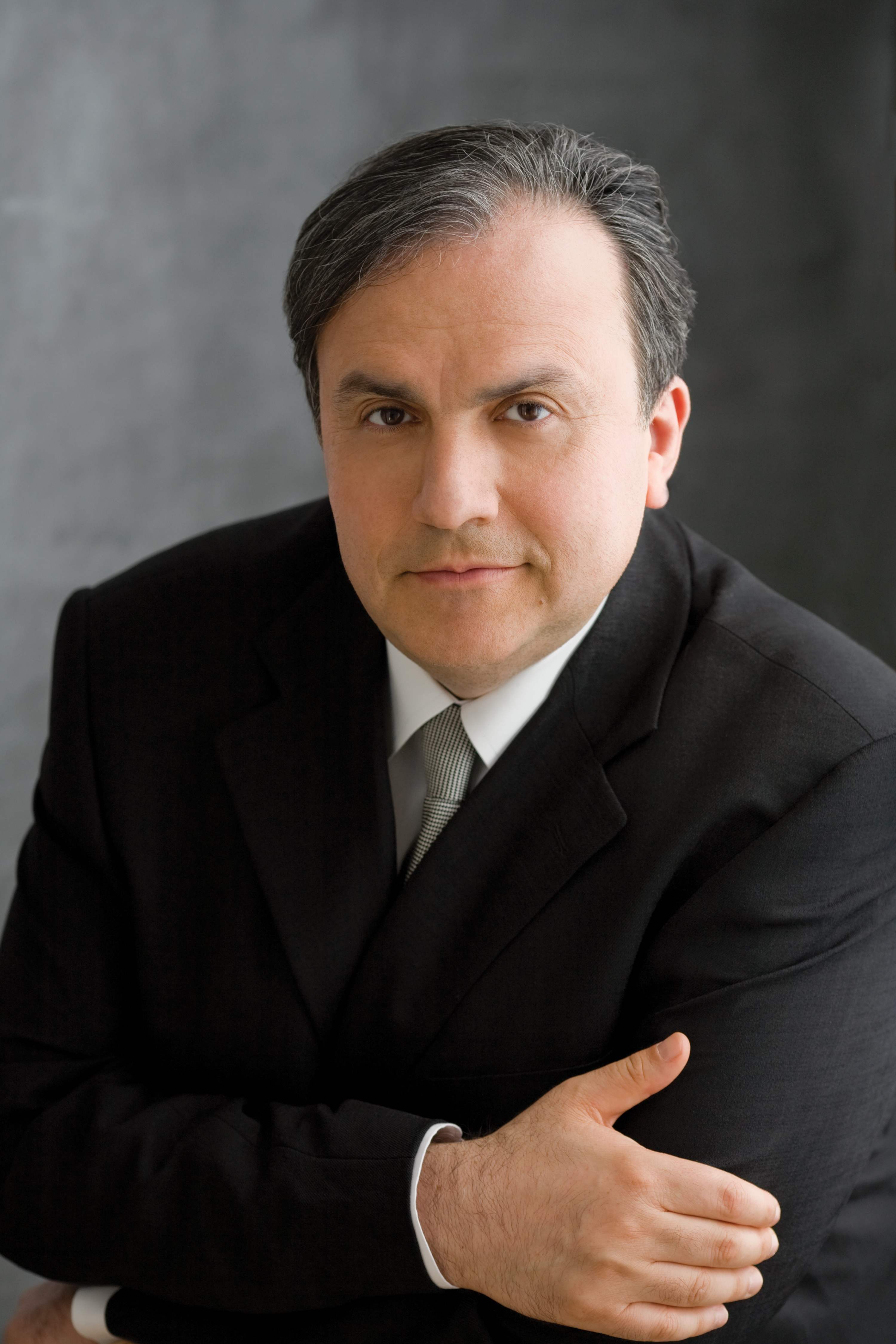 Much better was to follow. Bartók’s Piano Concerto no.3 was dispatched in no-nonsense fashion by Yefim Bronfman (pictured right), who found the right balance of classical clarity and sparky spontaneity. Gergiev had the sense to stay in the background, showing himself perfectly capable of providing a beat should the mood take him.
The third concerto was Bartók’s final completed piece, and cut from much more genial cloth than the crunches and clashes of his first two. Like Stravinsky’s symphony, Bartók’s concerto belies the unhappy circumstances of its composition, dying as he was of leukaemia. From the relaxed opening melody – and this time the orchestra got the beginning just right – to the bravura final sprint up the keyboard, Bronfman was in full control. The highlight was the middle movement, where he found the poetry in beautifully voiced chords.
The second half consisted of a vigorous and violent Rite of Spring, the best sort. Because of its familiarity it is possible to forget what a unique piece it is: Stravinsky never again wrote such complex music, or for such a large ensemble. Indeed he spent three decades from the 1920s on creating scores which were as polished and detached as the Rite is visceral and intuitive.
It is always possible to hear new things in the music, familiar as it is. On this occasion I was struck by brilliant work on the E-flat clarinet by Chi-Yu Mo, who brought terrific energy to his solos. With good sight of the bass section I noticed how varied and crucial their part is, whether giving sonorous underpinning to the "Spring Rounds" or flying with flashing virtuosity in the "Dance of the Earth".
Gergiev put his own stamp on the music, taking the fast sections very fast, at times staggeringly so: I can’t remember hearing such a rapid "Augurs of Spring". At the other end of the scale, the slow sections were slower than usual, less convincingly, but part of a clear interpretative scheme. Gergiev’s conducting was assertive and the result exhilarating, on an evening which saw him at his thrilling best and maddening worst.




Add comment