For me, New Zealand has always felt like both a centre and an edge. It is a place people travel to, rather than through. That sense of distance brings clarity and space to explore, but it can also mean that New Zealand’s creativity develops slightly out of view of the wider world.
At the World’s Edge (AWE) Festival grew out of that tension. We launched in 2021 in the Queenstown Lakes region of New Zealand’s South Island with a simple idea: to bring people together through the intimacy of chamber music, and to create a space where New Zealand artists and composers could be heard alongside international voices as part of the same creative conversation.
Five years on, that idea has had the opportunity to travel. This April marks the launch of AWE London, following our second festival in Chicago in March. These are not touring projects. They are attempts to build something local in very different places, shaped by the communities in each place while holding onto a shared ethos.
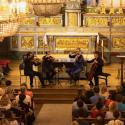
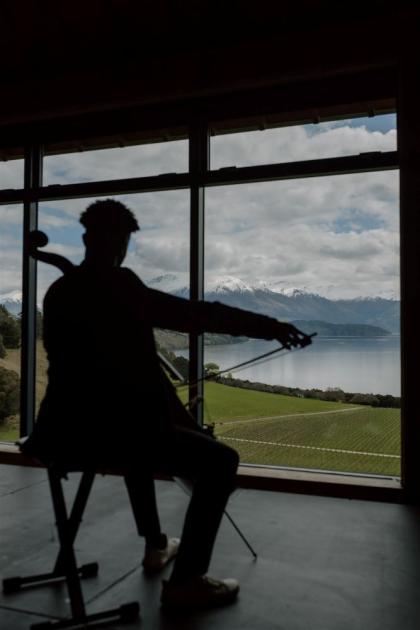
That ethos is rooted in how we experience music. Chamber music asks something particular of its audience. It is close, exposed, and shared. The atmosphere in the room is not only created by the performers, it is co-created by everyone present. That has led AWE towards spaces that heighten that sense of connection: a wine shed nestled among the mountains of Central Otago, a Māori meeting house at Chicago’s Field Museum, a café in central London with the city moving past the window behind the players.
Alongside that sits a commitment to programming that places New Zealand music in an international context, not as a statement, but as a normalisation. The distinction between “new” and “old” music is often one of familiarity. Every piece we now consider part of the canon was once unknown. By placing works side by side, connected through a shared theme unique to each AWE festival, we try to shift the focus away from recognition and towards listening.
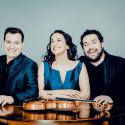
The festival also grew from a very personal starting point. I met AWE co-founder Justine Cormack while playing together in 2017. We are both violinists from New Zealand, but on different musical paths. After studying internationally, Justine built her career within New Zealand as a principal player and concertmaster in two of the country’s leading orchestras, before becoming a founding member of NZTrio, which continues to perform widely at home and abroad. I, on the other hand, left New Zealand at eight to study at the Yehudi Menuhin School in the UK, and have since built my career between Europe and North America while returning to New Zealand regularly. AWE emerged from a desire to bring our two perspectives together, and to create something that might bridge them.
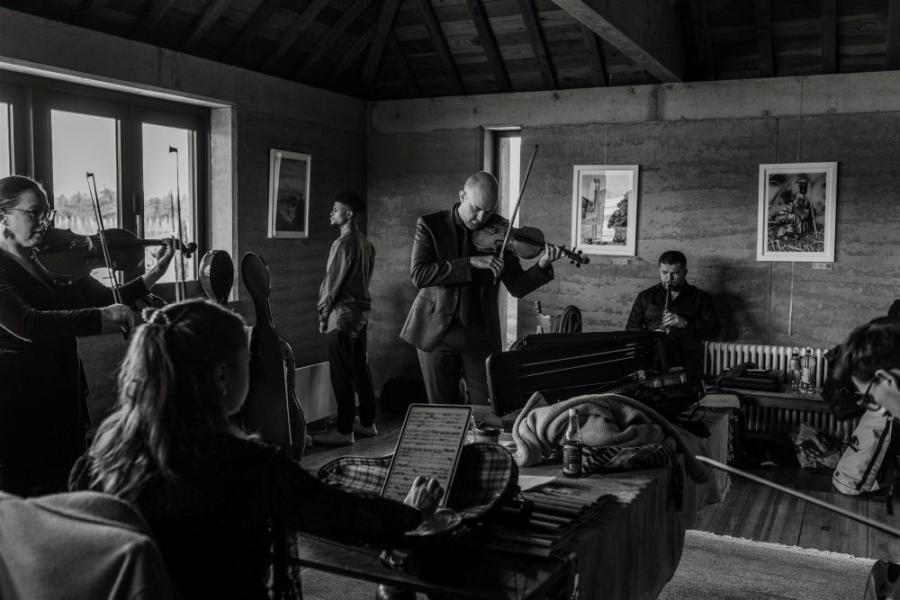
Education and mentorship were central to AWE’s mission from the outset. Each year, young New Zealand musicians and an emerging composer join the festival, working alongside established artists and the composer in residence as part of a multi-year mentorship pathway. Since 2023, through the AWE Pettman Scholarship, AWE has had the opportunity to support two musicians each year to spend time in the Northern Hemisphere, building connections and experience that can shape the next stage of their musical journeys and further study. Already, we are seeing these musicians continue their paths at institutions including the Yale School of Music, the Royal Academy of Music, the Royal College of Music, Guildhall, and the Hochschule für Musik Hannover.
Which brings us back to the question: why London?
In some ways, it is the natural opposite of where AWE began. London is one of the world’s great cultural centres, dense with history and activity. The opportunity here is not to arrive with a finished idea, but to contribute something distinct and to see how it resonates.
Our first London festival takes place from 20 to 24 April, in the days leading up to Anzac Day. Rather than focusing on military history, the programmes reflect on the values of Anzac that emerged through the First World War and have come to shape New Zealand and Australian identity on the world stage: courage, sacrifice, service, mateship, remembrance, and a particular kind of understated resilience.
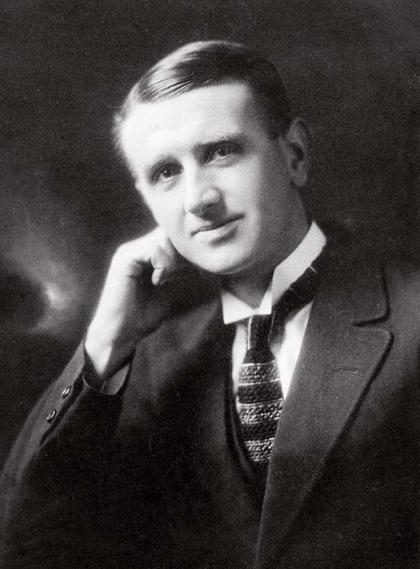
At the centre of the programme is the story of Alexander Aitken, a New Zealand soldier, violinist and mathematician. On his journey to the First World War, he was given a violin by a fellow soldier who had won it in a raffle onboard the troopship. Aitken carried it with him through Gallipoli and the Western Front, playing for those around him whenever he could. After being wounded at the Somme, he believed the instrument lost. However, it was returned to him 18 months later, after the war, signed by the many members of his company who had kept it safe.
For this festival, AWE has commissioned Aitken’s Violin from composer Sebastian Black, a UK and New Zealand dual national with family ties to Central Otago. The work reflects on the idea that we can never fully know what Aitken experienced on his journey, but that even an attempt to imagine it can shape how we listen.
There are other threads connecting New Zealand and London. One of AWE’s early emerging artists, cellist Jack Moyer, now studies here and joins us for a special appearance. His journey, from the first AWE festival in New Zealand to building his musical life in London, reflects the kind of connection AWE hopes to support over time, strengthening the creative exchange between New Zealand and the wider world.
It is still early days for AWE in London. The intention is not to replicate what we do elsewhere, but to build something that belongs here, through collaboration and over time.
If there is a single idea that runs through it, it is that the “edge” is not a fixed place. It is a point of encounter, between places, between people, and sometimes between what we already know and what we are hearing for the first time.