Nowhere welcomes Ukrainians (and Palestinians too, for that matter) more warmly than Ireland, and especially Dublin. A standing ovation twice over was guaranteed, and well deserved after their perfect performance of Beethoven's Third, "Eroica" Symphony. Otherwise, no special case needed to be made for these distinguished visitors beyond the perception and beauty of their playing under no-nonsense Artistic Director and Chief Conductor Volodymyr Sirenko.
Robert Beale reviewed their programme culminating in Beethoven's Seventh in Manchester. Here the two Delius nature-pictures they so cannily chose launched the evening, with a special resonance in bass underpinning on the very first chord (double basses placed left). Precious because I don't think I've ever heard either live in concert before.
Pianist Maria Pukhlianko didn't drop a stitch in an authoritative, old-style approach to Beethoven's Fifth, "Emperor" Concerto, crystal-clear throughout, as Robert observed, and imperious indeed in double octaves, though she might have established more of a rapport with her fellow players. Her encore was flashy but original - one of those madcap Beethoven Bagatelles which get all too few airings (in this case Op. 33 No.7).
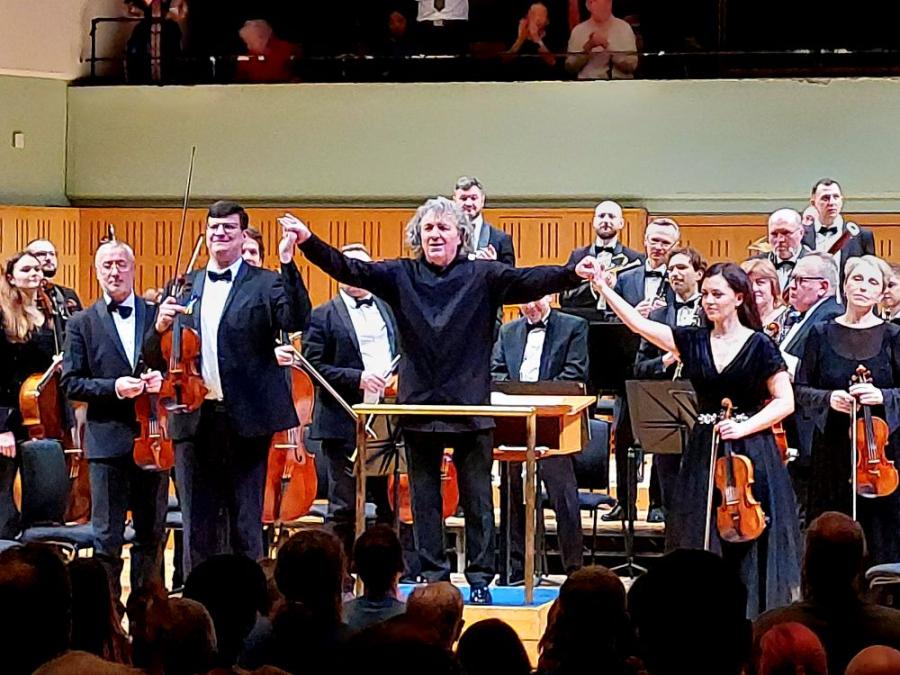
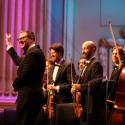
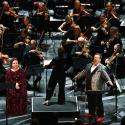
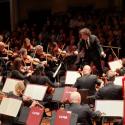
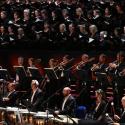
But what justifies this second review of the orchestra in a week is that "Eroica". Robert also observed that the relatively small string section - eight each of first and second violins at one end (Sirenko with concertmaster Maksym Grinchenko and leader of the second violins Viktoriia Hanapolska pictured above), four double-basses at the other - is ideal for this music; it makes for clarity in textures and phrasing, both of which Sirenko managed ideally.
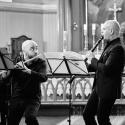
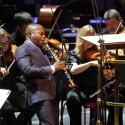
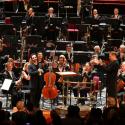
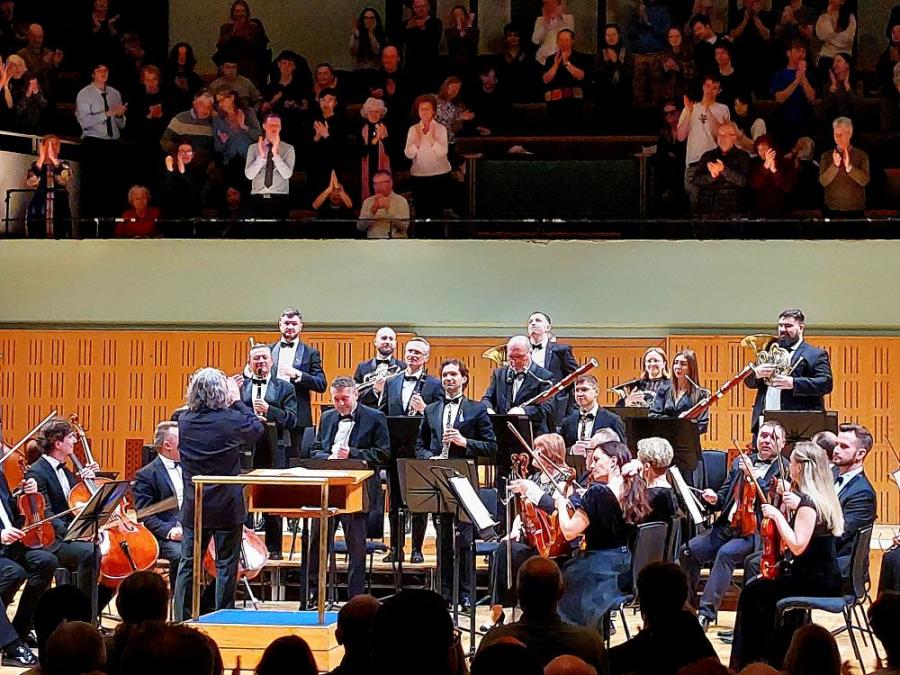
Quiet dynamics were especially wonderful, above all when the first violins softly provided a Pastoralesque descant to the main first-movement melody in its coda, and the strings treated the funeral-march theme to a Bach/Mozart fugue. Climaxes had all the more full force as a result, capped by clarion trumpets. The solo star was oboist Yurii Litun, a keen observer when not playing, possessed of a silvery sound which cut through at all times. The horns managed their tricky hunting antics in the Scherzo's trio perfectly, and an ethereal flute graced one of the finale's lighter variations (Sirenko congratulating wind and brass pictured below).
"It's up and down more times than during Mass," commented my companion as we sat back down twice for two very welcome encores - Ukrainian, of course. The first was the concise and sprightly finale from the other work on some of the programmes, Berezovsky's C major Symphony of 1770, the second Mykola Lysenko's valse-triste Elegy, a gentle and lovely end to the concert to mirror the Delius at the start.