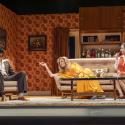
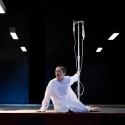
This is the third Emlyn Williams piece to be presented here in a decade: The Druid's Rest in 2009 was followed by the enormous success of Accolade, directed by Blanche McIntyre, two years later.
If it's a truism that neglected plays may well have been neglected for good reason, it is also true that forgotten work can chime unexpectedly with current taste or reveal new elements in the output of a writer previously dismissed as out-of-date. Terence Rattigan's reinstatement in the canon is the most obvious example, but the Finborough has made a reputation for rediscovering the work of writers no longer given much space elsewhere. Emlyn Williams - known mainly for his psychological thriller Night Must Fall and the autobiographical The Corn is Green - is one such.
 The Wind of Heaven, unseen in London for nearly 75 years, presents a greater challenge than Accolade for a modern audience. While hypocrisy in high places will always be of current concern, a Messianic parable set in mid-Victorian Wales has less obvious resonance. Writing in the final weeks of the Second World War, Williams chose to set the action at a distance, at the close of another war, the Crimean, in 1856. The first audience no doubt nevertheless recognised the sense of dislocation and loss and the need for new beginnings caused by a traumatic national upheaval. In 2019, a religious Nineteenth Century rural community seems remote indeed, so it is to the credit of director Will Maynard and his cast that the sincerity of the characters comes through intact.
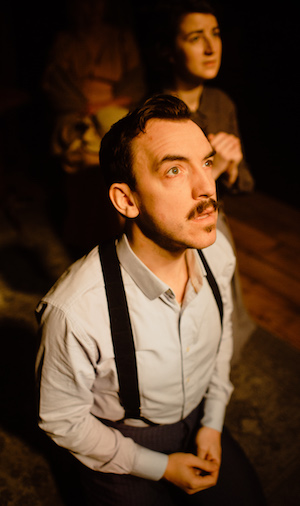
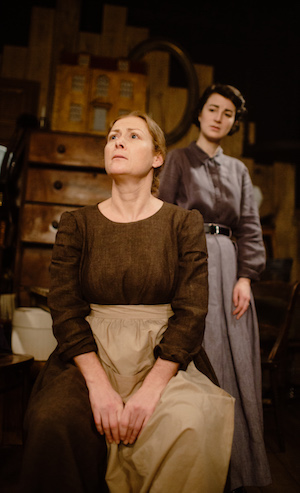
Ambrose (played with panache by Jamie Wilkes, pictured above, left) is a flashy circus-owner from Birmingham who began life as a teacher. He arrives in the North Wales village of Blestin, where he grew up, at the mansion home of Dilys Parr (a fervent Rhiannon Neads), whose life has become meaningless after the loss of her husband in the recent war. The entire village is in mourning, all its children having drowned in a boating accident some years ago. No-one in the community any longer sings or worships. On the look out for a new act to bring in the punters, Ambrose has heard rumours of a "dyn bach", a small man who seems able to cause music as he walks. Then Gwyn the son of Dilys's maid, Bet (given a mixture of maternal warmth and wonder by Louise Breckon-Richards, pictured below, right), suddenly seems to match the description, to be no less, indeed, than the returning Jesus. The "small man" is a 13-year-old boy who apparently performs miracles.
 Well, it is the correct season for the coming of God among Christians, but this isn't simply a Sunday School tale. While the religious theme is not shirked - Ambrose even hears a cock crow thrice when he temporarily abandons his loyalty to Gwyn after being tempted back to his old life by his business-like lover - this is also a parable about people being true to themselves, learning to take, literally and metaphorically, a leap of faith in the future. Dilys and Ambrose are inspired to make selfless plans and the whole village begins to live again. The boy has no lines and is as much an expression of others' needs as a person in his own right. Ambrose's employee, Pitter (authoritative David Whitworth), a clear-sighted observer who remains coolly rational, offers dispassionate explanations for the miracles and sums up what has happened succinctly: if those with new purpose believe Gwyn is the Messiah, they will no doubt do good work. Others may be better informed but cannot share that satisfaction.
Ambrose was originally played by Williams himself: he too began as a teacher and he is perhaps commenting wryly on his own glitzy showbiz success in the conflicted agonising of the charismatic circus proprietor who tries to deny his Welsh origins.
The Finborough's tiny space could not possibly accommodate the elaborate living room described in the text, but the abstract set by Ceci Calf - little more than a pile of furniture and a window on the world outside - suffices. The costumes, by Isobel Pellow, seem closer to Edwardian than mid-Victorian but are true to character. There is quality Welsh singing, of course.
I doubt this production will have the same success as Accolade, but it is a worthwhile discovery and a welcome seasonal antidote to the slew of pantos.