

Over the past few years, the National Theatre has specialised in trilogies. End is the final play in both playwright David Eldridge’s outstanding trilogy and in this venue’s former director Rufus Norris’s Dorfman programme. Like Roy Williams and Clint Dyer’s Death of England trilogy, Eldridge’s cycle – Beginning (2017) and Middle (2022) – says as much about the state of the nation as it does about the personal lives of its characters. Starring Saskia Reeves (familiar from Slow Horses) and Clive Owen, this two-hander explores the emotional landscape of a couple making plays for a final parting.
On a bright sunny day in June 2016, 59-year-olds Alfie and Julie are waiting for the arrival of their daughter Annabelle at their Harringay home in London. It promises to be a tense meeting because Alfie, who has been suffering from cancer for many months, now has had enough and wants to stop treatment. He just wants to die. He also has some very definite, and, to Julie, quite upsetting ideas about how to live out his final days. As he insists, “I want a good end.” But what’s good for him might not be equally appealing to his wife and daughter.
Eldridge deftly sketches in this couple’s Brentwood Park Essex origins, and the story of their relationship. Alfie has been a DJ and music-maker since his teens while Julie has given up her teaching job to become an extremely successful crime novelist, so their memories are infused with the pounding beat of acid house and its derivatives, which Alfie now revisits as he plans his funeral playlist. At the same time, Julie is thinking about turning their lives into a semi-autobiographical literary novel, thus contesting the publishing industry’s pigeonholing of her as just a middle-brow bestseller.
As they wait for their daughter, they not only play music from their Ecstasy-addled youth, but also discuss death and how to manage the last chapter of their lives together. During some fraught moments, we learn that they never bothered to get married, and that they both have secrets that slowly peek out of the cupboards of their very well-appointed house, and there’s a constant tension between their obvious love for each other and the typical frustrations and antagonisms that affect most long-standing relationships. For anyone over 40 the tone will feel extremely familiar.
Despite some revelations, one of which is crucial to the decisions Alfie will take, this real-time play, which is about 95 minutes long, is less about full-blown drama and more about meditation, about thinking through the reality of death, dying and leave-taking. Both of them act out, through dance moves and slang expressions, certain kinds of rosy memories of a deeply shared past. At the same time, their unexpressed feelings and psychological evasions also play out in a quiet kind of anguish. It’s the kind of play that makes you think not only about this pair, but also about yourself and your loved ones.
Eldridge writes good dialogue and his account of Alfie and Julie’s awkward musings on mortality, and the profound emotional echoes of this subject, is compelling and moving even if you miss the drama of a full-blown showdown. Instead, the two protagonists are wary in their movements around the stage, saying one thing (“I love you”) while also signalling “I’m not sure.” Their talk goes between everyday offers of a cup of tea and deeper matter about the meaning of their lives, and of their lives together. At one point, they have sex, awkwardly, and, in Alfie’s mind, maybe for “the last time”, a very perceptive view of masculine obsessions.
The play paints a picture not only of a wealthy middle-class home, but also of a nation which has not yet been hit by Brexit and COVID. It has a nostalgic edge in which it seems perfectly cool to dream of youth and of house music parties and clubs, humming tunes just as the ship of state heads towards the iceberg crash that defines our lives in the 2020s. There’s a kind of beautifully golden haze around shared memories, especially when these involve – as the set also illustrates – both football teams (West Ham) and acid-house subcultures. Yes, this is a ruminative piece full of feeling.
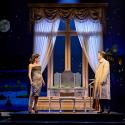
The playwright’s meticulous writing is well served by director Rachel O’Riordan and designer Gary McCann, who creates a wonderfully detailed kitchen-cum-living-room set. The sense of anguish and painful longing that both characters experience is superbly conveyed by Reeves and Owen, who excel in their clarity in showing happy moments as well as sad reflections on a life ending too soon. Both embody the feeling that they have left many things unsaid, or only partially spoken, and now must finally talk, however hard an ask that is. Such perfect performances prove that this is an outstanding way of finishing a trilogy which encompasses all of life.










Add comment