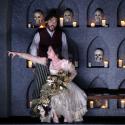
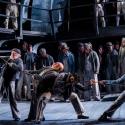
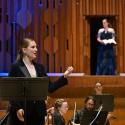
Depression, with or without psychotic episodes, is a rare subject for drama or music theatre - and with good reason: the sheer unrelenting monotony of anguish and self-absorption is hard to reproduce within a concentrated time-span. So we still stand in awe of Sarah Kane for the way she managed, months before her suicide, to wring from the depths and write in blood such a kaleidoscopic range of despair and black vision in 4.48 Psychosis; in awe, too, of composer Philip Venables, for finding an equal variety, and an even greater eclecticism, in the musical voices to tell a drama of pain that is anything but general.
Masterpiece or not, 4.48 Psychosis the opera is a very rare case of the music reflecting what could be an overpowering text at every point. Kane's words by themselves will always be the richer option because of their total authenticity, even in the occasional bathos and banality. Some of Venables' sequences sound a bit more generic - the slow-burn meshing of his six female voices, for instance, brilliant idea though it was to have them represent aspects of the undoubted protagonist, sufferer, patient, call her what you will - the utterly convincing Gweneth-Ann Rand (pictured above), as before. Others add a layer to Kane's writing and can be hair-raising, not least the fast passages involving numbers and lists; difficult to catch all the amplified words here when they're not flashed up as text on the back wall, but the fizzing textures are the thing, with bending string lines and shrieking woodwind (flute/piccolo and three saxophones), Birtwistle-style, from the hard-working CHROMA under Richard Baker.
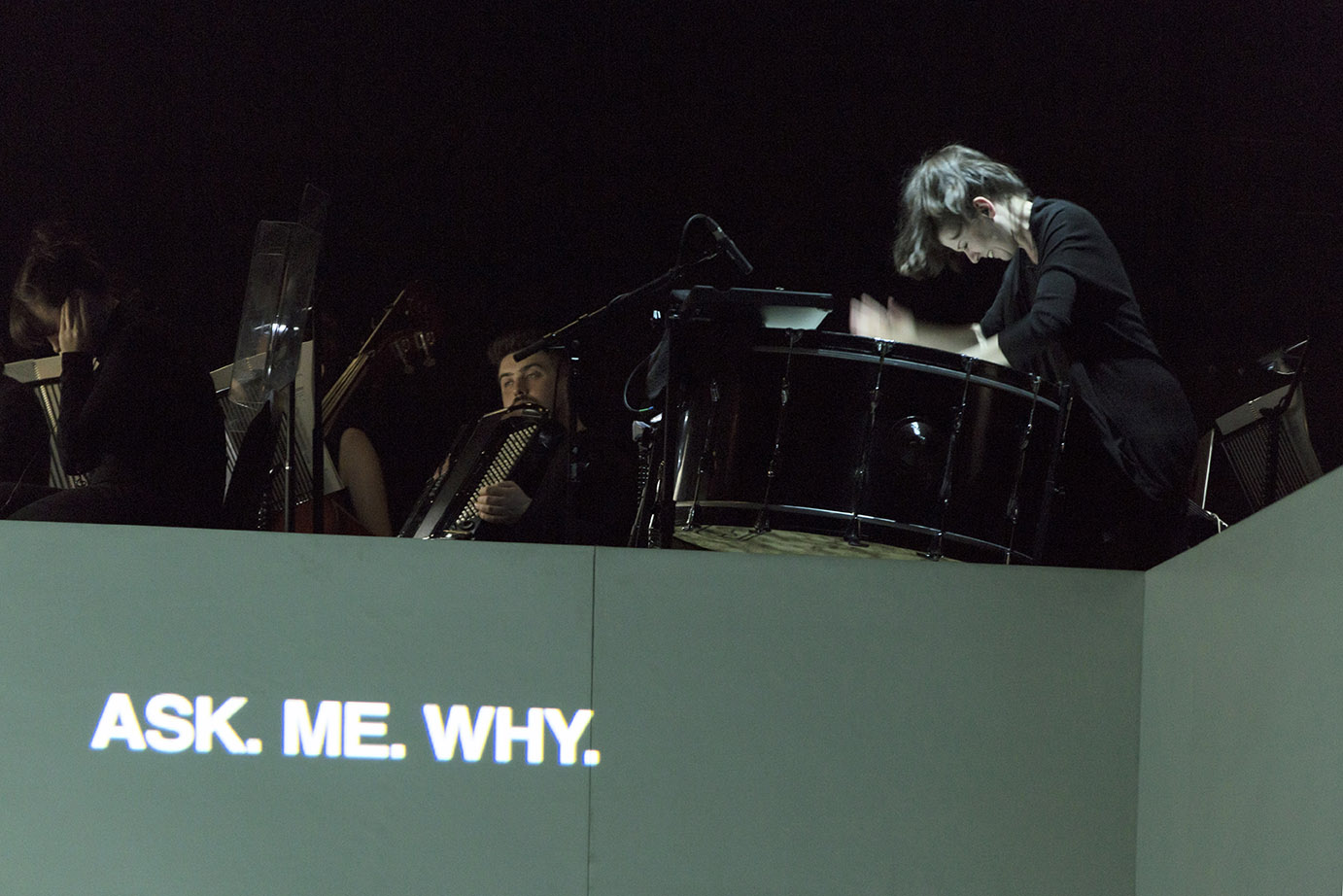
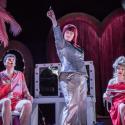
The visionary hour around 4.48am inspires music for a black-and-white mass. Most riveting of all is the dialogue between (we assume) patient and psychiatrist which launches the work - as a monologue since one of the two remains silent - and is, perhaps, its only developmental strand. CHROMA's two percussionists, Louise Goodwin (pictured above), beat out the speech-rhythms on bass drum and other hard-hitting instruments against dribbling recorded muzak while the text is seen below. It's as if the protagonist is under water in her isolation, and barely hearing properly; towards the end, mezzo Lucy Schaufer begins to articulate the psychiatrist's words. It's moving; there is professional help here, but the main character (Kane, surely) is beyond it.
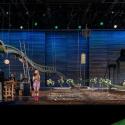
It's not always easy to work out who's singing what; given the non-directional miking and the darker lighting in D.M. Wood's palette on Hannah Clark's set, but Susanna Hurrell excels as a more companionable self and there's fine ensemble work from newcomers to the production - I presume, since the characters' names seem to be those of the original singers - Lucy Hall, Samantha Price and Rachel Lloyd. Director Ted Huffman overcomes the problem of a specific location for a totally unspecific text - a room with a glass door, table and chairs - by drawing variety parallel to Kane and Venables from his team and video designer Pierre Martin. Not easy listening and watching, then, but decidedly a confirmation of a classic.