

After Thursday night’s concert I celebrated the Proms’ exploration of unfamiliar repertoire via the CBSO. The following evening saw the festival diving back into mainstream repertoire – as it must also do – conducted by the CBSO’s previous music director. But although Bruckner’s Eighth Symphony is now central to the canon, it wasn’t always so: Henry Wood only ever programmed Bruckner once during his entire reign at the Proms, writing later in his autobiography “the public would not have it then; neither will they now.” Fast-forward 80 years and the public very much will have it, as evidenced by the full hall and enthusiastic reception.
Before we got to Bruckner we had some Bach organ music, played on the Albert Hall’s mighty instrument by the Leipzig Gewandhaus’s resident organist (since 1984) Michael Schönheit (pictured below). He presented five pieces, making the half-hour first half into a mini-recital. It is somewhat strange, in the age when symphony orchestras don’t play Bach any more, leaving it to leaner, lighter period instrument groups, to hear the organ music belted out of such a massive beast.
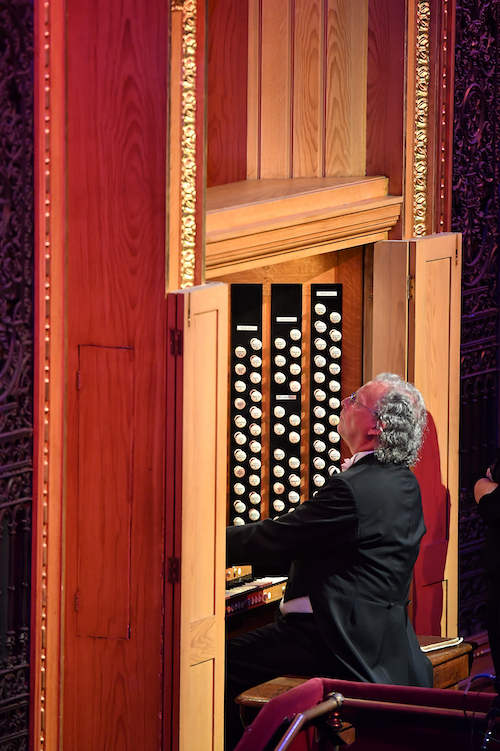 Where it worked was in the declaratory Fantasia BWV542 that opened and the giant Fugue in E flat BWV552 that closed. Where it was less successful was in the arrangements of the cantata movements known best in this country as “Jesu, Joy of Man’s Desiring” and “Sleepers, Wake!”, which felt too heavy. Also, the rhythmic unevenness in the flowing lines of both, presumably deliberate, made the music less lissom and graceful, and I missed the nuance of the originals. But for all the peculiar untheatricality of the audience gazing at an empty stage, with only a bobbing head above it for people to look at, Michael Schönheit can probably lay claim to being the only performer this season to have definitely been heard by everyone in the hall.
The connection between the first and second half – beyond Bach’s connection to Leipzig – is that Bruckner was a virtuoso organist and indeed, in 1871, gave a recital series at the newly opened Albert Hall. His music shares Bach’s seriousness of intent and sense of the numinous, although in the expansiveness of his musical development he is in a different world from the quicksilver Bach.
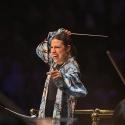
Bruckner’s Eighth Symphony is massive, it goes without saying. It is a feat of concentration for players and audience alike, and for a conductor a test of large-scale control. The deliberate pace at which events unfurl – and at times I felt the swearing-in-a-cathedral urge to shout “Get on with it!” – means the music needs to get out of a low gear when it can. Here I felt Andris Nelson’s slow (in the case of the second movement) and very slow (in the case of the third) tempos undermined the forward momentum of the piece, and kept it earthbound. The third movement sounded ravishing, but at over 27 minutes was just indulgent. 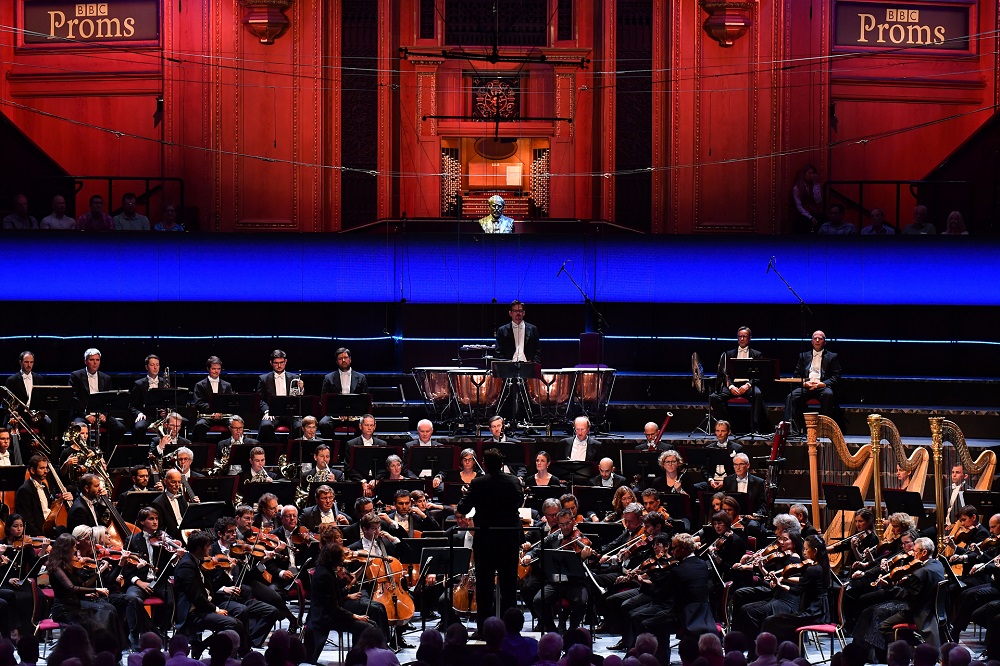 The Leipzig Gewandhaus orchestra were (a rogue oboe solo aside) excellent, making a beautiful sound. The brass in particular were very tight, augmented by Wagner tubas, and the biggest actual tuba I’ve ever seen, which rumbled delightfully. The strings are the workhorses of the piece and sounded particularly good in low register, warm and welcoming. Perhaps the biggest star was timpanist Marek Stefula, revelling in an exciting part, at one point lifting himself from his seat with his own exertions. Andris Nelsons was a leonine presence, crouching, prowling and, at the big moments, exalting and even, once, airborne. Unlike the music which, for all the bluster of the final C major apotheosis, never quite left the ground.



Add comment