

"How long is Wagner’s Ring Cycle?" That’s not the opening to a joke, it’s a genuine question asked by a friend who I’d met up with before heading to Edinburgh’s Usher Hall to hear the Royal Scottish National Orchestra perform "Wagner’s Ring Symphony". His question is one I really don’t know how to answer: technically it’s 15 hours, but does a cycle ever really end? Is a piece of string as long as the ties that bind? How long would it take to wrap up the whole world?
Fortunately, I didn’t really have to. "They’re not doing the entire thing!" I said. ‘I’d be in that hall until next week! The Ring Cycle is a series of four operas, each of them very long in themselves, with very convoluted plotlines. This symphony is a kind of truncated version of that cycle, like a flowing medley of some of the main themes and motifs from all four operas, and only with orchestra, there’s no singing.’
"Right, gotcha. Like a radio edit."
A radio edit. That’s far more succinct. Thanks, Colin, I’ll take that one for free. Henk De Vlieger’s 1991 arrangement The Ring, An Orchestral Adventure, is a 40-minute fairground ride through some of Wagner’s finest music that features in his epic work: the work of a lifetime. The member of the orchestra who introduced the piece did so partly by saying that "a little bit of Wagner is better than no Wagner", though I’m not really sure that I agree.
Out of sheer coincidence, the Royal Ballet and Opera live-streamed their production of Die Walküre, the cycle’s second opera, earlier that week. I’d therefore happened to have seen that entire opera just a couple of days previously in the cinema across the road. To experience the full gamut of not just the music but the depth of human emotion and the intricacies of our relationships, set out as the composer intended, is a truly powerful thing indeed. The idea of a ‘radio edit’ of such a masterpiece is one which doesn’t really sit well with me.
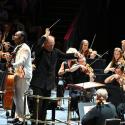
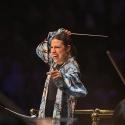
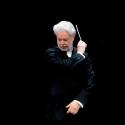
But that’s just me. The orchestra certainly cannot be faulted for their execution of the piece. The nine-person strong horn section (which included four Wagner tubas, so points for that) delivered a rousing, robust tone and the orchestra as a whole fully brought the drama to the fore under the baton of Thomas Søndergård. I hope very much that any audience member not acquainted with the full cycle will be inspired to seek it out. The RSNO certainly gave it a very good advert.
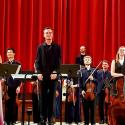
The concert’s first half was flavoured by early music. The Dunedin Consort opened with an elegant rendition of Handel’s Water Music Suite no 3, before joining forces with the RSNO for the world premiere of Neil Tòmas Smith’s Hidden Polyphony. This was a commission from both groups and is inspired by the use of polyphony in early Scottish choral music. As Smith argues in his programme note, it’s very likely that polyphony existed in Scotland pre-1500, but due to both accidental and deliberate destruction of source, we cannot know exactly how it sounded. His musical speculations on this manifest in what’s a profound piece of music from a composer who looks to have a very exciting career in front of him. The music’s dissonance still manages to be harmonically satisfying, and the off-stage ‘hidden’ choir was particularly effective. For a soprano whose benchmark is always amazingly high, soloist Anna Dennis surpassed even herself, giving a magnetic performance. Every musician involved with this piece seemed to truly care; a strong mark of a fruitful collaboration, as well as just really good music-making.




Add comment