

Coinciding with Mothers' Day, and a week after International Women’s Day, Manchester Camerata gave this fascinating window into the world of lesser-known music by British women composers.
Why such an education is needed is a good question. Are some of these pieces (which are to be recorded for CD by John Andrews, soloists Alexandra Dariescu, Alex Mitchell and Rachael Clegg and the Camerata strings this week) in the nature of what a former, male and very Lancastrian, member of the Hallé brass section once defined for me as “justly neglected masterpieces”?
Or should we go looking for hidden gems wherever women composers are concerned? Even in the relatively recent past they had a harder time than their male counterparts, either because of prejudice, or the expectations put on motherhood (or just matrimony) by the society of their time. The works in question on this occasion were all written in the 20th century – most of them in its middle years – and, though some had notable first performances, a factor working against them in the 1940s to early 1960s may have been the change of tack taken by the Cheltenham Festival after John Barbirolli lost charge of it and the change of taste at the BBC once William Glock got hold of it.
None of them was serialist or remotely like it. Even Elizabeth Maconchy’s style is hardly any more stretching of tonality than Bartók’s: Ruth Gipps’ is rather influenced by Vaughan Williams – and the music of Doreen Carwithen (aka Mrs Mary Alwyn, taking the surname of her lover and eventually husband, William) is eclectic in its influences but resolutely tonal.
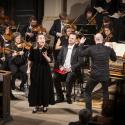
The concert began with a world premiere – of a piece written 113 years ago, Morfydd Owen’s Beatific Sea. Owen was a precociously brilliant musician who died aged only 26, and it’s a tantalising indicator of what might have been. A brief meditation on part of a poem by Thomas Campbell, it’s strikingly concise and shifts quickly from richly harmonised chorale-like writing for the string orchestra (with chromatic tweaks), through brief moments of contrasting articulation and rhythmic interest before a return to its opening mood. Caroline Pether led the Camerata players in a determined presentation of its idiom.
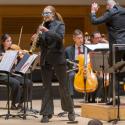
Soloist in Ruth Gipps’ Jane Grey’s Fantasy for Viola and String Orchestra, written in 1940, was Camerata principal Alex Mitchell. VW-ish it certainly is at the beginning, with a modally-shaped melody over pizzicato string chords (echoes of the Fantasia on Greensleeves?), but there is constant variety in its exploration of what string orchestral accompaniment can be, including another “period” evocation of our briefest sovereign’s reign through a drum-like figure for the cellos, and a threatening rumble before the soloist’s increasingly anxious, and arrestingly played, solo song. Its sorrowful, soft coda ends its time almost as abruptly as the Privy Council ended Jane’s.
Elizabeth Maconchy’s Life Story, for string orchestra, from 1985, was one of her last works (another Vaughan Williams pupil, she was one woman who made it to the heart of the musical establishment, being chair of the Composers Guild of Great Britain and president of the Society for the Promotion of New Music, and ultimately a Dame). Whether its four movements are meant to have any autobiographical significance is not obvious, as they function as a miniature symphony – with arguments that embody some stridency unresolved by the end of the opening movement, a “Scherzo”, jogging at first, that visits a variety of ideas without settling on any of them, a slow movement contrasting polyphony with repeatedly stabbing chords before fading away, and a finale that begins with a bold cello theme, busy figurations and episodic ideas, a recall of the stabbing chords and (at last) an assertive summation.
By way of contrast and also preparation for the concert’s second part, one male’s music was represented: William Alwyn’s Autumn Legend of 1955 (premiered at Cheltenham by Barbirolli). It’s for solo cor anglais and strings and was played with fluency and charm by Camerata principal Rachael Clegg. Described at the time as being like “L'Après-midi d'un Cygne” (presumably because of the Swan of Tuonela reminiscence in its scoring), you can see why people found it rather derivative, including the Delius-style slithery chromatic harmony that pops up – but it’s undoubtedly restful. It was written after Alwyn was smitten with Doreen Carwithen, apparently – she became his mistress and later his wife, so read into that what you will.
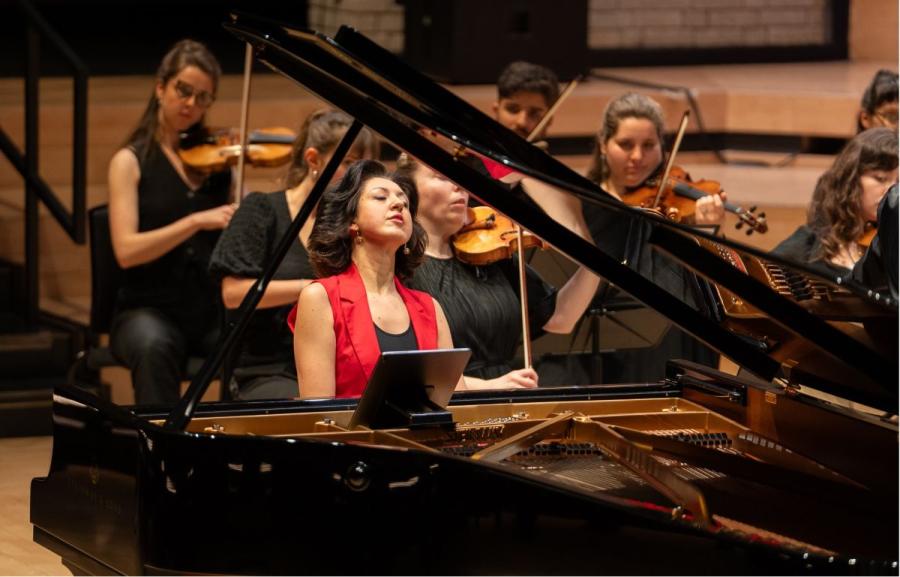
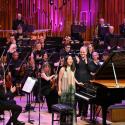
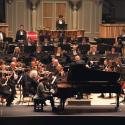
So what a contrast to hear the work of Mrs Alwyn afterwards – or, to credit her original name, that of Doreen Carwithen. The concert was titled One Damn Thing After Another, in homage to a piece of hers that was not in fact played. But her Piano Concerto, written in 1948 and premiered at the London Proms, was – and was probably the most deserving of the epithet of “neglected masterpiece” of the works in this programme. It certainly sounded that way in the hands of Alexandra Dariescu (pictured above) Royal Northern College of Music alumna (John Andrews and the other soloists are also RNCM-trained), effervescent personality and superlative musician. It’s full of variety and energy, assuredly written for both piano and orchestra, with big soulful melodies and lots of fun. Dariescu’s lucid and bell-tone is just right for this music, and the double octaves cascade effortlessly from her fingers.
The slow movement offers a solo violin time in the limelight (eloquently played by Caroline Pether) and has a very beautiful ending; the finale gives both piano and strings some forceful gestures and provides a softer, slower passage that proves capable of being amplified to something very grand, after which the piano gets its quasi-cadenza spot, and the whole thing is summed up with one of the most emphatic dominant pedal-note perorations you will ever hear and a final, climatic, tonic.


Comments
Morfydd Owen, 'Beatific Sea'
Thank you for your review of this concert but unfortunately, Morfydd Owen’s ‘Beatific Sea’ was not a world premiere because two performances are known to have taken place in 1913.
The composer did not conceive her score as a work for string orchestra either. Morfydd Owen’s composition sets a poem by Thomas Campbell for mezzo-soprano soloist and full orchestra (3222 4231 2 harps, timpani and divisi strings) so should not have been programmed or performed using the string parts alone.
Add comment