Theseus was a tablet-carrying dictator, Lysander a sweet-faced asthmatic, and Peter Quince rechristened Mistress Quince in the agreeably unexpected presence of Elaine Paige: those were among the innovations of Russell T Davies's larky reworking of what must these days be Shakespeare's most frequently performed play. (A third London production in as many weeks starts performances May 31 at Southwark Playhouse.)
On paper, such textual intervention sounds like so much jiggery-pokery, and I could have done without the action-movie theatrics that at one point saw an imperiled Hermia (Prisca Bakare, pictured centre below) being rescued from rapids that might have given Meryl Streep pause in The River Wild.
But on its own terms, Davies's extensively filleted, occasionally re-ordered version of A Midsummer Night's Dream more than delivered the goods, its capacious heart of a piece with the director Emma Rice's current (and delightful) Globe take on the same play. That one, too, features not a few same-sex encounters along the way. Party on, as both versions clearly intend to say.
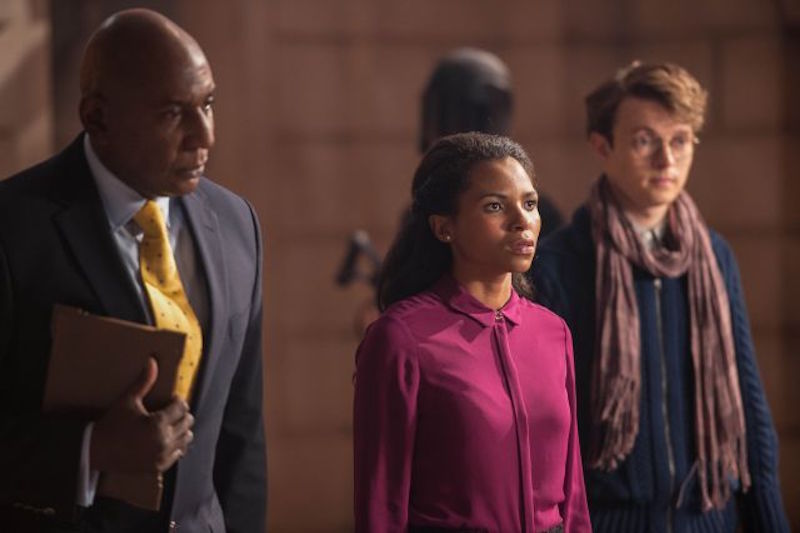 The fact remains that the Dream among all Shakespeare's comedies possesses a resilient energy that can accommodate pretty well any and all comers, especially when those interpreters are as attuned to the text's giddy sense of relief and release as is the case here. After all, if the world of the court weren't so fearsome, there would be scant reason for the lovers to beat a hasty woodlands retreat in favour of the "widow aunt" referenced early on by Lysander – a character who remains one of the abiding red herrings in all of Shakespeare, given that we never hear mention of her again.
From a beginning that saw John Hannah's thin-lipped, scowling Theseus in fierce possession of Eleanor Matsuura's bound-and-gagged (!) Hippolyta, one felt anew the need for a third option to the choice between arranged marriage and death proffered by Hermia's father, Egeus. At which point, cue the four lovers' entry into the woods – hello Stephen Sondheim, even if Murray Gold's score here suggested faux-John Williams – and toward the realm of Nonso Anozie's horned Oberon and his omnisexual glamazon queen, Titania (Maxine Peake).
As for Hiran Abeysekera's Puck – a good-time sprite if ever there was one – this celebrated sidekick-scamp brought with him vestiges of this actor's 2015 run in Peter Pan via the unbilled Tinkerbell offered up by director David Kerr, whose penchant for light beams and multiple effects allowed the denizens of the supernatural to appear and vanish at will.
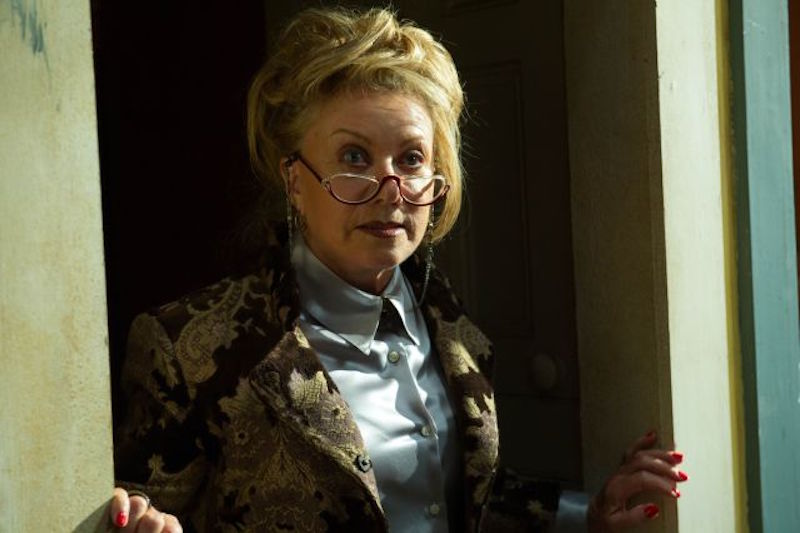 More traditionally served were the mechanicals, headed this time out by an endearingly exasperated Paige (pictured right) in a notable change of pace for the musical theatre diva. Whether forcibly correcting the mispronunciation of Ninus's tomb or cheering on her am-dram charges like some sort of displaced Momma Rose, Paige at Quince's most wide-eyed displayed an uncanny resemblance to Hillary Clinton: separated-at-birth completists should take note. Props, too, to Matt Lucas's Bottom, a smooth-cheeked chatterbox of unusual sweetness; indeed, it made sense for Peake's dusky-voiced Titania to give a final, fleeting nod in the direction of her onetime bedmate (and ass), as if to suggest that some carnal memories never die.
The greatest departure from the text came with a finish that contrasted the mechanicals' staged deaths of Pyramus and Thisbe (all credit among their starry ranks to the deadpan contributions from Richard Wilson and Bernard Cribbins) with a highly convenient heart attack that felled Hannah's arms-happy Theseus in his despotic prime – a tyrant elsewhere seen putting an X through the faces of those marked for elimination on his iPad.
Theseus's absence allowed the play's disparate communities to come together in an inclusive spirit of rebellion-turned-revelry that fed this adaptation's vaunted and entirely plausible closing lesbian kiss. And to those viewers who may have been offended, Shakespeare as ever had the last word via Abeysekera's glinting-eyed Puck: "If you pardon, we will mend". And if not, fret not – there's bound to be another Midsummer Night's Dream any minute.