The Art of David Munrow (Warner Classics)
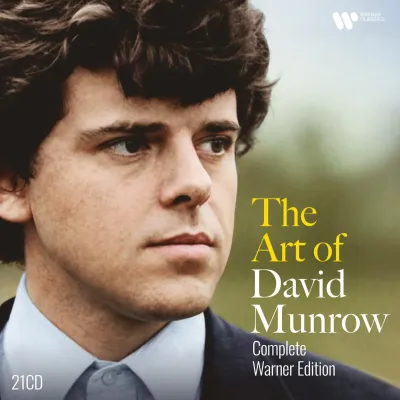
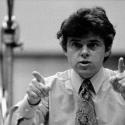
An online search tells me that the most popular gap year activity (for those who can afford it) is backpacking, the most popular destinations being Australia, New Zealand and Thailand. Not for the 18-year-old David Munrow, who deferred a Cambridge English degree by signing up with VSO in 1960 and heading to Lima to teach. Already a recorder player and bassoonist, he spent his Peruvian Christmas exploring, travelling deep into the Andes and encountering indigenous musical traditions. In his words, “I came across instruments that had been brought over by the conquistadores and adopted by the Indians. And they’d gone on making them in the same way that flutes and recorders and harps were made in the Renaissance.” Munrow brought a selection of instruments back home with him, one of the catalysts for his increasing interest in what we now call ‘early music’.
After graduating, Munrow was hired as a bassoonist by the RSC, the company’s music director increasingly keen to exploit his new recruit’s growing collection of curtals, crumhorns and shawms. Munrow’s Early Music Consort, a flexible ensemble formed in 1967, brought him wider attention, giving frequent live performances and recording for BBC Radio 3. That station hiring him to present Pied Piper, a music-appreciation programme aimed at young listeners airing four times a week, Munrow fronting over 600 episodes. His was an extraordinary career, and this wonderful box set contains the LPs recorded for EMI between 1971 and 1975, plus 1969’s The Pleasure of the Royal Courts, first released on the Nonesuch label.
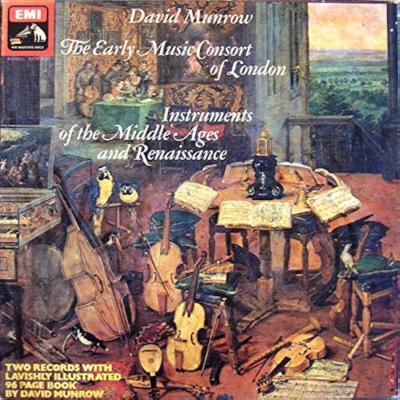
It’s difficult to imagine how otherworldly these records would have sounded when released, discs like The Pleasures of the Royal Courts containing some genuinely astonishing music. Sample Adam de Halle’s stark “Tant con je vivrai”, or the anonymous “Souvent souspire mon cuer”, both 13th century bangers, the latter number showcasing Munrow’s superb recorder playing. Dip into any of the 21 CDs in this set and you’ll find something to delight. Skip forward to Instruments of the Middle Ages and you’ll be hooked. Cowhorns, cornetts and slide trumpets, lyres, psalteries and a Jew’s harp are highlights, the latter’s laugh-out-loud contribution to Thibaut of Navarre’s “Dou tres douz non” one of the highlights of my listening year. Playing techniques have developed hugely in the past 50 years but the raw energy and joy on display here are a tonic. 1971’s Two Renaissance Dance Bands featured “the largest collection of renaissance instruments ever assembled for one record”, most of its numbers by the 16th century Flemish composer Tylman Susato. They’re marvellous, as are the pieces taken from Thomas Morley’s The First Book of Consort Lessons, published in 1599.
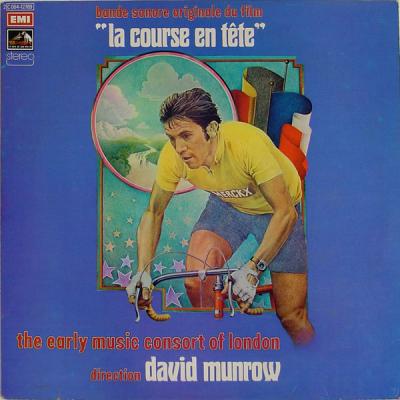
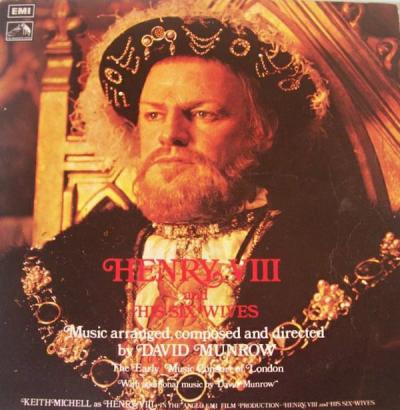
A Bach disc includes different recordings of Bach’s 2nd and 4th Brandenburg Concertos with Munrow on recorder and teamed, improbably but successfully, with Yehudi Menuhin and Adrian Boult. There’s an enjoyable and productive collaboration with Neville Marriner on a 1973 LP, with concertante works by Telemann, Sammartini and Handel. Munrow’s score to the 1972 film Henry VIII and his Six Wives features a selection of historically appropriate pieces along with Munrow’s own compositions; sample the brief, raucous snatch of “Street Music” or an elegiac cue written for the film’s closing titles. Both are great. A novelty is La Course en Tête, the score for a 1973 documentary about Belgian cyclist Eddy Merckx featuring original renaissance pieces and more Munrow originals. His “The Race Against Oneself” and “The six days of Grenoble” are effective pastiches. A highlight of the Munrow discography was the triple album The Art of Courtly Love, a groundbreaking collection of French secular music composed between 1300 and 1450. Edward Blakeman’s interesting booklet essay rightly draws attention to the track “Istampitta Tre fontane”, a spellbinding snatch of anonymous 14th century party music, Munrow letting rip on his sopranino recorder. Much of this music hadn’t been heard for centuries, the players bringing it back to vibrant, colourful life.
Munrow ‘s 1975 double album The Art of the Recorder is here, its second volume including pieces by Britten and Hindemith, and 1976’s Greensleeves to a Ground features music by Peter Warlock, Vaughan Williams. There’s an epic exploration of 15th century music from the Netherlands, Munrow’s EMI discography also taking in Dufay, Machaut, Purcell and little-known music from Spain. Philip Ledger’s vibrant 1975 recording of Monteverdi’s Vespers was new to me, Robert Tear, Anthony Rolfe Johnson and Elly Ameling among the soloists, with Munrow’s band accompanying. An expanded tracklist detailing the players and singers involved is available on Warner Classics’ website, with James Bowman and Christopher Hogwood among the famous names in Munrow’s orbit. This is a truly wonderful box set, tidily packaged: nab it while you can.
Ludi Musici // 1621 – Instrumental Music of the Early 17th Century As Time Goes By - A New Consort of Music (Tyxart)
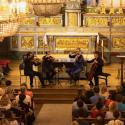
This album deserves shelf space next to the David Munrow box, and one wonders if any of the five members of the cumbersomely named As Time Goes By – A New Consort of Music were influenced by Munrow’s work. They take us back to Amsterdam in 1621, the year of Jan Sweelinck’s death, Ludi Musici being a collection of ‘musical games’ by the German composer (and Sweelinck pupil) Samuel Scheidt, four volumes of which were published between 1621and 1627. Petra Zenker’s entertaining sleeve note gives us plenty of detail about the city’s musical culture, including how copies of Scheidt’s treble and bass parts were circulating before publication, Scheidt complaining that “uncomprehending individuals” would attempt to realise the inner parts and cause his ears to ache. The generous selection of pieces on this album are arranged for recorder quintet and they're delightful, a recorder consort inevitably sounding perkier than Scheidt's original organ. Dance numbers like the tiny “Galliard à 5” and “Alamande à 4” are delightful.
Two Sweelinck pieces are included, my favourite being a stately but sprightly “Balleth del granduca”. John Bull’s “The King’s Hunt” oozes pomp, and there’s a solemn, affecting number by Orlando Gibbons. The “Gallarda Passamezzo à 4”by Peter Philips features some virtuosic high playing, the album concluding with three charming dances from Johann Schein’s Banchetto Musicale. Though intended for viols, they feel totally idiomatic on recorders. A charming anthology, beautifully played and nicely recorded, the physical packaging including some entertaining photos of the group at play.
Homage to Tālivaldis Ķeniņš Kremerata Lettonica, Gidon Kremer, Madara Pētersone (violins), Luca Coetzee (cello) (SKANi/ Latvian Music Information Centre)
Wow. When Gidon Kremer leads a chamber music project as a player and from the front, with total belief and a sense of mission, the results are absolutely stunning. There is an inescapable sense that every one of the performers in this project is not just energised to show this music at its very best, but also to lift the immediacy and communication in their playing to the highest level possible and in every moment. Ķeniņš’ compositions always have a sense of forward motion and a constantly evolving story, and every single track here kept me hooked from start to finish, especially the total clarity and unclutteredness of the wonderful final work, the Quintet for Piano and Strings (1994) .
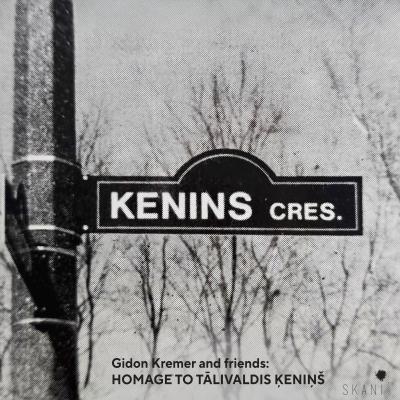
The story of Tālivaldis Ķeniņš (1919-2008) is dominated by the exile from his native Latvia for more than six decades, mostly in Canada where he lived from 1950 until his death. The cover image alludes to that displacement rather cleverly. Whereas the album has been made in Latvia with total passion from everyone involved, the first thing we see is a street sign bearing his name from a nondescript residential area in Ottawa. Ķeniņš left Latvia in wartime in his early 20s, was enrolled at the Paris Conservatoire in 1945 (aesthetics class of Messiaen, joint first prize in composition with Pierre Cochereau, lifelong friendship with Nadia Boulanger...), and departed for Canada in 1950. He didn’t set a foot back in Latvia until 1989. For readers needing to disappear straight down a Ķeniņš research rabbit-hole at this point, I thoroughly recommend the article “A Letter from Siberia” by Daniel Jordan in Volume 108 of the Musical Quarterly (Spring-Summer 2025).
Ķeniņš as composer was always deeply aware of musical heritage. The earliest piece here is a movement from a neo-romantic work written in Paris, the Sonata for Cello and Piano (1950), heart-on-sleeve from both players. From the composer’s early years in Canada (he made ends meet by playing the organ in church, teaching piano and delivering refrigerators) we have Piano Quartet No. 1 (1958), with a poised and delicate opening, and a wonderful way of contrasting spaciousness with urgency. Also worth singling out is the Concertino barocco - Omaggio à J. S. Bach for two violins (1985) played by Zane Kalniņa and Madara Pētersone, with a superbly reflective central ‘adagio’. Excellent 32-page booklet too. Thoroughly recommended. Sebastian Scotney
Stravinsky: Music for Piano and Orchestra Giuseppe Andaloro (piano), Orchestra Sinfonica Abruzzese/Filippo Arlia (Brilliant Classics)
Stravinsky’s music for solo piano and orchestra really only extends to three pieces: the neo-Baroque Concerto for Piano and Winds (1924), the pseudo-Tchaikovskian Capriccio (1929) and the late serialist Movements (1959). These together come to only about 45 minutes, so most recordings of this repertoire – and there are quite a few – supplement with other goodies. My go-to, Steven Osborne and the BBC Scottish Symphony in 2013, add in the “Basle” Concerto in D; Peter Donohoe makes a double-CD by playing all the solo piano music for good measure; Jean-Efflam Bavouzet includes Petrushka (which has an extensive orchestral part and was originally conceived as a piano Konzertstuck); and Olli Mustonen and Vladimir Ashkenazy embrace the charming Ebony Concerto. What none of them do is omit Movements – which, although a spiky listen, is engaging and surely a must-have for any album of Stravinsky’s piano and orchestra music.
But that is exactly the solution arrived at by Giuseppe Andaloro and the Orchestra Sinfonica Abruzzese, and I don’t like it. Wot, no Movements? The extras here are little squibs and transcriptions, like the Ragtime and Circus Polka (originally composed for a big tent act of dancing elephants), which are better heard in their instrumental original versions anyway. And as if to further demonstrate nervousness, the sequencing has the sugary Capriccio before the astringent concerto, as if worried that people will be scared away. It all feels very strange – and in the absence of Movements the performances would need to be exceptional to get a seat at the top table. And, sadly, they’re not.
The playing in the Capriccio is appropriately capricious – I just didn’t like most of the choices made, such as when to press on and when to stop and admire the view. Andaloro’s piano sound is quite strident and dry, where I wanted more romantic luxuriance, and I didn’t enjoy the over-the-top pomposity in what should be a lightweight comedy. Then the opening of the concerto, which should be all pomposity and mock-baroque grandeur, is underweighted and muddy. Once it’s up and running things get better, and Andaloro is better suited to this piece, but his interpretation is not going to displace any other favourites. The muscularity of the opening transmutes into a warmer start to the second movement, but the horns of the Orchestra Sinfonica Abruzzese are out of tune and it quickly descends into an unsubtle mess. The last movement has some of the virtues of the first, but also more out of tune playing and a coda that makes a mockery of Stravinsky’s witty ending. I’m afraid this album is one to avoid. Bernard Hughes
Vivaldi Edition Vol. 76 - Concerti per fagotto Sergio Azzolini (bassoon), L’Onda Armonica (Naive)
Vivaldi: Bassoon Concerti III Sophie Dervaux (bassoon), La Folia Barockorchester (Berlin Classics)
These two complete editions of the complete Vivaldi Bassoon Concertos (sic!) are at different stages: Volume 6 brings the Naïve set from Sergio Azzolini to completion after a decade and a half. On this final disc he strays away from Vivaldi’s thirty-plus bassoon concertos (!) to do a bit of selective pilferage from the composer’s cello concertos. Sophie Dervaux’s Berlin Classics set, on the other hand, is a much more recent venture. It has been coming out in annual instalments since 2024, and Volume III marks its half-way stage.
Both sets are good news, firstly because they bear testament to an incredible leap forwards in playing standards in the past quarter of a century. Go back and listen to the surveys of this repertoire which Daniel Smith and Tamás Benkócs made in the 90s and 2000s and the comparison really is like night and day: alongside Dervaux and Azzolini, Smith comes across as very approximate indeed, while if Benkócs seems technically more secure, his reticent character makes his readings a bit bland. Secondly, and perhaps more importantly, these two new sets really could not be more contrasted. Both are very worthwhile in their different ways.
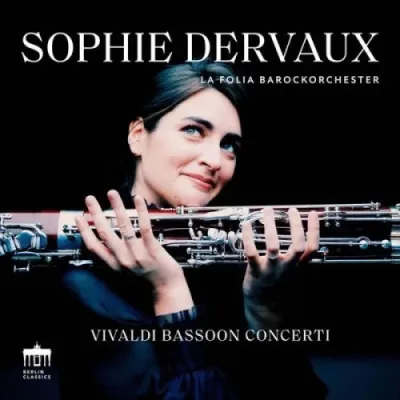
From Team Sophie we have playing of unbelievable refinement. The French-born bassoonist, principal bassoon of the Vienna Philharmonic, is a brand ambassador for the German modern instrument-maker Püchner (there’s not much change to be had out of 50,000 Euros for the Superior model which she plays), and there is probably no bassoonist anywhere producing quite such a sumptuous and consistently focused sound. Her Dresden-based ensemble has just one string instrument per part, which tends to put her strong playing into the foreground. Every detail, arpeggio, twiddle in the tricksy A minor concerto RV499 is there with total clarity. This is a masterclass of fine playing, elegance and charm.
Team Sergio has a different vision. For them, Vivaldi is a composer intent on dramatic excess, and if there are times when his music wants to sound like an early sub-genre of hard rock, then go with it. The orchestra is bigger than Dervaux’s (the strings are 4.4.3.3.1) and they are ready to create violent storms at the slightest prompting, such as the “Fantasmi. Presto” from RV501, which has the bassoon on his knees, sighing meekly, pleading for clemency in front of the implacable sea monster of an orchestra. Azzolini’s weapon of choice on this recording is a modern copy of an anonymous early eighteenth-century instrument, made by Peter de Koningh a Dutch specialist in making replica historical instruments. This bassoon can do pretty and jolly, but where it really excels in his hands in its capacity to deliver raw, dirty and ugly.
There is a lot of pleasure to be had in both of these albums, and the sets which they form part of. Two top-flight soloists with very different characters and ambitions have come up with very distinct, maybe even complementary visions of the same repertoire. Sebastian Scotney
Stephen Hough’s Picture Postcards (Hyperion)
Stephen Hough’s preface to this album’s sleeve note (“I’ve always loved short piano pieces…”) had me thinking about orchestral concert programmes, and how so many shortish pieces that were once standard repertoire rarely get performed. An evening typically consists of concerto and a romantic symphony, or just a romantic symphony if it’s Mahler. With piano recitals, you might, if you’re lucky, get a couple of miniatures as encores. This anthology is a blast, 24 short pieces which Hough assembled as musical postcards, meaning that a small card rectangle might contain “profound poetry… or wit and whimsy,” while conveying a message from someone overseas. Here we get numbers from Russia, Japan, Finland, Norway, Mexico and Hollywood, a mixture of originals and transcriptions. Hough is good at nailing each work’s essence; nothing feels forced or overinflated. Familiar items like Rachmaninov’s “Prelude in G sharp minor” sound fresh, and Sinding’s once-familiar “Rustle of Spring” provides a sonorous coda.
We get some intriguing rarities; I was charmed by two short pieces by one-time Master of the Queen’s Music Malcolm Williamson, both from sets of his Travel Diaries written for young players. “Broadway” is a delight, and there’s a lilting “Etude in A minor” by finds Sibelius. Hough makes light work of Cécile Chaminade’s sparky “Toccata” and finds real poetry in Wilhelm Kempf’s arrangement of Handel’s “Minuet in G minor”. Hough’s transcription of Rimsky-Korsakov’s “The flight of the bumblebee” isn’t as unhinged as György Cziffra’s but it’s still spectacular, in contrast to Japanese composer Kōsaku Yamada’s “Aka tombo”, a depiction of a dragonfly seen at sunset. Hough’s transcriptions of Disney songs are fun, especially a flamboyant version of “Supercalifragilisticexpialidocious”. Better still is a melting take on the lovely “Remember me” from Coco. Good sound, and good notes, the booklet including a photo of the young Hough at the piano – recommended.
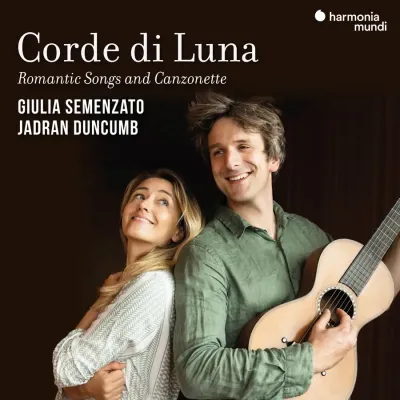
Corde di luna - Romantic songs and Canzonette François Doisy Giulia Semenzato (soprano), Jadran Duncumb (guitar) (Harmonia Mundi)
The absolute of highlight of this album is an indispensable performance of Mauro Giuliani’s Sei Cavatine, Op.39, published in Vienna in 1813. I have it on repeat, and can’t stop playing it for the sheer pleasure of listening to it. Venetian soprano Giulia Semenzato sings in her native Italian with a totally captivating freedom and joy, she embellishes and ornaments the vocal line wonderfully and boldly, and brings understanding and clarity to every word. Semenzato has attracted plaudits in opera houses in Handel, Mozart, as Verdi’s Nanetta, and she’s about to do a run as Zerlina at Covent Garden...but on this intimate scale she is totally spellbinding.
Her accomplice here is Sheffield-born, Norwegian/Croatian/English guitarist Jadran Duncumb. Now based in Norway, he has a unique distinction: he is (still) the only guitarist to have won the strings category of BBC Young Musician of the year and to have competed in the main final – that was in 2008. These days, the lute is his main instrument, indeed he has written on social media about this release: “Back to the guitar after 15 years :)”. His pacing and empathy and balance throughout this disc are stunning. Jørn Pedersen as producer has done a brilliant job. But my fate is sealed: I can’t help wanting to go back to the Giuliani again and again. Spare yourself the trouble of even sampling any of the nine other versions of the Cavatine on Apple Music, some of which are truly cringe-making. Stick to this one, it’s unsurpassable. Sebastian Scotney