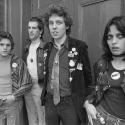
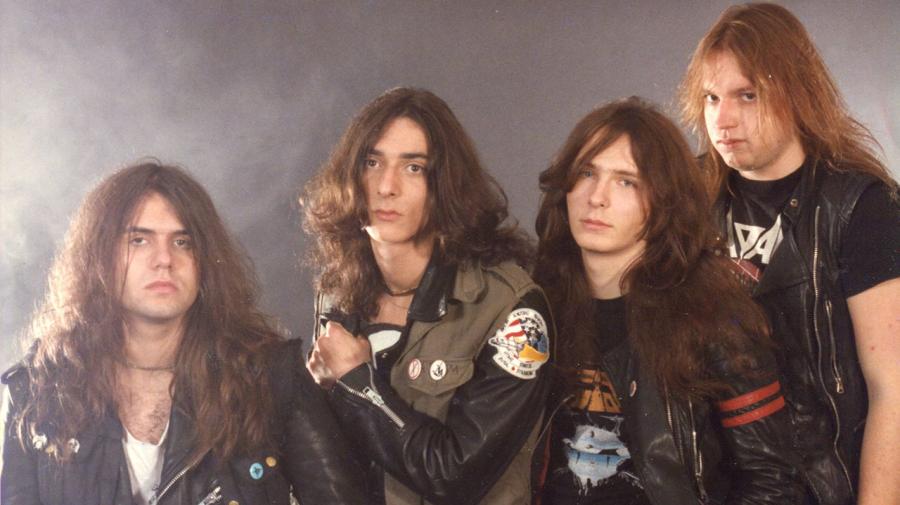
Mille Petrozza was born in 1967 to a Calabrian father, and a mother who was a refugee from Communist East Germany. He grew up in the Altenessen district of Essen, in Germany’s industrial Ruhr Valley, where his father worked in the coal mines. As a young teenager, inspired by a KISS concert, he and school friends Jürgen "Ventor" Reil (drums) and Rob Fioretti (bass) started a band.
By 1984, after going by various names, the band was called Kreator, with Petrozza the frontman and rhythm guitarist. Their raw 1985 debut album Endless Pain was followed by 1986’s seismic Pleasure to Kill. The latter is regarded as a benchmark European thrash metal album and, by the decade’s end, Kreator were one of the Teutonic Thrash Big Four, alongside Sodom, Destruction and Tankard (parallel to the US Big Four, Metallica, Slayer, Megadeth and Anthrax). It's worth noting that Kreator created their first three albums while Petrozza was still a teenager.
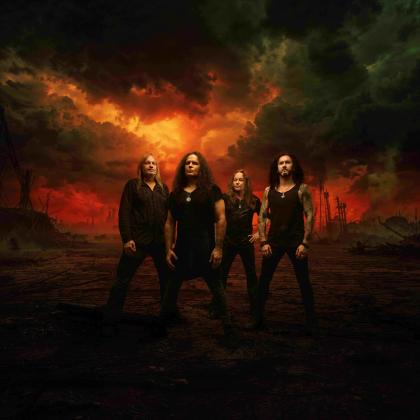
The band achieved early success, their brutal, attacking style and lyrics of destruction, terror and worldwide turmoil gaining them a global fanbase. However, this waned in the 1990s with the rise of grunge, and Kreator experimented with other styles. Returning to full-on thrash in the 21st century, the last couple of decades have seen their career undergo a major resurgence, both in the album charts (albeit not in the UK) and on the live circuit.
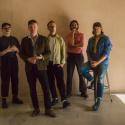
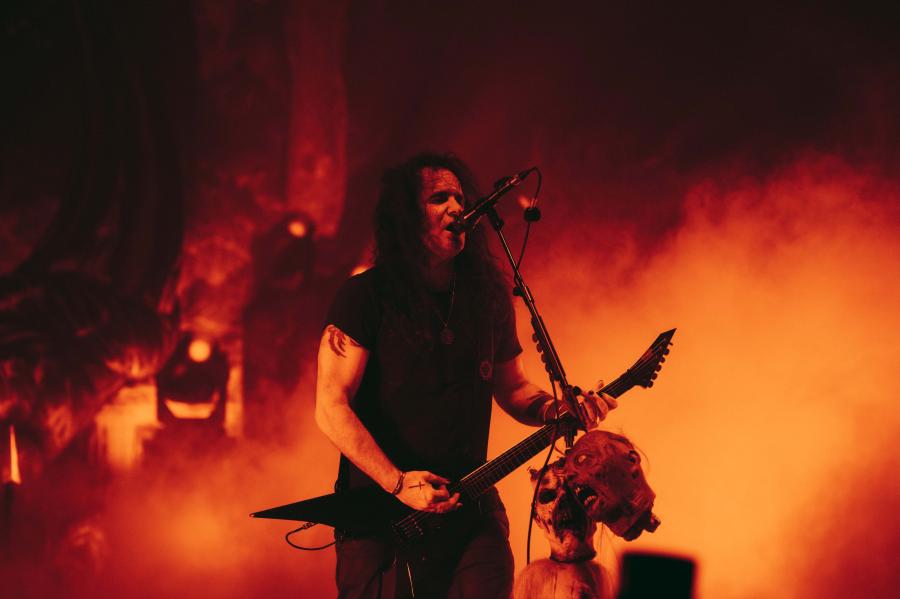
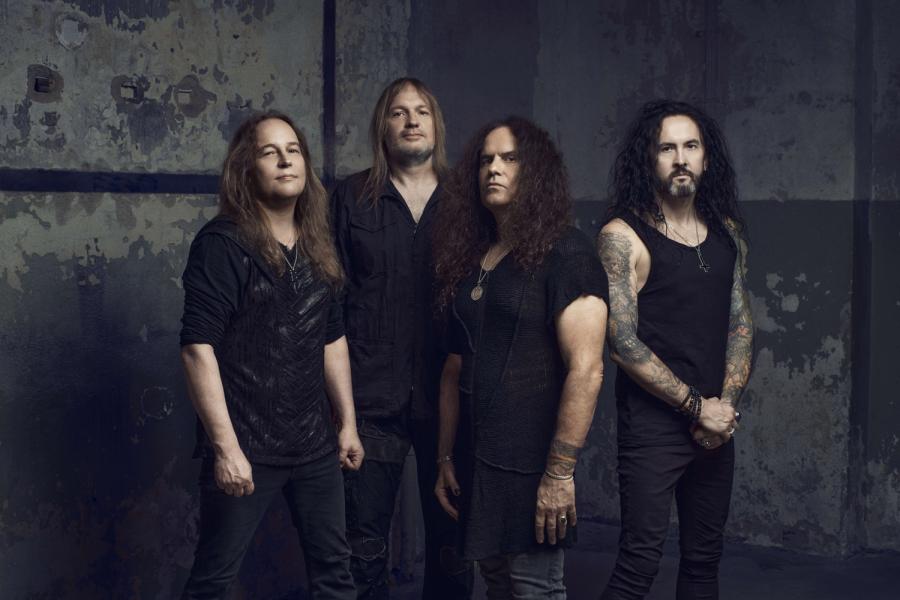
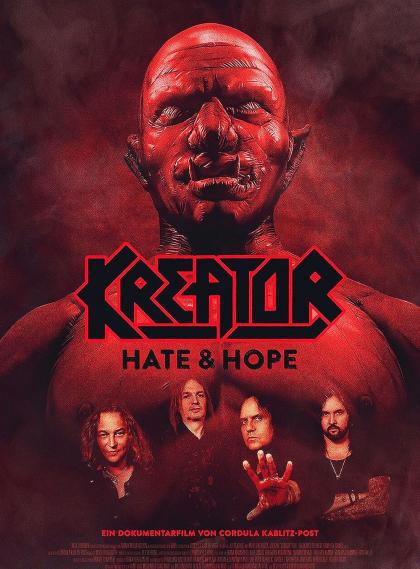
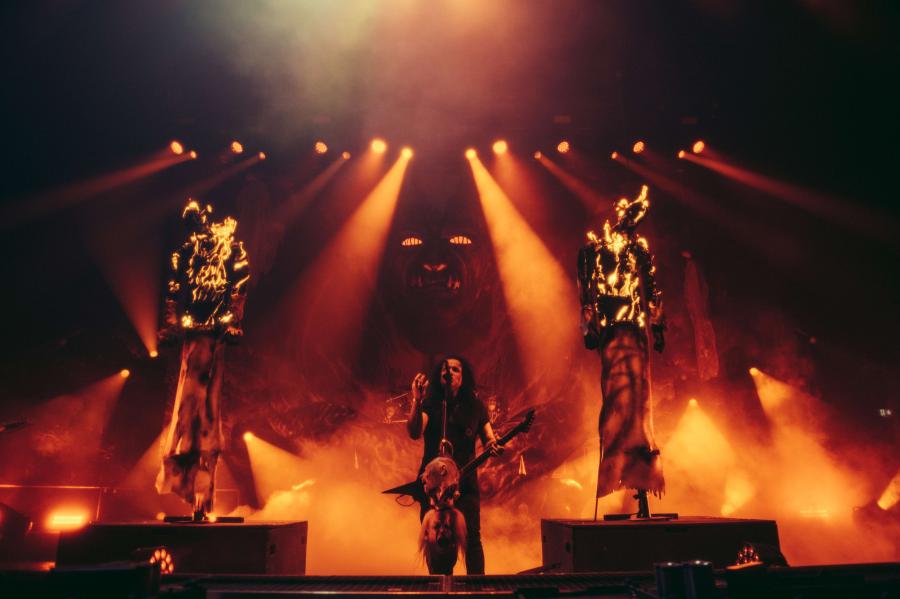
Kreator now consists of Petrozza, Ventor, Finnish lead guitarist Sami Yli-Sirniö and French bassist Fred Leclercq. Their shows are spectacular pummelling affairs, matching theatre and pyrotechnics with sheer battering force. Led by Petrozza, they remain one of the most visceral, exciting exponents of thrash from its original generation. Their story is told in a new documentary Kreator – Hate & Hope.
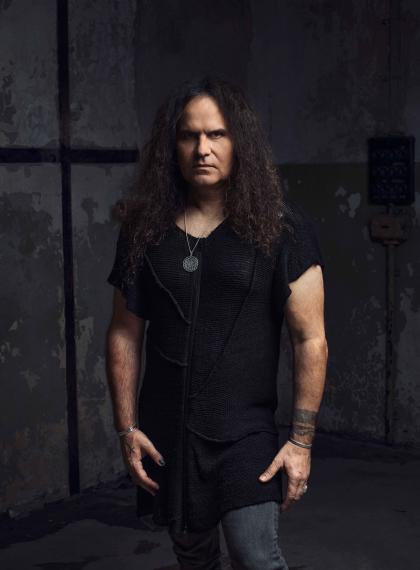
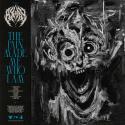
Mille Petrozza is curled on a sofa in a small, east-windowed room on an upper floor of Brixton Academy, where Kreator are playing this evening on a tour celebrating their latest album, Krushers of the World. He’s just under six feet tall but folds into himself, his head engulfed in his oversize black hoodie. Welcoming and engaged, initially earnest, he relaxes and is increasingly inclined to cheeriness as the interview goes on. He speaks with a very slight German accent.
THOMAS H GREEN: What were your parents’ opinions of your band and its early success?
MILLE PETROZZA: They loved it. My father was like, “Don't go down the mines, just don’t, it's horrible.” He was happy I found something that made me happy.
But your music must have seemed extreme to their ears?
My parents just love music, OK, and they were making a little fun of it, like, “Rah, it's only screaming,” but in a nice way. I was saving up to buy my first Ibanez Destroyer [guitar] and I needed 400 Deutschmarks and my father helped.
With the imagery and reputation of extreme metal, some parents might have said, “Yes, be musical, but maybe not THAT sort of music”…
I'm a music fan. To me, there's no such thing as a genre I totally dislike. I'm open-minded to anything. I think my parents are the same way. Okay, so they were more into Italian singers like Dominico Modugno, Adriano Celentano, all the greats, and my mother, of course, likes the German schlager singers. They don't have any connection to the metal world but, to them, it's the music I make and they were really supportive.
Below: Watch the video for "Violent Revolution" by Kreator
How did it affect your family when Essen's Zollverein Mining Complex closed down in 1986?
My father was working until the early-Nineties. I think not all of it closed down.
Coke production continued until 1993.
My father was seriously happy he didn't have to work. He didn't like the job, but it had a good social care package. When my father retired, he got an OK amount of money. It was a good deal. You waste your life down there, but they at least gave you something back. Once he was out of there, he was like, “Yeah, I can work on the garden.”
Have your parents come to see your big festival gigs?
My father came to Rock Hard Open Air in Germany, a 7000-8000 capacity event. They’re both really into it. My mother came to the German premier of the documentary.
If you had a time machine, and you could go back in time for 24 hours only, where would you go?
Probably here in London in the 1960s. The music that came from the Beatles, this is the root of everything, the root of the culture we’re still in. Actually, if I had that time machine, like Stewie from Family Guy, I would probably not like it, because you go to The Beatles concert, the PA system is not really loud, and you only hear screaming girls. But I’d probably still go, yeah.
Are you more for the Beatles than The Who or The Stones?
Yes, The Beatles. I used to be more into The Stones, but I think, overall, The Beatles were the genius songwriters. You can study that band. I just saw the Disney special, with Rick Rubin and Paul McCartney [McCartney 3,2,1]. They were digging out the old tapes, and they were solving how they did stuff, for example, some of the vocal harmonies and bass tracks. Back then, talent was very important. Nowadays, you can get away with not so much talent and still have a reasonable career.
Metal is very big in Germany, more commercially successful than in many other countries. Techno is also massive there. What do you think of techno?
It’s a big genre, right? For example, there’s Scooter.
But that’s, like, pop, isn't it?
Yeah, but it's also technology from the techno world. I love electronic music. I like Moby, stuff like that, but that's not techno. That's very well written electronic music. So, the techno, I have a friend who had a club. He had to close down because in Germany now clubs are dying, but he used to have all that Ed Banger [Records] stuff from France. Techno is a genre within a genre. I'm into electronic music.
So you like a bit of Aphex Twin?
Yeah, that's the stuff, that's progressive music. And then there's party techno, like Skrillex a couple of years ago. It's a big world, and I love some of it. I have a friend, Westbam, who’s from that world. You know him?
We'll Never Stop Living This Way was an album I used to play a lot. Great title too.
I almost did a song with him. We were writing, but then it fell apart. Maybe we'll still do this. He was involved with the Berlin Love Parade.
Did you ever go to the Love Parade?
Yes, I was there once.
In the Nineties you walked a parallel path, exploring electronics on your albums Renewal, Cause for Conflict, Outcast and Endorama. Those albums stand sort of alone in your career.
They kind of do, right?
So what's your feeling about them?
Artistically, very important moments, especially Endorama. We were a metal band and then, all of a sudden, we discovered the sampler. We're like, “We can have soundscapes,” then we dug deeper. I'm a part-time time goth so, yeah, Endorama came from that. It’s a goth album. Looking at it now, I’d make it even more so, not be so dogmatic. It could have been my solo record, maybe, but I put out everything under the name Kreator. Maybe that was confusing for some people, but it really, really fulfilled me artistically. I think those albums were essential.
How so?
In order to do what I do nowadays I can take little parts from Endorama, little parts of Renewal, put it into the music, and make it interesting. I'm so happy we released these albums, even though they were not the most successful commercially. Once you start thinking too much about commercial success, you lose your integrity.
Below: Listen to "Everlasting Flame" from Kreator's Endorama album
At the time Nirvana were defining the sound of rock. What did you think of them?
I love them. I remember Marky [Edelmann] the drummer from [Swiss metal band] Coroner, we were on tour with them in 1989, and he give me this tape. On one side there was Soundgarden, and the other side was [Nirvana’s debut album] Bleach. To me, that was punk rock. I liked them better than Soundgarden. Soundgarden, the voice I didn't really get into, but I liked Nirvana, and when Nevermind came out, I really loved that. But then it was too much, everybody was, all of a sudden, getting into it, and it got on my nerves.
You first went to America with Voivod in the spring of 1987 when you were 19. What were the things that most surprised you about America?
It was like walking through the setting of a movie, but what I really liked, on a human level, on a spiritual level, was this world with Voivod. They had connections. They knew everybody in the scene. They knew the people in Nuclear Assault. They knew the people from all these bands. I remember we had a baseball game with Kitan [W. de Pena] from [Californian thrash band] Hirax and Ron McGovney who was the old bass player before Cliff Burton in Metallica. We stayed in his house. It was like a big family, and everybody embraced us: “Those are the German guys - they play thrash metal, but they're from Germany.” You're kind of connected, even though you don't know each other. But then those friendships last for life.
How was your English in those days?
Probably not perfect. But I got away with it. You know why a lot of Germans don't speak English so well? We dub our movies. Yeah, it's a big fail.
The English are way worse than the Germans at speaking foreign languages.
[LAUGHS] The good thing was, we were on tour with Voivod, we were in the van, and they’re French-Canadian, so their English wasn't good either. So we kind of learned from each other.
Do you think of Kreator as more of a live band or a recorded band?
Both. The last album I had the most fun ever. I was in the studio for two months, and I had this routine, going to the gym every day, going to yoga every day, going for a walk for two hours. It was summertime and we were right in very beautiful country [Krushers of the World was recorded at Fascination Street Studios on the outskirts of the Swedish city of Örebro, bordering the great plain of Närke]. We worked hard, but not too hard, because Jens [Bogran, producer] was always busy with each new song.
And live?
Live is a different world. What I really like about this tour is that this is our 16th album so I get why people will be like, “Yeah, the new stuff is not as good as the old stuff” - I'm the same! But what’s overwhelming is that people react to the new songs, almost like they've known them forever.
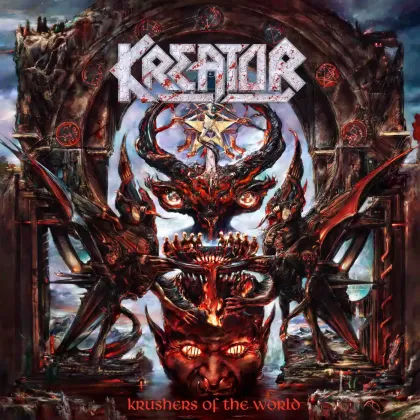
Is the song “Psychotic Imperator”, on your new album, about Trump?
No, I don't want that person on my album. It could be about somebody from way back, Nero from the Roman Empire, who set Rome on fire, or it could be anyone in the future. It's just the idea of this evil person. You have these people from Germany and now, maybe, in America, maybe Russia. They’re everywhere. It’s cyclic.
Tomorrow, funnily enough, there's the biggest anti-fascist march London has seen in many years.
Thank you. Finally. The pendulum swings. Now it's swinging to the right. Needs to swing back to the left, then maybe we meet somewhere in the middle. Hopefully.
You’re saying that everything's reactive?
Yes, it is, in a way, and especially nowadays. This digital age, it seems even worse, even though it's not. You go out, walk around Brixton, you see the human race is not lost. It seems worse when you're on social media all day.
What about the song “Satanic Anarchy"? What’s Satanic anarchy?
It's two words that look cool [LAUGHS]. It's not a new form of anarchy. When I look at a painting, or a horror movie, I like titles. Sometimes I have a title for a while and I need to fill it with the right words. It's kind of like a rebellious song, of course, but it's not to be taken too seriously. It's just a song.
Below: Watch the video for "Satanic Anarchy" by Kreator
I heard you’re into yoga - when did you discover that?
15 years ago. I had a girlfriend, she really got me into it, but discovering it was also a journey. I did it at the gym, and thought it was like a gymnastic exercise. Discovering what it's really about took me a lot longer. It took me a while until I knew that asanas [physical postures] are not like the most important thing. It's about mindset. It's about making sure that your body, your breathing and your spirit will connect through the practice. You go into Shavasana [resting pose], and you're meditating. It's a journey and it's all never the same. I go to yoga class and I'm reflecting on life. It’s very philosophical at times.
Do you do this as you travel around the world on tour?
Yes, I do. I'm technically a Jivamukti [school of yoga] teacher, like the spiritual warrior. I teacher trained for that, but I'm not this kind of guy. I'd rather be a student; that's, like, a part of my trip. Every time I go to somewhere I know there's cool yoga places. It really keeps me sane and it's fun, because I love connecting with the yoga community all over the world.
Is your veganism part of that journey, too?
Yes, it is. It's connected to the Jivamukti philosophy. It's like ahimsa. You know what that means? Ahimsa means living without violence. I was a vegan before I discovered yoga but it connects quite well.
You see, in my mind, there's a contradiction at the heart of what you do, between all you just said and Kreator’s musical interest in horror and violence. You have an album called Hate Über Alles. Another called Extreme Aggression. I wonder how you can make this work, philosophically?
It's, like, violence and hate and love, those are, like, the Yin and Yang, yeah, the two extremes. It should be all love, but it can't be. Sometimes even love turns into hate. So it's me trying to figure out why we're here, and what is existence. Is there a meaning of life, or is there not? Probably not, you know, but you try to absorb everything and put it into your music. That's what I do. I don't really even think about it.
For me, there's catharsis in what you do.
That's a good word because [Kreator’s music] kind of makes me deal and cope with things. It keeps me sane.
Below: Watch Kreator perform "Pleasure to Kill" in East Berlin in 1990
Do you think the performances you give, which are very visceral, are something that's necessary to you?
They are now, because it's what I've done all my life. I mean, I started this when I was 15 and I’m now in my 50s, so I guess I can't live without it, and I'm gonna do it until I drop dead. The older you get, the harder it gets. To be on tour, you need to watch yourself. You cannot party anymore.
Do you not party at all anymore? Never ever?
I did, of course, when I was young, in the Eighties, in the early Nineties. Now, never. I mean, every tour maybe there's one night where I stand around with a glass of wine. I drink, like, one; the second one and I’m done. I can't take alcohol anymore. I wouldn't label myself Straight Edge, but I'm almost Straight Edge.
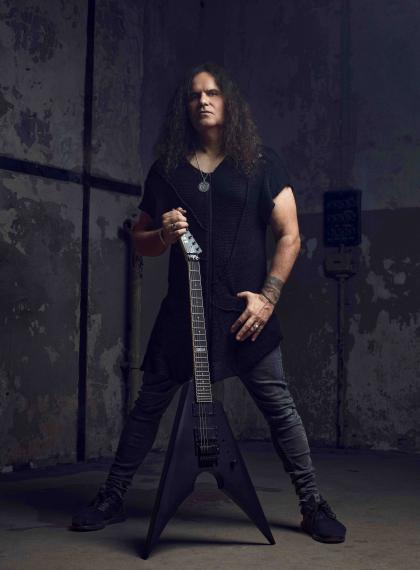
But you're not anti-alcohol?
No, it's a social thing. It's like, sometimes it can open you up. But I don't need to. I'm very communicative anyway, so I talk a lot, and when I drink alcohol, I talk even more [LAUGHS].
Aside from when he quit for a couple of years in the mid-Nineties, you and Ventor have been in the band forever. You must have a sort of familial relationship.
Yeah, it's like he’s the brother of from another mother. I have brothers and sisters, a big family, but [Ventor and I] connected when we were kids, and we’re still connected.
Presumably there are times when you fall out, then you get back together?
It’s like marriage. I've known the guy since I was four-years-old. I've changed, he’s changed, but we're still the same, in a way. When it comes to music, when it comes to the band, we connect.
Last night was the British premiere of the documentary film Kreator – Hate & Hope. What can you tell me about the director Cordula Kablitz-Post?
She's a famous director in Germany. She did many, many documentaries… Scooter, Peaches, Die Toten Hosen…
Did you enjoy the process of making it?
I didn't feel comfortable, to be honest, to have a documentary about us, because I'm a very private person. She made sure that it's personal, but not too private, so it's a glimpse behind the scenes, but not too much. Demystifying a band is counterproductive, in my opinion. It makes me feel uncomfortable, but it's a nice thing to have as a band, something that will be there when we're all dead and gone.
There’s an interesting scene when you're in the Paris Catacombs…
Oh yeah, that was her idea. I love the movie but that's not my favourite scene. It's such an obvious one for metal people. Didn't some band just play there, like The Smashing Pumpkins or something? [Queens of the Stone Age played there in 2024]
The place seemed to affect you.
It made me feel uncomfortable, really. It's a little claustrophobic down there. These skulls and bones were once people but, on the other hand, it's a tourist attraction. When I was 18, maybe I would have liked it better. It was fun but I would have never gone by myself.
Another thing about the film, it makes it look like there are not many women in Kreator’s world. From experience, I know there are a good few women at your concerts, but do you think what you do is more of a masculine thing?
I know what you mean. I would love to have more women [in Kreator’s world]. We have women in our crew, and I'd love to do more. Maybe it's the type of metal we play, maybe it's more male, but I don't want it to be this way.
I think it was Miles Davis who said that if you look out and see only men in the audience, your music is dead…
[PETROZZA LAUGHS UPROARIOUSLY]
… your crowd isn't like that, though.
Absolutely right, it's definitely not. I’d love it to be 50/50, yeah, but it's maybe 70/30, men to women.
How much time do you spend on the road?
Last year, we didn't do much. We only did a little festival run. This year probably, like, 50 shows or something.
Does the travel get more annoying as the years pass?
Depends how you travel? I don't mind being on a tour bus, but we're also touring in South America and Australia where you have to go to an airport every day. That's very bad, very annoying.
What was the last album you listened to from beginning to end?
Flea's new album this morning. I really like it. There's one song with Nick Cave on it. It's very good. I'm not even so much of a fan of jazz, but I like the Chili Peppers and I like him.
Did you see the film Lords of Chaos [about the early-Nineties Norwegian death metal scene which became mired in violent misanthropy and murder]?
I liked it. Long before all that drama happened, three of those guys - Metalion, Euronymous and Necro [Necrobutcher] – came to Essen and we hung out with them for a week or so. And then when all that happened later on, it was like, “Are these the same people? Really? Seriously?” I was like, “Those were the nicest guys ever.” But, all of a sudden, something had happened there. I like the movie. It was very respectful. But I know a lot of my Norwegian friends would probably disagree. I had a connection with Norway, but I wasn’t there, not in that time in the Nineties.
Do you think it could be regarded as an occasion when the whole Satan thing in metal was taken too seriously and went in a very wrong direction?
Like I say, I wasn’t there, but I think it was more like, almost, a competition as to who's the most evil person, right. Like a teenage, kind of, “I'm more evil than you! I'm going to burn a church.!” And that's about it.
Are you a reader? Do you read books?
Yes, all the time. At the moment, I just bought [REACHES INTO HIS BAG AND PULLS OUT BOOKS] Bob Dylan Tarantula, this is poetry, Christina Rossetti Selected Poems, and this is the book that I always carry, The Creative Act: A Way of Being by Rick Rubin.
Over the decades, who’s the person you've been most excited to be introduced to?
I wasn't excited and I wasn't introduced to the person, but I remember we played a festival in Novi Sad in Serbia and I was sitting in a restaurant and Nick Cave was sitting at the next table. He was doing a set at the festival with Grinderman. I didn't approach him, but that was like, wow! But I never get starstruck. We’re all just human beings, either nice people or not.
Over the years doing this, I've got more used to meeting people who I admire.
90% of them are nice, right?
Yeah. In fact, the people I've found who are more difficult have tended to be people who, perhaps, haven’t achieved the success they feel they deserved, and that…
…somebody else is responsible for it and they're bitter.
Yes, that's it! Did you ever get bitter in the in the 1990s when Kreator’s success waned?
No [LAUGHS LONG AND LOUD]. To me, everything is a gift. It's a bonus that I'm successful. I would probably still do this if I wasn't. We did some very small shows in the Nineties. It doesn't matter, does it, at the end of the day. I have to admit, when we did US tours in the Nineties, sometimes there were 70 people there. But these 70 people, they came, so you put on a show and just enjoy it. There's no reason to be bitter. It happens to the best of us. Seriously, if you go out there and play music, and you're not ready for this, then you're in the wrong world. You should just do something else. It’s about making people happy. Even if there's only three people down the front, I treat it as a challenge to make them happy.
- Kreator are about to take their Krushers of the World Tour to the US. The documentary Kreator - Hate & Hope is available to stream on Thunderflix in the UK. And, if you can read German, Petrozza’s memoir of Kreator’s early years, Your Heaven, My Hell - Mein Leben, Heavy Metal Und Wie Das Alles Passieren Konnte, co-written with Torsten Groß, is available now.
- More New Music on theartsdesk
Below: Watch the trailer for the documentary Kreator - Hate & Hope