

While I'm still learning to disentangle my mezzo from my Meistersinger, I enjoyed a lot of the opera on offer in London this year, especially at English National Opera. Parsifal was perfect and Rameau's Castor and Pollux, while probably a little too Germanic in direction with its dancing amputated legs and unerotic nudity, was wonderfully sung. I especially enjoyed the premiere of Nico Muhly's Two Boys, whose internet-era set design suited its perverse modern "love" story.
tv reviews
emma.simmonds

Many have dismissed 2011 as cinematically something of a disappointment, but while close inspection may have identified more cubic zirconia than bona fide diamonds, the year glittered nevertheless. The showstopping Mysteries of Lisbon was undoubtedly the real deal - what a teasing, sumptuous and gorgeously strange film that was (even with a running time in excess of four hours).
Kieron Tyler

“For three weeks the Beans leave rich pickings for us Borrowers”. It’s probably not how most of us see the Christmas season, but if you’re a miniature person living under the floorboards, the seasonal treasures of the full-size humans – Beans – are irresistible. Setting this lovely one-off adaptation of Mary Norton’s books about the tiny recyclers over the advent count-down and bringing it up to date might have been obvious, but it charmed.
Adam Sweeting

Every now and again there's a TV series that lives up to the hype, and in 2011 it was Channel 4's Top Boy. Although this crushing saga of gang violence, drug dealing and conflicted loyalties in Hackney was written by Irishman Ronan Bennett, it felt hauntingly authentic, though Bennett admitted that he'd almost despaired of getting the street-level patois right.
Thomas H. Green

2011 was a year when the wheels of global history cranked noticeably forward, the news always full of images that will be in school text books within a decade. It was also the year when, for most of us, “a bit peeved” became “utterly livid” that greedy, over-privileged vermin had gambled and lost all our money and were clearly getting away with it, unhindered.
Adam Sweeting

Though the wind had wailed mournfully through the plot-holes of the second series of Downton Abbey, writer Julian Fellowes was in his element for this two-hour Yuletide spectacular. With the characters in place and a cluster of storylines tantalisingly in play, it boiled down to a grand game of tying knots, building climaxes and sawing off the loose ends. Framed as a Christmas shooting party with a grand gathering of friends, relatives and prospective in-laws, it was the Gosford Park of the Downton canon.
Veronica Lee

Joy was unconfined in my house as the J-team reunited for Christmas to give us the greatest gift of the season. Not that baby and his royal visitors in Bethlehem but Jennifer Saunders, who gathered together her old mates Joanna Lumley, Jane Horrocks, June Whitfield and Julia Sawalha for a cracker of a reunion stuffed with gags.
Kieron Tyler

Next time you glance up at the stars, spare a thought for your Christmas tree. It’s probably topped by a star, but some of those in the sky might just be the spirit of the tree itself. By helping free the spirits of the trees in a forest, the Doctor transported the symbols of Christmas into an adventure that only he could have instigated. The combination of Christmas, the World War Two setting, Matt Smith’s vitality and a family uncertain of their future ensured this nostalgic fantasy was an instant seasonal classic.
The war is ongoing and Christmas is almost here. Madge Arwell comes across a strange man in a strange suit, whose face she can’t see. She helps him find a police box. She has also received the telegram telling her that pilot husband Reg is lost. Afraid to tell her children, Cyril and Lily, she doesn’t want this to become the Christmas that breaks their hearts. Keeping the secret, she takes them to a country mansion for the holidays and finds a caretaker who’s turned the rooms into a crazy, Willy Wonka version of what comes with Christmas. The caretaker is the Doctor, returning to thank her for helping him out.
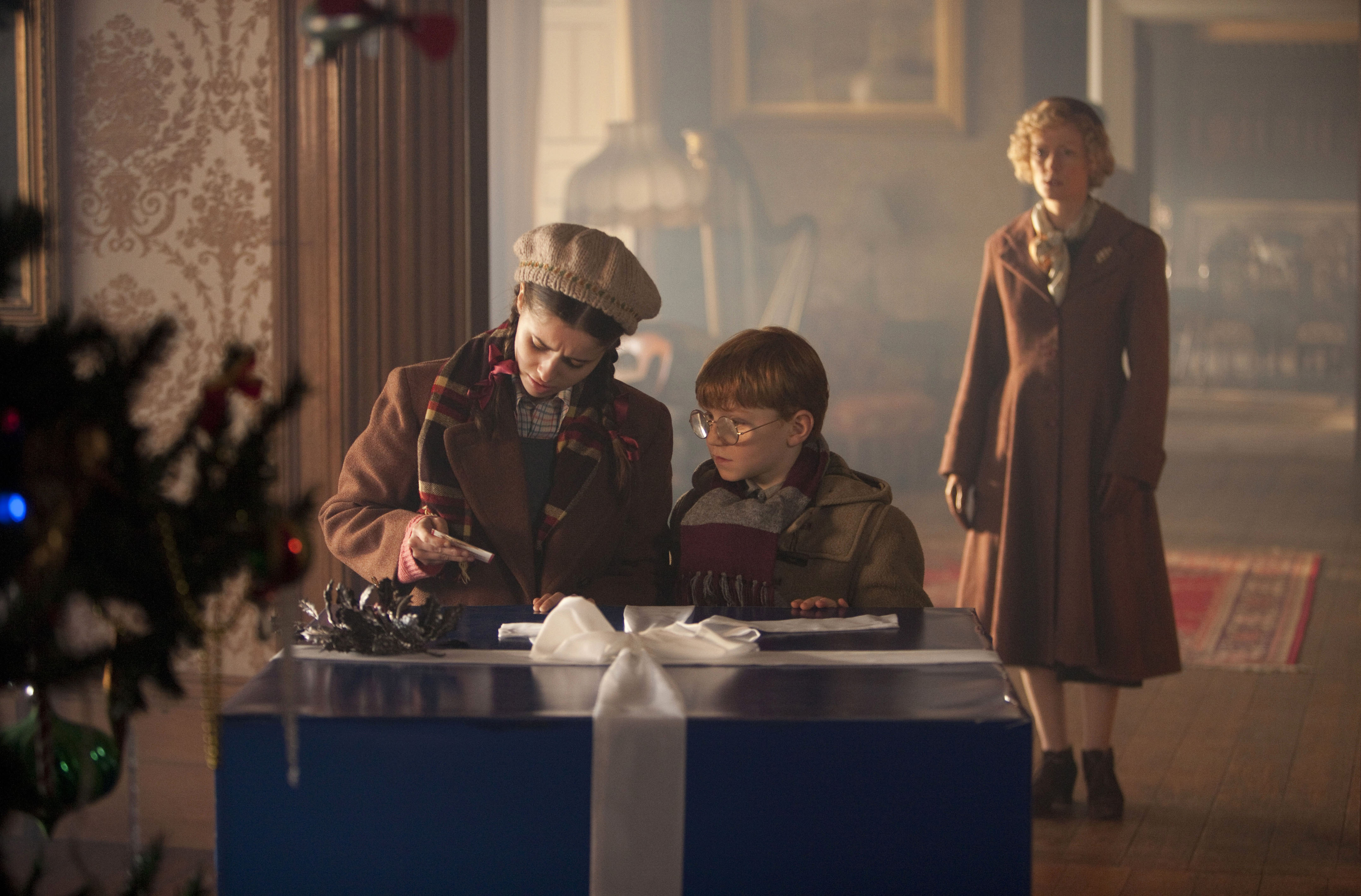 He’s also left a present, a large box, in the living room. It’s irresistible for Cyril, who opens it early. In his dressing gown, he steps in, entering a snowy forest. In turn, they all enter, discovering the gift isn’t what the Doctor thought it was. It’s not Narnia. About to be harvested, the spirits of the forest’s trees need help escaping their fate. Madge is the key and, in full-on protective mother mode, she comes to the aid of Cyril, Lily and The Doctor, giving the spirits their release.
Matt Smith’s Doctor was at his most paradoxical. Manic, charming, eager to please, isolated and jumping in without weighing the consequences, he was forlorn, yet enthusiastic and magnetic. Thankfully, Claire Skinner’s Madge Arwell was there to pull everyone out of danger before it sucked them all in irreversibly. Holly Earl’s Lily Arwell was level-headed, her quizzical acceptance of all that came along exactly what you’d hope for in any kid that comes across the Doctor.
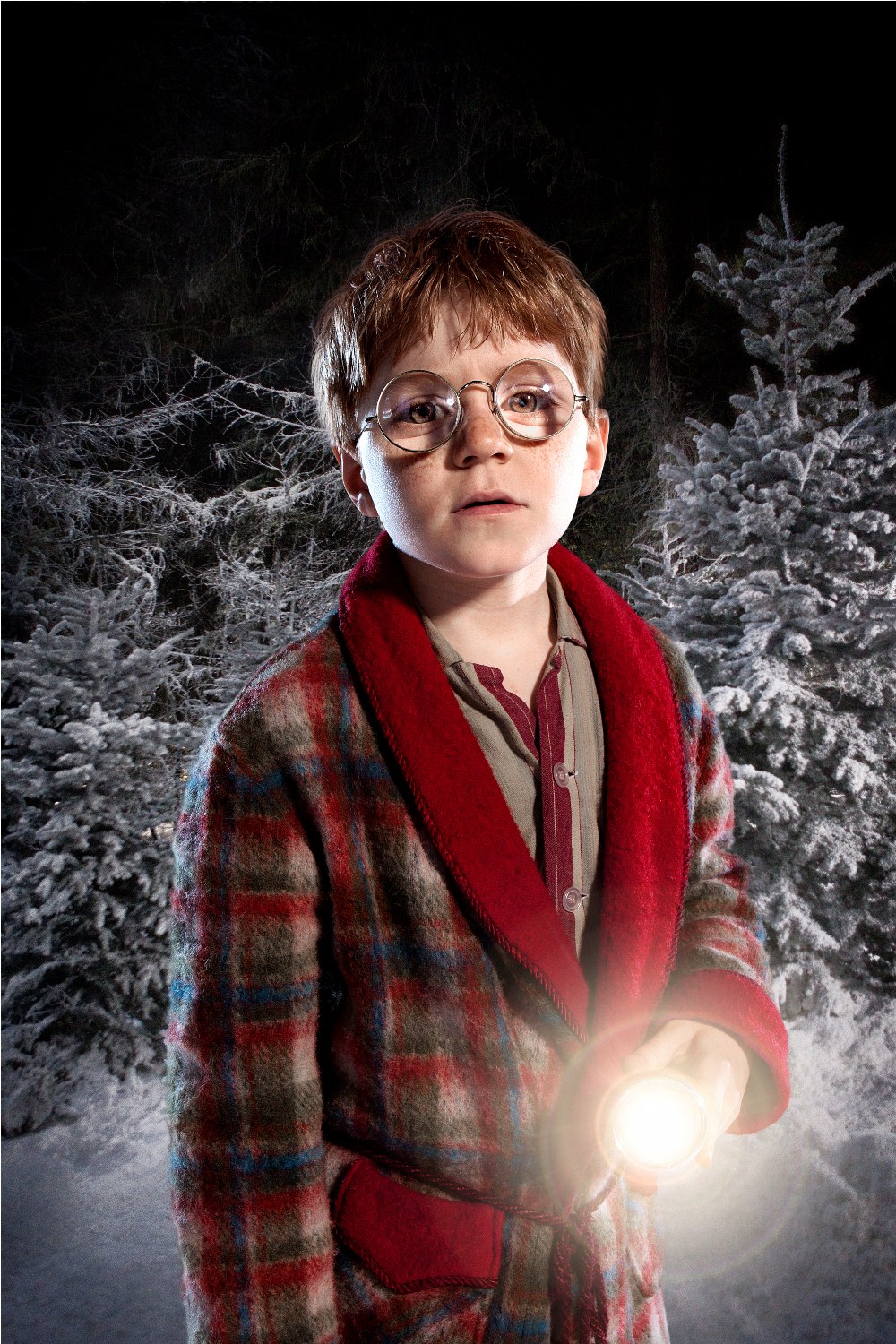 As Cyril, Maurice Cole was a delight (pictured left). From the Milky Bar Kid on, any boy in oversize, milk-bottle-bottom-lensed round glasses is going to be a classic. Alexander Armstrong has been perfecting the what-ho type for years, so he was perfect. Bill Bailey, Arabella Weir and Paul Bazely as the bumbling, uncertain operatives monitoring the harvesting of the forest tempered the impending peril.
Despite the borrowings from The Lion, the Witch and the Wardrobe, the strongest reference was the great Powell and Pressburger film A Matter of Life and Death, released in 1946 as the meaning and effects of the War were being digested. The film was central to the process of understanding. Alexander Armstrong’s Reg Arwell explicitly brought David Niven's Peter Carter to mind, as did the scenes of his lost, doomed plane and his unexpected return to earth. The Doctor became A Matter of Life and Death’s guide, Maris Goring’s Conductor 71. The trees became the film’s angels – as well as stars, angels also crown a Christmas tree.
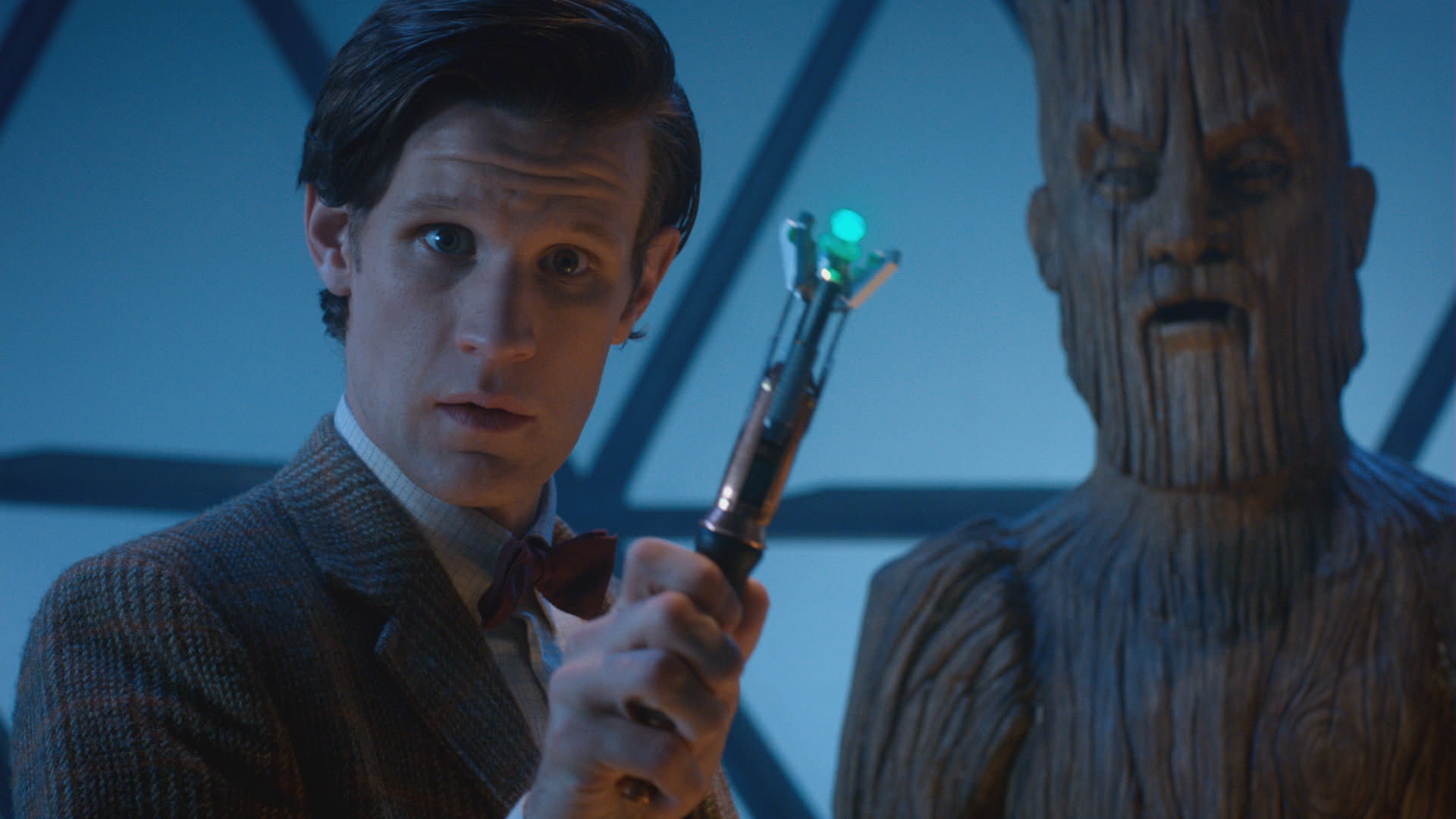 There were no Doctor Who perennials: no Daleks, no Cybermen, and virtually no role for any companions (Amy and Rory were seen at the end). The modern series isn’t tied to its history. The wooden King and Queen created by the forest were never going to be adversaries. The Doctor and Doctor Who renew themselves just as the programme bowls onwards. Six years and three Doctors after it returned to the TV schedules, The Doctor, the Widow and the Wardrobe was further confirmation that the series is in a constant state of renewal.
However Doctor Who has evolved, the question of which of his predecessors Smith most closely evokes inevitably bubbles up. This Christmas, the lonely, can’t-get-it-quite-right, slightly patrician Doctor offered a subtle nod to where it all began. Was he a souped-up William Hartnell? But as ever, the Doctor will move on, leaving such thoughts behind.
Overleaf: watch the trailer for The Doctor, the Widow and the Wardrobe
Adam Sweeting

The makers of this short history of country music had done a good job of rounding up interviewees, who included such veterans as Ray Price, Merle Haggard and Charley Pride alongside the offspring of several country legends. We met Shooter Jennings (son of Waylon), Hank Williams III and Georgette Jones (daughter of Tammy Wynette and George Jones).
Adam Sweeting

What finer way to nudge us gently towards the forthcoming festivities and celebrate the season of goodwill than by creating a lurid reconstruction of the riots that scorched through London last summer. London's Burning was assembled principally from news footage of the events, which you'll recall was copious and shockingly vivid, while interspersing it with dramatic re-enactments of people's real-life experiences in Clapham. Quite what it was trying to tell us I'm not sure.