The 1988 uprising in the French colony of New Caledonia, in the Western Pacific, is apparently unknown to most French people, let alone we rosbifs, but director Mathieu Kassovitz has used the episode as a scalpel with which to probe issues of colonialism, race and political cynicism. It's something of a return to issues Kassovitz explored in La Haine (1995), following his excursions into the supernatural and sci-fi with Gothika and Babylon AD.
The setup is pretty simple. A group of Kanak separatists launches a surprise attack on a gendarmerie on the island of Ouvéa, killing four French policemen and taking 30 hostages. These are dispersed into two groups and kept under guard in the north and south of the island. In response, Captain Philippe Legorjus (played by Kassovitz) is despatched from the French mainland with 50 of his GIGN troops, who specialise in counter-terrorism and hostage rescue missions.
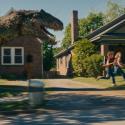
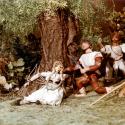
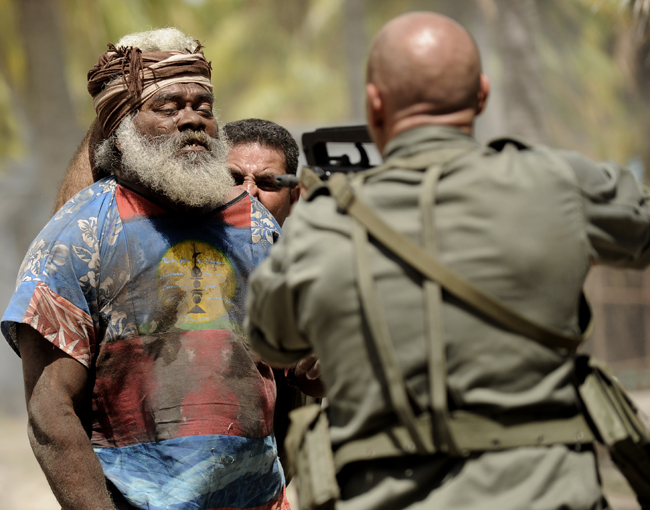 By the time Legorjus reaches his destination, the French Army has arrived in full force and the whole operation has been madly scaled up, largely because there's an election campaign raging in France, with messrs Mitterrand and Chirac as front-runners. Both of them, it seems, perceived electoral advantage in taking a ruthless hard line with the kidnappers (New Caledonia meets the French Army, pictured above).
No way is this going to end well. The film opens with a dreamlike premonition in which Legorjus laments that his negotiating efforts failed, while French soldiers execute rebels in the background. Kassovitz has also opted for a soundtrack consisting of minor chords and doomy booming sounds, which conveys a sense of disaster even before one has occurred.
The narrative develops into two divergent strands. One group of insurgents hastily repents of their actions and apologetically releases their hostages - the killing of the French policemen is portrayed as a ghastly, panic-stricken mistake - while Legorjus, with the assistance of local gendarmerie commanders familiar with local customs, enters into talks with Alphonse Dianou (Iabe Lapacas), who's in charge of the other lot. It looks promising, and hopes rise for a bloodless conclusion.
Meanwhile, the Army begs to differ. General Vidal (Philippe de Jacquelin Dulphé) starts behaving like the conniving old generals in Stanley Kubrick's Paths of Glory, who sent French troops to their deaths in World War One to boost their personal prestige and career prospects. Plans are laid to blast out the insurgents with missiles, flame-throwers and the hardcore special forces unit "11th Shock".
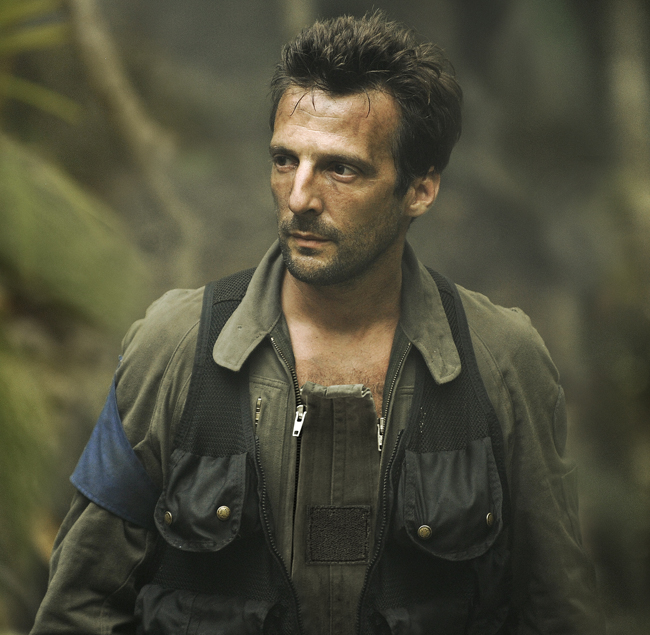 Legorjus develops a genuine rapport with Dianou, and Kassovitz pays particular attention to the close-knit tribal values of the Kanaks, whose elders implore the kidnappers to find a solution before they cause any more damage. The contrast between the traditional rituals of island life and the clumping brutishness of the Army is chilling (Kassovitz cast a number of military veterans and Foreign Legionnaires, and a gruesome looking bunch they are). The notion of carrying out a major military operation against a handful of misguided amateurs - deplored as fanatical terrorists by the French authorities - in a remote island paradise becomes increasingly outlandish.
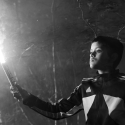
The end is indeed contained in the beginning, and I shall say only that Kassovitz (in battle fatigues, above left) earns his spurs as a director of combat sequences. The blame is laid squarely at the door of conniving politicians, exploiting death and bloodshed in a tiny country which, if Argentinian logic were adopted, should be part of Australia. Although the Kanak Liberation Front (or FLNKS) who sponsored the insurgents' actions gets a good slapping too.
At 135 minutes Rebellion is far too long, and the tone often strays into the didactic and simplistic. Yet, regrettably, Kassovitz's message about foreign wars manufactured for disreputable ends rings all too true.
Watch the trailer for Rebellion