The Armenian genocide by the Ottomans during and after World War One killed 1.5 million people and is a wound that won’t heal for Armenians, though modern-day Turkey continues to insist that no genocide occurred. It’s only through the efforts of Armenian-American billionaire Kirk Kerkorian, whose family fled the killings, that The Promise came to be made, thanks to him putting up most of the $100 million production costs. But he died in 2015, so never saw the finished product.
He would probably have been pleased that it was made at all, but for all its noble intentions and the horrors it depicts, the film is undone by its staid, old-fashioned tone. Under Terry George’s direction, it feels like a costume epic from the 1960s, awash in shimmering scenery and spectacle but trying to make its point through sheer scale (and length, at 134 minutes) rather than delivering much in the way of historical insight or detailed characterisation.
 Perhaps its most glaring shortcoming is that it never gives any clue about why the Ottoman authorities suddenly decided to wipe out their Armenian citizens. Opening scenes in which we meet the central character, Michael Boghosian (Oscar Isaac), living in a rural village in southern Turkey but dreaming of studying medicine in Constantinople, evoke a prelapsarian idyll where Turks and Armenians, and the Muslim and Christian faiths, coexist peacefully. Constantinople itself is presented as an exotic perfumed garden straight out of the Arabian Nights. But later on, when war breaks out and the Ottomans ally themselves with Germany, suddenly crowds are rampaging angrily through the streets, wrecking Armenian businesses and beating up their owners. Out in the countryside, the army starts slaughtering Armenians in their villages or rounding them up and sending them on death marches.
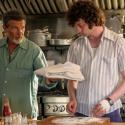
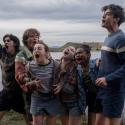
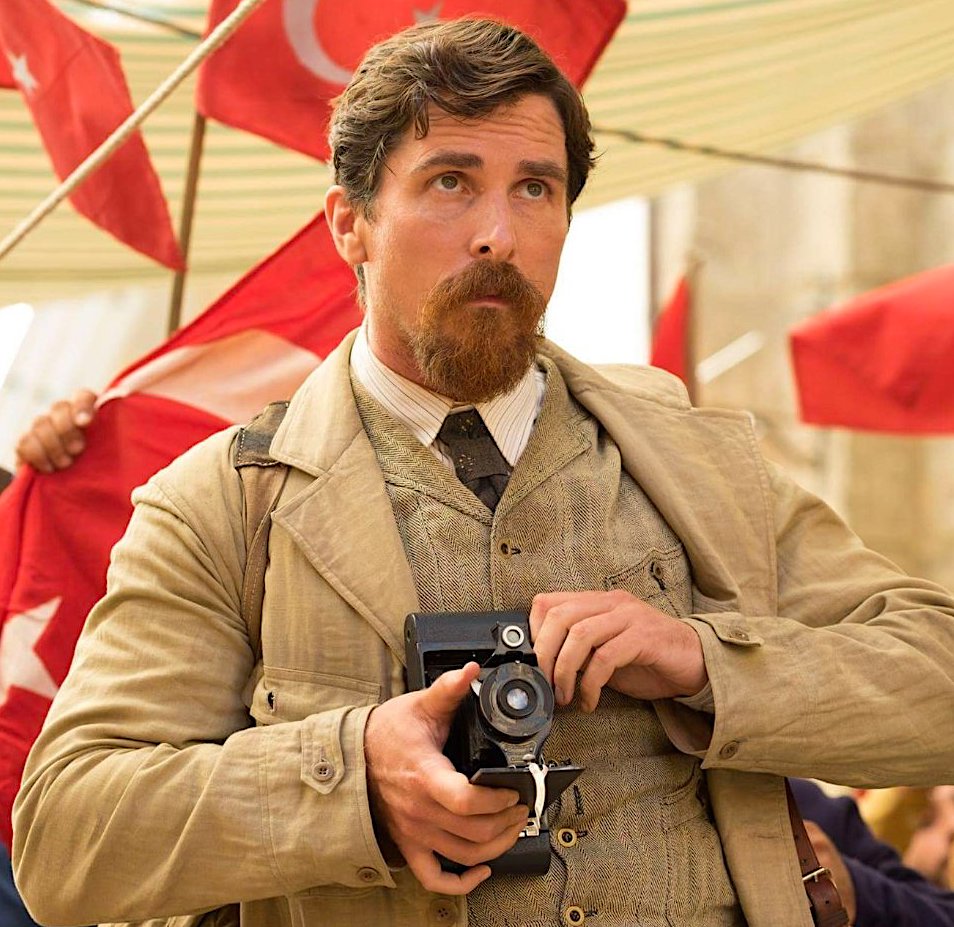
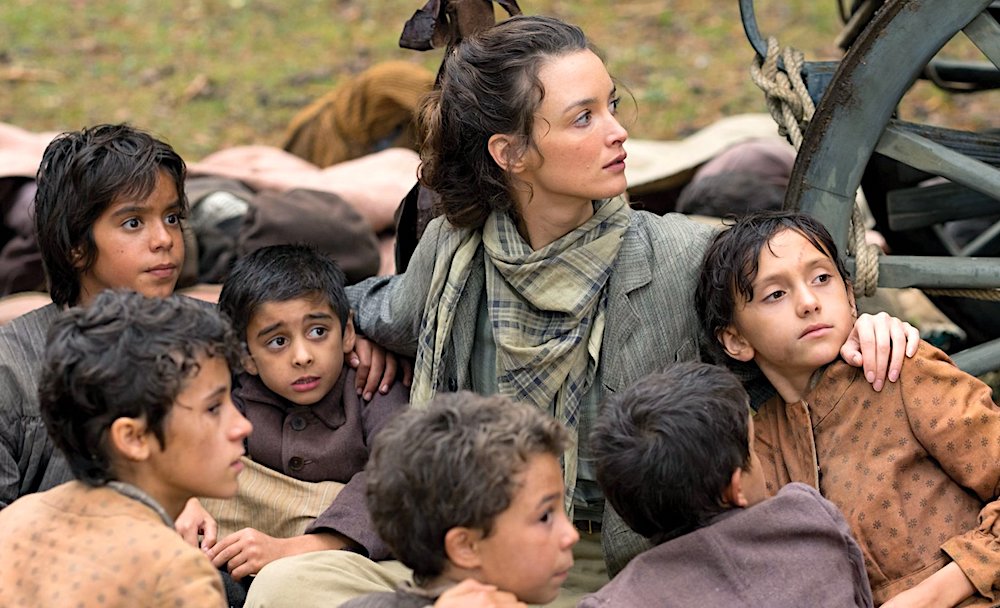
Enter American photojournalist Chris Myers (a whiskery, hard-drinking Christian Bale, pictured above), who gets wind of the atrocities and travels out to record them for his employers at the Associated Press. However, Myers has brought with him from Paris the lovely Ana (Charlotte Le Bon), a delicate beauty with refined tastes in art and ballet. She also happens to be an Armenian who comes from a village near to Michael’s. Though Michael has only been able to come to Constantinople thanks to the dowry from the village girl to whom he has become engaged (Angela Sarafyan), he and Ana soon only have eyes for one another (below, Ana with refugee children).
 Thus the genocide provides the backdrop for the romantic entanglements of the protagonists, which has the effect of undermining both aspects of the story. There’s a bit of teeth-gritted tension between Michael and Myers as Ana inclines towards the former, but whenever simmering emotions threaten to boil over, some new real-world event interrupts to take our minds off it. The prickly issue of Michael’s existing betrothal is resolved somewhat too conveniently by what Harold Macmillan described as “events, dear boy, events”, and when Myers is threatened with a sticky end by the Turkish authorities, a bristling turn by James Cromwell as American ambassador Morganthau eases our palpitations and reasserts a Washington-centric view of affairs.
There are some dynamic battle sequences as Armenians flee the despicable Turkish army (though we might draw a veil over an appearance by a French warship that looks suspiciously like an Airfix kit), but there’s not enough in Terry George and Robin Swicord’s screenplay to let the actors breathe meaningful life into the characters. Meanwhile, though we can understand that the events of the genocide are hideous – and parallels with current refugee crises inevitably suggest themselves – they’re not depicted with the kind of visceral impact that would really have driven the message home. Ultimately, the movie doesn’t live up to its gruelling subject-matter.