Tom Holland is 30 now, and after a decade in the role his boyish Spider-Man muscularly comes of age in this fourth solo outing. A montage of street-level NYC crime-fighting sums up his activities since Spider-Man: No Way Home (2021), when Peter Parker’s unmasking and the collateral damage of Aunt May’s death caused Dr Strange to magically wipe public knowledge of his secret identity, protecting loved ones such as girlfriend MJ (Zendaya) only by sacrificing that love’s existence.
It’s a classic sf quandary which this latest instalment relishes working through. Parker has let himself be absorbed into Spider-Man, fighting crime with only an AI helper for company in a spartan apartment, a monastically repressed existence rudely pierced by seeing oblivious MJ around town. The excruciating situation forces adolescence-style changes, as he suffers black-eyed mood-swings and spurts real webs.
Obligatory action and Marvel Cinematic Universe chess-moves prove more tiresome, as he is enlisted by the transparently dodgy Department of Damage Control to combat a rampaging telepath whose identity is the film’s big reveal, played by Sadie Sink with girlish vulnerability and real threat. Her habit of jumping between hosts, turning any stranger or loved one into a taunting foe, recalls Gregory Hoblit’s Fallen (1998) in its creepy MO. Dr Bruce Banner (rumpled Mark Ruffalo), optimistically suppressing his Hulk side and fielding Avengers fanboys at college lectures, Black Widow (Florence Pugh), the Punisher (Jon Bernthal) and Frank Miller’s ‘80s samurai the Hand complete the over-stuffed scorecard.
The MCU’s sclerotic, arcane continuity mirrors the original comics’ decline. Spider-Man was by contrast Marvel’s symptomatic ‘60s hero, least indebted to Jack Kirby’s cosmic visions and most tangibly reflecting Stan Lee in the centrality of klutzy Peter Parker, encountering young romance and tragedy while navigating high school and college. The rubbery, horror-adjacent weirdness of co-creator Steve Ditko’s art and storytelling contributed to Parker the teen outsider, just as his successor John Romita’s romance and crime genre background added both gloss and grit. It’s Spider-Man’s soap opera which anyway made him Marvel’s figurehead, something understood by every film since Spider-Man (2002), and enhanced here by Holland’s innocent, empathetic persona.
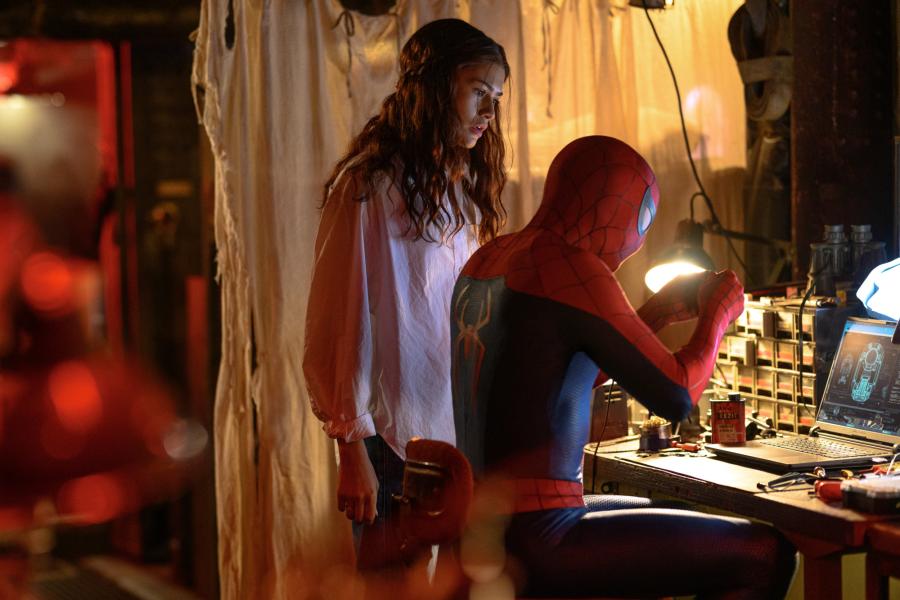
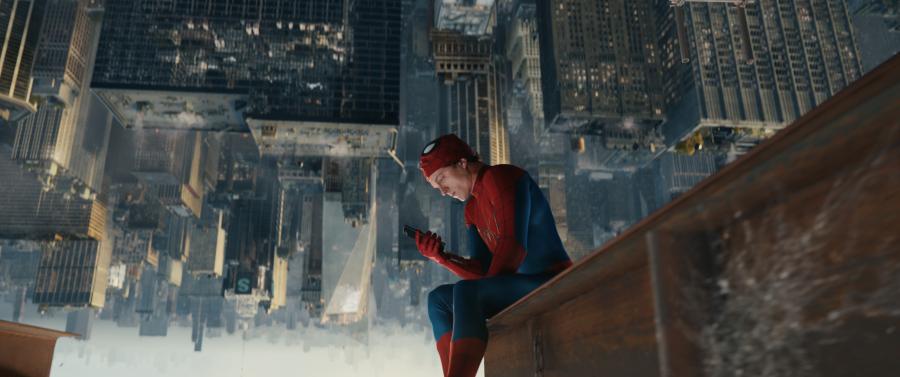
Prior to entering the MCU with Shang-Chi And The Legend Of The Ten Rings (2021), Destin Daniel Cretton directed the warmly intimate, socially conscious dramas Short Term 12 (2013) and Just Mercy (2019). With regular cinematographer Brett Pawlak he marshals lustrous Manhattan skylines (despite actual locations in Glasgow) and quietly humane scenes between his star-crossed lovers, enriched by the recently married Holland and Zendaya. The Holland series’ writers Chris McKenna and Erik Sommers fashion especially effective dialogue in which Parker’s hopes of turning back time are firmly, not unkindly dashed. The film’s horror side crushes such dreams with cruel perversity.
The ordinary nobility which makes Spider-Man Marvel’s ace threads through adequate action and Sink’s anti-heroine’s more potent, pained backstory. All is redeemed by a last moment conjured like a card trick by Holland’s word and gesture, simply conveying miracles.