Is there a neuroscientist in the house? I need a latterday Oliver Sacks to tell me about earworms, specifically earworms issuing from the music of Pyotr Illyich Tchaikovsky.
I should explain. At about this time every year, for days and sometimes weeks following exposure to The Nutcracker, I am plagued by bits of its score playing on a loop in my head. Not the big hummable tunes like the "Waltz of the Flowers" in Act II, nor the massive bass trombone-led crescendo that accompanies the growing Christmas tree, but snippets, linking passages, what might technically be called the score’s interstitial elements. But I think I know what the answer might be: that its fabulous use of the available range of orchestral colour and texture makes this music entirely memorable, evergreen, unerasable. Put simply, it’s so good it sticks.
To give credit where due, the most recent bout was amplified by a particularly stirring opening-night performance by the English National Ballet Philharmonic, with Maria Seletskaja wielding the stick. Goodness they took the Overture at a lick, the woodwind scooting through their tricky tongued solos like mice running the length of a skirting board. This production, new last December, makes full use of the Overture to set the scene – not, as some productions do, adding confusing voodoo about a missing soldier, but instead simply suggesting what we have to look forward to: a party with some lively guests and quantities of sweet treats. Which is not to belittle Aaron S Watkins and Arielle Smith’s concept.
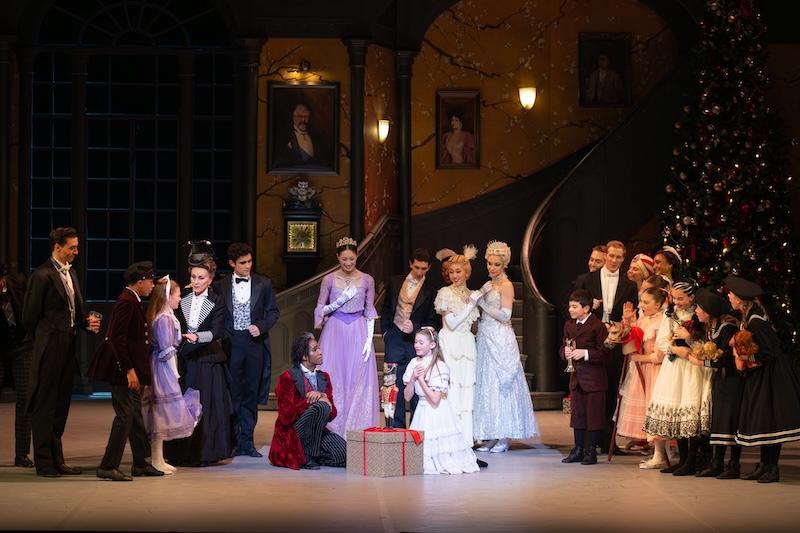
Their jointly reworked version provides almost everything required of a more or less traditional production of The Nutcracker. That is, a certain symmetry between the two acts – both of design ideas (Dick Bird) and the balance of dance and narrative action – fabulous sets, and a hint of darkness when the mice and rats appear. What’s lacking – at least, on the basis of the cast I saw – is an emotional connection between the adolescent Clara and her Nutcracker Prince and a sense of the girl's growing adult awareness. Tchaikovsky’s music for the Act I pas de deux dictates this unequivocally – it’s big, almost overwhelming – but what we see has the clichéd romance of a teen magazine. Choreography and performance may be equally to blame.
By contrast, the grand pas de deux which ends the ballet is magnificent – the only element in this production, as in many productions of Nutcracker, that relates back to the original choreography by Marius Petipa. Hats off to Sangeun Lee’s Sugar Plum fairy and her Cavalier Gareth Haw for their poise and aplomb, not to mention technical precision and riveting speed.
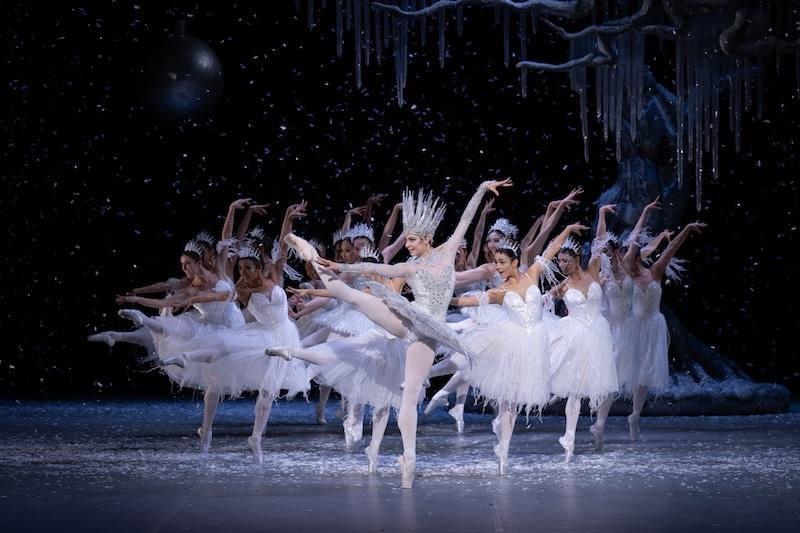
The original steps for the "Dance of the Snowflakes" have also survived into some productions, but Aaron S. Watkin opted to replace it, with great success, adding a virtuoso solo role for an Ice Queen (Anna Nevzorova, pictured above) her height enhanced by a foot-tall crown of icicles. ENB’s corps, decked out in contrasting styles of ice-white tutus, are on fine form too. Danced beneath a stage-wide ice ceiling, this segment would be terrific all round were it not for the frankly pathetic contribution of the small girls’ choir who are required to supply a legato counter-theme to the filigree figurations of the strings. Alas, the performance I saw was hesitant to say the least, and the altos failed to come in at all. No doubt it's unnerving to have to sing facing a full Coliseum, with the conductor a distance away, but surely it’s possible to find a children’s choir that’s a little more bombproof?
The five- and six-year-olds who appear as guests at the Stahlbaum’s party, as street urchins, baby mice, gingerbread people and, hilariously, as Liquorice Allsorts, have no such inhibitions. Beautifully schooled in their dances, full of beans and grinning from ear to ear, they steal the scene every time. But for me the visual and choreographic imagination expended on "The Land of Sweets" dances is what ultimately sells this Nutcracker. Properly global in its references, in a way that would have appealed to this ballet’s 1892 audience, it includes dances for Spanish turrón, Ukrainian poppyseed rolls, candied fruit snacks from China, and Marzipan Zwiebelflöten (try saying that after two glasses of interval fizz).
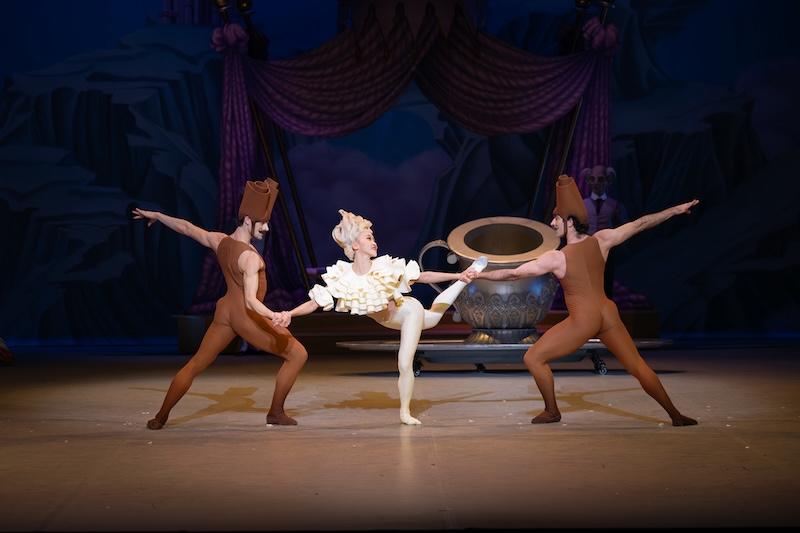
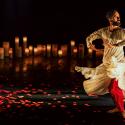
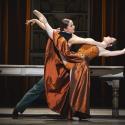
A standout is the pas de trois (pictured above) celebrating Sahlab, an Egyptian hot drink derived from orchid root. Set to music known to many as “the Arabian dance”, the soloist coils her way out of a giant copper cup while flicking an extravagant length of creamy ruched fabric around her as if it were a feather boa, or possibly a whip. Her two moustachioed attendants, sporting cinnamon-stick helmets, conspire to frame her slinky gymnastics-cum-burlesque floorshow in a fashion that renders it entirely innocent – which is just as it should be. There's something for everyone here.