

A performance of Olivier Messiaen’s kaleidoscopic Turangalîla-Symphonie is always going to be a bit of an event. The Edinburgh International Festival set this one up nicely by making it not only the impressive culmination of a four-concert residency by the London Symphony Orchestra, but also the centrepiece of a group of Messiaen-themed performances.
These included a separate concert, earlier in the evening, which juxtaposed Debussy’s La Mer and Milhaud’s La création du monde in a programme described as The Road to Turangalîla, and the previous day a performance of Messiaen’s Quartet for the End of Time. As festival director Nicola Benedetti put it in a podcast sent out to all ticket holders, it’s programming that reaches into the extremities of human experience (pictured below by Andrew Perry: Rattle and the LSO at the end of the earlier concert).
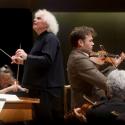
Having duly placed Turangalîla on a pedestal, it was a chance for the LSO under Sir Simon Rattle to shine, and shine they did. For while this symphony is famous for its quasi-concerto roles for the piano and Ondes Martenot, it is so much more than that – more of a concerto for the whole orchestra, a point reinforced by placing not only the piano and Ondes Martenot but all of the tuned percussion at the edge of the stage in front of the strings. 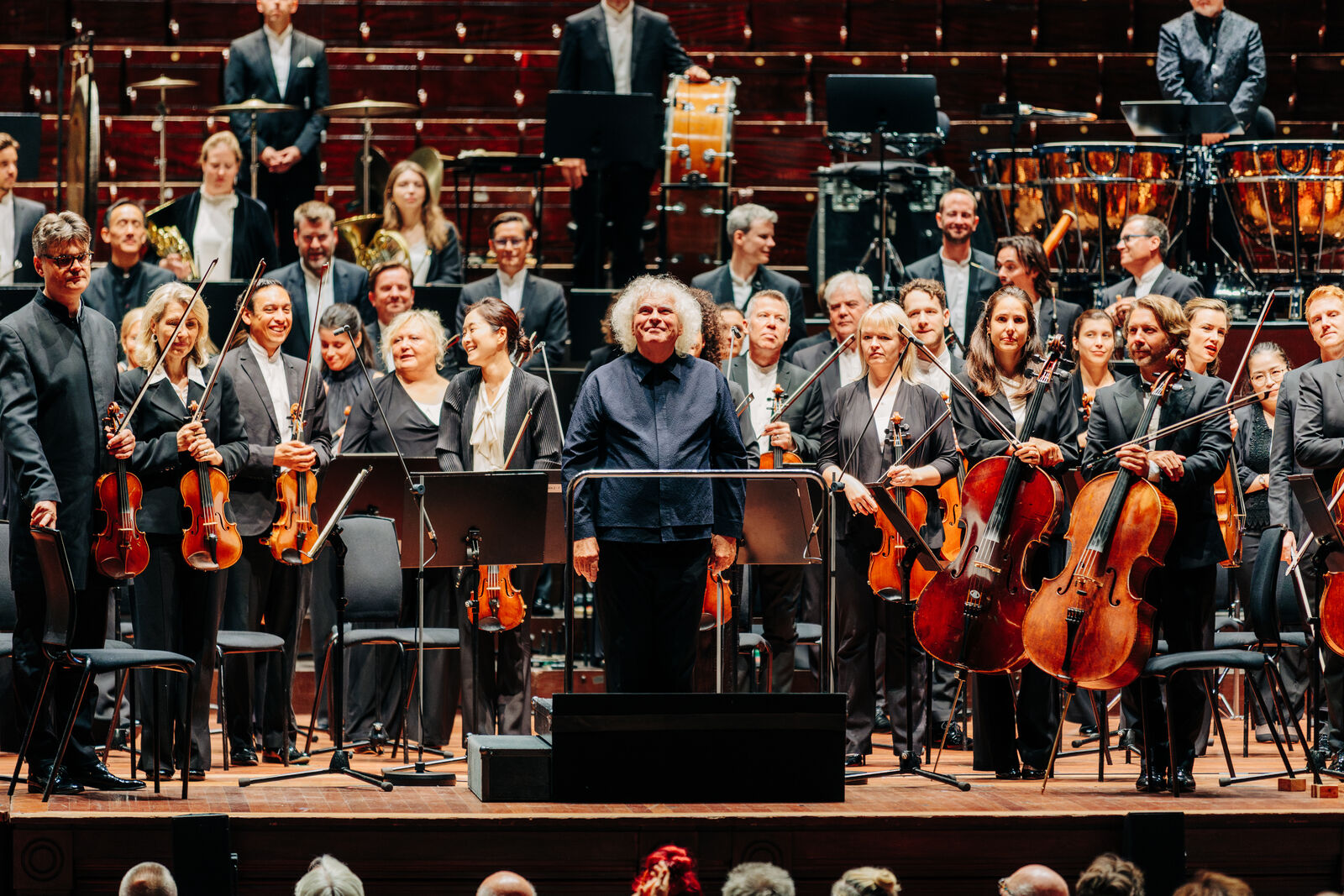 From the outset, the LSO players produced a sound of dazzling depth and immediacy, taking in their stride Messiaen’s myriad changes of tempo, mood, and style, all guided by an unerringly clear beat from Sir Simon. This is a symphony of almost unlimited imagination, and a corresponding welter of notes, that keeps the players extremely busy – if they were tired to be playing so hard in their second concert of the evening, they did not show it. I was particularly transfixed by the cymbalist, holding his shimmering, gleaming discs aloft with such enthusiasm that he nearly lost his footing on the Usher Hall stage. Lovely playing from the clarinets too, and as for the brass: what a range of colours from piercing light to abyssal darkness.
As for the principals, Cynthia Millar on Ondes Martenot (pictured below by Mark Allan in an LSO concert at the Barbican earlier this year) and pianist Peter Donohoe are such old hands at Turangalîla they can probably do it in their sleep, but I could have sworn that Millar produced some new sounds from this most eccentric of instruments. We’re used to the fragile purity of its soaring glissandi, swooping up to giddy heights before plunging to electronic depths, but for the first time I also heard gentle popping noises, slightly comic, as if someone were opening tuned bottles of champagne, and some rather more sinister petulant squeaks. For his part, Donohoe flew into his role with enthusiasm, at times producing such an impressive crescendo on one note that it seemed the soundboard might crack. 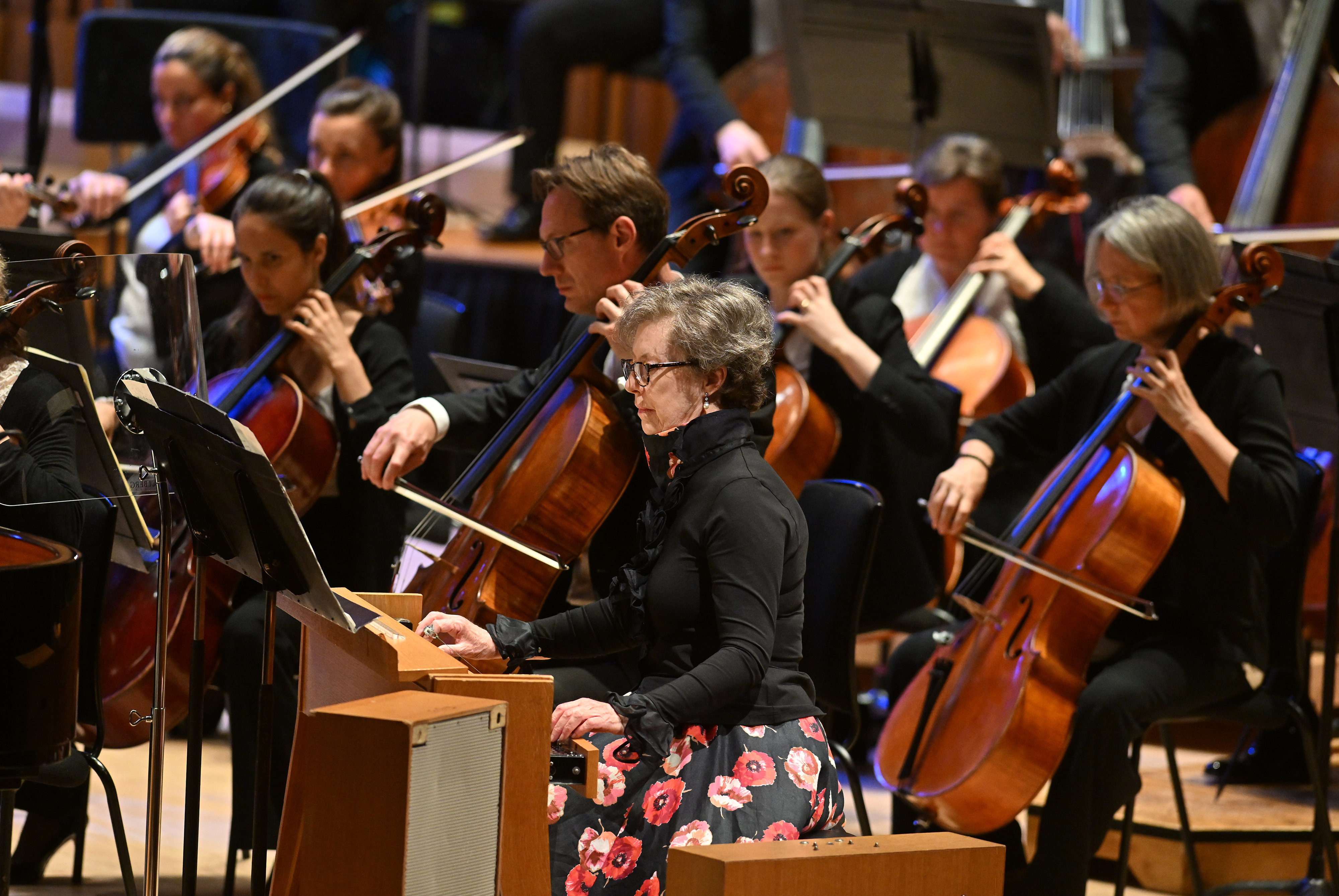 An interesting decision was taken not to have a printed programme. Whether this was for eco or cultural reasons, the most noticeable benefit was that rather than trying to unpick the four big themes and follow the descriptions of the ten movements (“Is this “Jardin du sommeil d’amour”?” “No it’s “Joie du sang des étoiles””), the audience could be enveloped by the work as a whole, and be swept along its emotional rollercoaster without the distraction of the printed word. A bold decision, but one that could have been better communicated to those many audience members who wasted much time trying to find one…
Riotous and sustained applause confirmed the place of this orchestra and conductor right at the heart of the Edinburgh Festival in 2023.




Add comment