

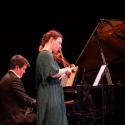
The Scottish Chamber Orchestra punches well above its weight when it comes to guest artists, and it was a big thing for them to have someone of the status of Alina Ibragimova as both soloist and guest director for this concert.
She directed Haydn’s Drumroll Symphony (No. 103) from the leader’s chair, and wisely adopted a less-is-more approach, letting the opening drumroll (terrifically assertive from timpanist Louise Lewis Goodwin) and wind theme unfold without her observably moving a muscle. This then spilt over into a main allegro that was as bright as a button, which nonetheless allowed for a weirdly shadowed colour when the introduction’s theme recurred on the strings in the development. The slow movement had a harrumphing bass line that never forgot its origins in folk song, over which Ibragimova’s solo soared like a bird in flight, and the finale had a lovely sense of brimming over in its climaxes.
I wish they’d agreed on a better vehicle for Ibragimova as violinist, though. Karl Amadeus Hartmann’s Concerto funebre has many admirers who wax enthusiastically about its musical defiance of tyranny, but I’m not one of them. For me it’s too full of generalised agony that blunts its ostensible political point – a response to the encroaching Nazi horror – and for a piece that carries such a darkly pointed message it sears surprisingly little, even considering its scabrous Scherzo of a third movement. Even with these performers, this felt leaden and murky, none of which was the fault of musicians who did their best with the material. However, as so often with concert rarities, it mostly served as a reminder of why it’s so rarely performed.
Even though it sounded a lot more vibrant, you could say the same about Richard Strauss’s early Suite for 13 wind instrument, the one part of the concert where Ibragimova wasn’t involved at all. It’s an interesting novelty, written by a precocious 17-year-old at the very start of his career and the SCO winds quite rightly played it with a quietly self-satisfied air, as though young Richard was trying to tap into the very bourgeois smugness that he would later go out of his way to scandalise.
The Suite is mostly gently purling textures that sometimes put you in mind of the opening bars of Daphne, written nearly six decades later, and if you have ears to hear it then there are repeated flashes of future brilliance, like the Alpine Romanze or the Gavotte which carries hints of the jokers who would come in the later operas. Still, a novelty only. In 2025 the SCO have played this, Strauss’s other early wind piece, the Serenade, and his first symphony. Thanks, but that’s enough for now.





Add comment