

Conducting a piano concerto and playing a piano concerto are normally two separate jobs. Not at last night’s Prom, where Lahav Shani did both – and not just in a breezy Mozart concerto, but the beast that is Prokofiev’s Third. It was quite the feat, like climbing Mount Everest carrying not just your own supplies, but everyone else’s too. I hope he was on at least time-and-a-half.
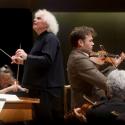
Of course, it’s not just a question of doing it at all: it’s only worth it if it’s done well, and it was. Shani (pictured below), who also conducted the rest of the programme (with the Rotterdam Philharmonic) in more conventional manner, led the Prokofiev with his head, body, eyes and ears – while making light of the challenges of the piano part. It was quite something to see and hear, a monumental achievement, but never a meretricious one, and it received the reception in the hall that it deserved.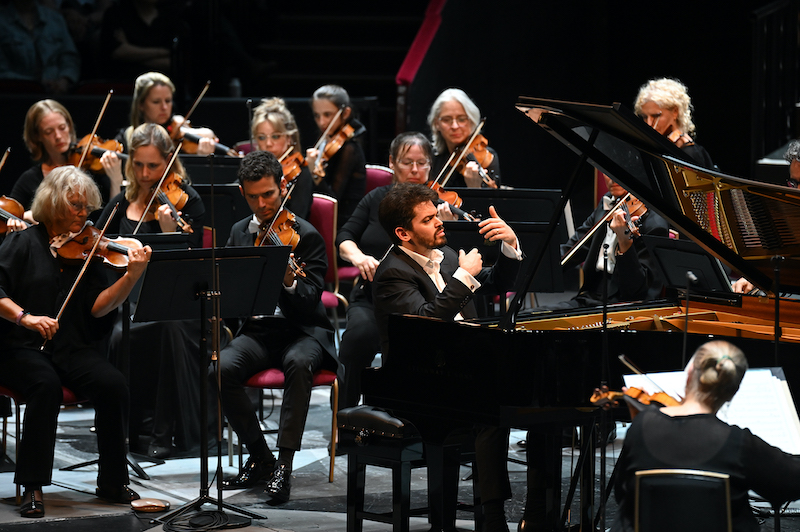 Having heard Mitsuko Uchida and Leif Ove Andsnes do the same thing – with very different types of concerto, it’s noticeable how the performance has to become more like chamber music. That’s how it was here – but it’s astonishing to do that with an orchestra the size of Prokofiev’s, rather than a classical size band. The level of co-ordination was highly impressive, especially in the thrilling passage that ends the first movement, the blistering run in the piano being matched stride for stride by scampering violins, all reaching the final downbeat triumphantly together.
Hearing it this way also reminded me of what a radical conception the second movement is: a theme-and-variations on a quirky little gavotte tune, that becomes so much more than a conventional slow movement. It goes through eloquent cantabile, military-style march and full-on show-off virtuosity, Shani shaping each bit of characterisation with fingers and eye-contact, the orchestral solo intertwining with the piano.
His reading of the piece perhaps played down some of the spikiness in the outer movements in a favour of a gracefulness not always associated with Prokofiev, but the balance between piano and orchestra – often a problem in the Royal Albert Hall – was good from where I was sitting. But as impressive as the flashy bits were, the most captivating section for me was the bit just ahead of the final sprint finish, where time felt suspended in a piano solo that was as peculiar as it is arresting. I was completely won over. After the Prokofiev most pianists would take a well-deserved shower, but Shani was straight back out for Ravel’s La Valse, where the hefty bass section of no less than eight players and a grumbling contrabassoon underpinned this fever dream of half-remembered waltz tunes and curdled high society. It’s so well-scored that Shani only had to let it do its stuff, his conducting so minimal at times as to barely be there. But the gradual build up was nicely paced, the growing sense of things falling apart, a glimpse into madness, inexorably reaching the point where the music collapses in on itself. The Rotterdam players gave it everything – and then relaxed into the perfect encore, Prokofiev’s March Op. 99, with its good-natured bombast hiding hint of madness it has in common with the Ravel.
The first half was much less memorable: Lili Boulanger’s D’un soir triste was languid and lush, but the strings were underpowered in the big moments. Debussy’s La Mer felt a bit run-of-the-mill in places, but was rescued by a vivid last movement, replete with the trumpet fanfares that Debussy edited out, where he should have trusted his first instincts. Ron Tijhuis’s cor anglais solo was poised and poignant and the warm brass chords of the ending won me over.



Add comment