

You wait years for a live performance to test whether Tippett’s Second Symphony is a masterpiece, and then two come along within six months. Both are due to the missionary zeal of the BBC Symphony Orchestra management, determined to give an overshadowed English composer a voice in Britten centenary year. But while Martyn Brabbins convinced me totally of the Second’s dynamic journey back in April at the Barbican, Oliver Knussen caught its rarefied sounds but not always its progressive sense. Many listeners might have left with a feeling of “very lovely at times, but is that really a symphony?”
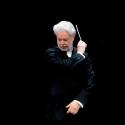
Knussen, the sharpest ear in the business alongside his fellow composer-conductor Pierre Boulez, chooses unorthodox programmes that don’t exactly draw in the punters; some work, others don’t. This one certainly had a greater connecting thread – and fewer distracting platform shifts – than the set of five works he conducted two years ago, with a serial essay for piano and orchestra by the 76-year-old Stravinsky set against that composer's earlier, back-to-Bach concerto and a thorny threnody by Henze to balance the Tippett.
Two of the pieces seemed to work, while two had their problems, at least from where I was sitting in this difficult hall. It’s not easy to warm to Henze’s Barcarola, hardly the gentle, rocking experience we know from barcarolles by Chopin, Offenbach and Respighi. It launches as a woeful cry de profundis, strikingly lined in the depths of the orchestra, and along the boat-journey which may be rowed by death-ferryman Charon – shades of Rachmaninov’s more insistently mesmerizing The Isle of the Dead – the colours of this master orchestrator shift beguilingly to almost playful woodwind and stern ceremonial brass, ending unexpectedly in a brief twittersphere which may be one kind of afterlife. The problem, as with so many more recent works including Knussen's own, is that strong ideas are hardly ever foregrounded, so it’s all atmosphere and a state of becoming: accomplished, but hardly memorable. Still, it might be time to give Henze's 10 symphonies another airing.
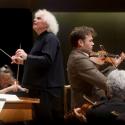
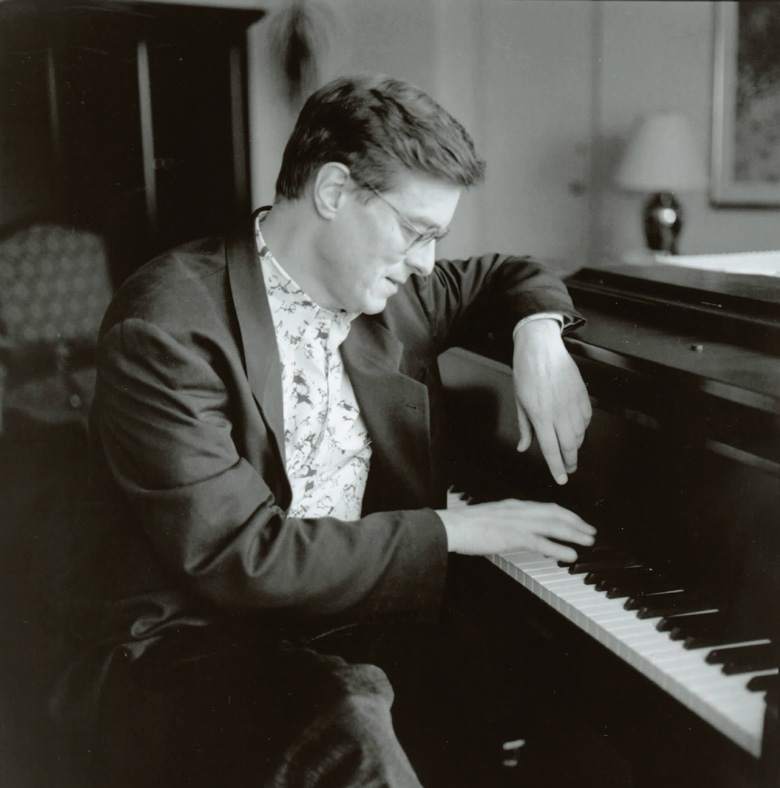 Cultured pianist Peter Serkin (pictured right) joined the orchestra for the Stravinsky centrepieces. From the left side of the hall his instrument, placed centre stage, couldn’t be heard in the first movement of the Concerto for piano and wind instruments; all interest was transfixed on an orchestral wind and brass department as fine, I think, as any.
In the surprising depths of the Largo, where Serkin had less of a battle with his fellow musicians and made good use of that Albert Hall magic whereby a subtle single instrument can really captivate, oboist Richard Simpson and cor anglais player Alison Teale touched the heart which Stravinsky was too often wont to place in inverted commas; in the finale, that top trombonist Helen Vollam shone, as she was also to do in the slow movement of the Tippett Symphony. The finale was deft but hardly bit deep with the kind of steel implants evident in Jeremy Denk’s unsurpassable performance with John Adams and the LSO a couple of years back.
This finale seemed to go nowhere, as if Tippett didn't quite know how to finish his symphony
Serkin was at least crystal clear, and every note from a selective orchestra made its mark, in Stravinsky's Movements of 1958. Connoisseurs claim they can hear the composer’s identity clearly in this succinct product of his late dalliance with 12-tone rigour; a couple of brass chords apart, I detected only Webern, but good Webern at that. Serkin surprised us with his encore. Ellington blues? No: Takemitsu's I Just Sing, confirming that this is a sophisticated musician made for the intimacy of a smaller hall, even if that's just what our venue briefly became.
Again, acoustics can play tricks in Albert’s colosseum, but I missed the arresting vigour which should grab you by the throat in the pulsating, Vivaldi-inspired low Cs, horn fanfares and ecstatic, fiddly string writing that kick off Tippett’s Second Symphony, which you certainly get in Colin Davis's angular, energetic premiere recording; Knussen, seated, seemed diffident in his half-smiling approach.
Instrumental solos were as fine as they had been in the orchestra's earlier, Barbican performance, keeping the ear intrigued in the sectional slow movement, and the scherzo flew past nonchalantly and organically. But where Brabbins had persuaded us that the symphony does all add up when the strings describe a great line in the finale, this one seemed to go nowhere, as if Tippett didn’t quite know how to finish his symphony. Which we know not to be the case. On, anyway, to The Midsummer Marriage in a fortnight’s time.



Add comment