

Beguiling echoes, patterns and symmetries accompanied the Hallé on this Proms journey through the enchanted forests of orchestral sound. Those mellow but irresistible horns that began the evening with the ethereal chug of the pilgrim’s hymn from the overture to Wagner’s Tannhäuser returned at the very end to celebrate victory over an evil sorcerer in a glorious finale to Stravinsky’s third Firebird suite. Neatly, the “Dresden” version of Wagner’s overture (which we heard) dates from 1845, whereas Stravinsky finished his final iteration of the music for Diaghilev’s 1910 ballet a century later, in 1945.
Yet the colours and timbres that Sir Mark Elder drew from Manchester’s finest – an orchestra now 160 years young – in their annual Proms outing had a fine consistency. Their playing confirmed the arbitrariness of those textbook markers that chop up musical history into rigidly separated periods and tendencies. This wasn’t a matter of making Debussy sound like Wagner, or Stravinsky like Debussy, but of finding and refining an orchestral palette that can do equal justice to each fresh bid to ravish the ear. Without fail, the Hallé did that on a torrid but bewitching night.
If musical drama – in opera and ballet – gave a spine to Elder’s programme, so did the colouristic and chromatic sound-worlds nurtured by these composers in response to the various strange tales that shaped these works. Wagner, Debussy, Stravinsky: each dreamed of the combined art-work that would amalgamate music into a total sensuous experience that also enlisted drama, design, stage scenery and dance. However, the Hallé’s command of this material meant that no one would have left unsatisfied, missing a Bakst backdrop or a Fokine pirouette. The music felt entirely self-sufficient here. Elder never overplayed the exoticism of an evening that abounded in magical, mystical and otherworldly themes, and set the charm of folkloric material in dialogue with several sorts of art-music sophistication. He invoked cool Apollo as effectively as hot Dionysus.
In these wide-angled, sumptuously scored works, he could make the Hallé – fresh from the triumphant conclusion to its concert versions of Wagner’s Ring – sound lean as well as lush. His Tannhäuser overture had a measure and control that made you hear the links between the sacred dignity of the pilgrim motif and the profane sensuality of the “Venusberg” music which interrupts it. The scurrying strings of Venus need not sound neurotic and hysterical, and did not here. Equally, the brass-led trudge of the holy seeker should – for all its stirring heft – never turn into the aural equivalent of an advancing tank division. Elder’s even pulse and balanced textures dodged that risk.
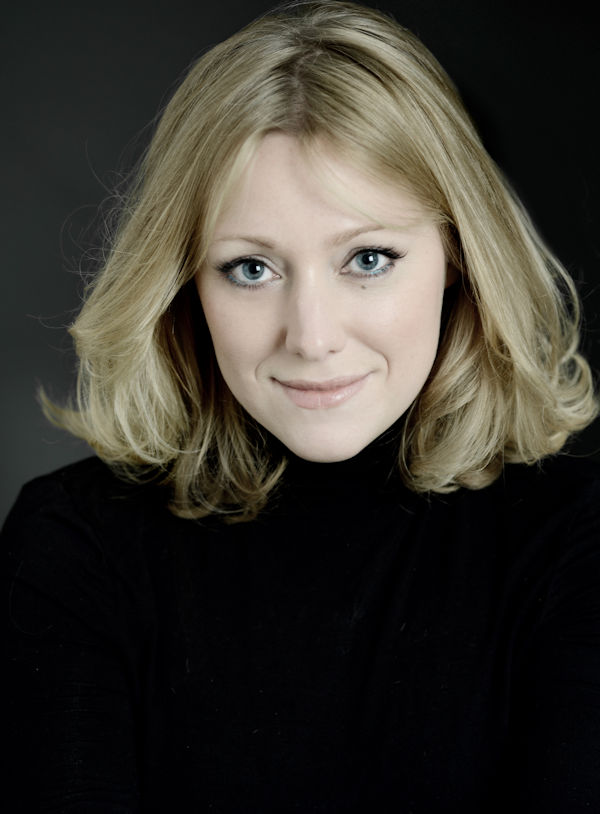
Wagner yielded to Debussy’s 1889 cantata La Damoiselle Élue, written for soprano soloist, mezzo narrator and female choir – here, the clear and elegant Hallé choir and youth choir. Yes, choral Debussy can feel at this early stage of his career like stripped-down Wagner, but the artful orchestral writing hints in its unearthly woodwind flourishes at the more delicate wonders (not least of Pélleas et Mélisande) to come. La Damoiselle Élue sets the French translation of a somewhat sentimental soppy-mystical poem by Dante Gabriel Rossetti. Too much Pre-Raphaelite schmaltz was avoided, however, in large part thanks to the controlled finesse of the ever-excellent soprano Sophie Bevan (pictured below by Sussie Ahlburg) – a late stand-in, and a mightily effective one, for the indisposed Sabine Devieilhe. As narrator, the dark-hued mezzo of Anna Stéphany enriched the mood.
Stravinsky owned the second half, with his 1919 suite The Song of the Nightingale preceding the 1945 Firebird. Based on a Hans Christian Andersen story, The Song of the Nightingale has a tangled history. Planned first as an opera, it morphed into a “symphonic poem” that also served as a Diaghilev ballet score. The 1919 revision bursts with ear-catching Stravinskyan touches, from the crashing swagger of the opening chords and the uncanny chant of the nightingale-flute to the jeering, sardonic trombone. By now, the woodland sprites and elves of the late 19th century have picked up a modernist edge and bite. These post-Rite of Spring sonorities shadow the fairy-tale with urbane irony. Yet, as a warm-up act to the polished dazzle of the Firebird, this nightingale felt slightly out of place: brilliant, yes, but disjointed and erratic – though gorgeously played.
 The Firebird itself shone and soared. It began, unusually, with the Hallé choirs singing two of the folksongs that Stravinsky quotes in his score – a reminder of the popular idioms that often underpin even the most experimental music of this age. Elder deployed his forces so that we could hear and feel the work’s thrilling contrast between the occult chromaticism of the prince-wizard Kashchei the Immortal (the eight-tone “Rimsky scale”) and the more folksy (but never naive) harmonies of the humans that oppose him. As they must, all the woodwind soloists delighted, from the elusive flutter of the firebird-flute and the yearning oboe in the princesses’ dance to the daintily melancholic bassoon of the lullaby. Elder, though, equally brought to the fore the haunting shimmer and murmur of the strings, that ever-present forest floor and canopy against which the woodwind birds flash and swoop. Although the brass jabbed and strutted to superb effect, the quietest moments here perhaps cast the deepest spell. This Firebird whispered as powerfully as it thundered. At last, the sublime simplicity of the solo horn melody led the other sections in a concluding chorale that, inevitably, brought us back to Wagner’s pilgrim – and so closed the musical circle of a century. Sometimes restrained, but never bloodless, Elder let daylight into the magic and framed frenzy within reason. Stravinsky (if not Wagner) would have heartily approved.



Add comment