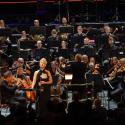
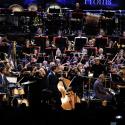
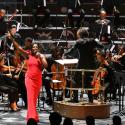
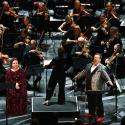
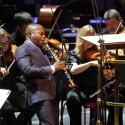
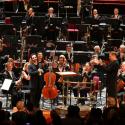
A packed Royal Albert Hall on a Tuesday night for a programme of 20th-century English music. Have the nation’s concert-goers come over all prematurely patriotic? Is Holst’s The Planets really that much of a draw? Or could the crowds have more to do with John Wilson – the straight-backed, schoolmasterly figure at the centre of the musical maelstrom? Whatever their motivation, the capacity crowd surely got what they came for in the scope and drama of this compact Prom.
If the Holst was the headliner here, then Vaughan Williams’ Ninth Symphony was a thoughtful opener, sneaked in under the cover of the former’s ticket-selling title. The Ninth isn’t an obviously ingratiating work, caught as it is between musical modes – sardonic, urban Shostakovich on the one hand, and lingering pastoral urges on the other. But the battle between these two forces is thrillingly dramatised, the composer pitting instrumental sections against one another in an extended conflict that only reaches a resolution in the symphony’s final moments.
Holst’s 'Planets' is a concerto for orchestra that uses every toy in the box
The BBC Scottish Symphony Orchestra have a forthright, bold sound, but they set it aside here for a wonderfully grungy start – pungent woodwind anticipating the smoky trio of wrong-side-of-the-tracks saxophones which set the tone for the symphony. Despite the sweetest blandishments of strings and flutes, there’s no luring this music back into its comfortable harmonic grooves, and every interval finds itself stretched or contracted into angular chromaticism.
Wilson may still be best known (in the context of the Proms, at least) for his film and musical theatre spectaculars, but what’s most striking about his approach to concert-hall repertoire is his restraint and precision. There’s razzle dazzle of quite a different kind to a performance capable of playing such a long game, of holding so much in reserve for so long. The second movement Andante was a sea – seemingly still, but rolling and roiling beneath the surface, while the mock-jaunty dance of a Scherzo nodded to the grotesque without ever getting costumey or camp – not a hermetically sealed episode, but another step towards the deciding conflict of the final Andante. Saving his reserves until the arrival of the shattering E major chord that tips the whole symphony on its axis, Wilson then spent all in a gambler’s flourish, claiming an ambiguous ending as an unequivocal victory.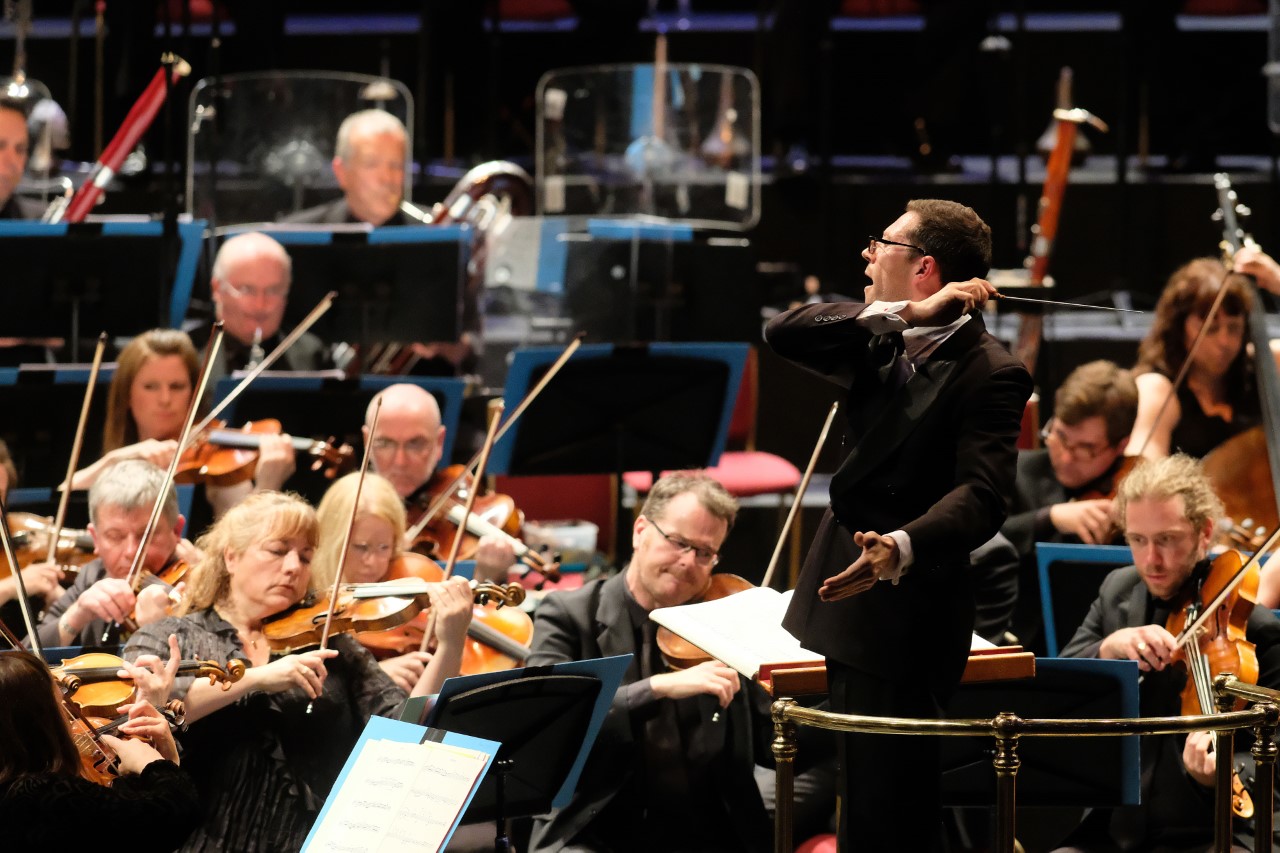 Holst’s Planets is a concerto for orchestra that uses every toy in the box and then some. In a space like the Royal Albert Hall and a festival like the Proms those are some pretty spectacular toys, including a behemoth of a Willis organ and the women of the CBSO Youth Chorus for the suite’s closing choral cameo. Wilson marshalled his forces with care, capturing the ferocity but also the control of Mars’s battlefield gallop, and the cool sheen of Venus’s moonlit landscape – silver, never gold.
There was conversational ease and intimacy for Mercury, a swaggering clarity to Uranus’s cross-rhythms, and some unapologetic brass and organ force. If it wasn’t for the too-present singers of the CBSO, blurring the final slide of this musical magic-lantern show with their emphatic contribution, Wilson and his players might have pulled off their performance without musical mechanism ever intruding on illusion – a conjurer’s account, balancing a showman’s art with some serious concealed skill.