

Have you ever witnessed both a Tristan and an Isolde physically plausible and vocally up to everything that Wagner throws at them, from violent cursing to heartbreaking tenderness? I hadn't until yesterday. At first it seemed as if Yuval Sharon's supposedly controversial production would smother Lise Davidsen's Isolde and Michael Spyres' Tristan in concepts and restrict them to a narrow curve set back from the front of the stage and hovering above it.
Acoustically that seems to have been a challenge for those I know who were present at the Met, the orchestra supposedly overwhelming the singers, but not in the sound for the screening. And the cameras were always where they needed to be for a visual experience also presumably very different from that in the opera house (kudos, incidentally, to the presentation and interviewing technique of top soprano Lisette Oropesa, who'd sung Violetta at the Met the night before, around the acts: genuinely enthusiastic, it seemed, rather than falsely gushing).
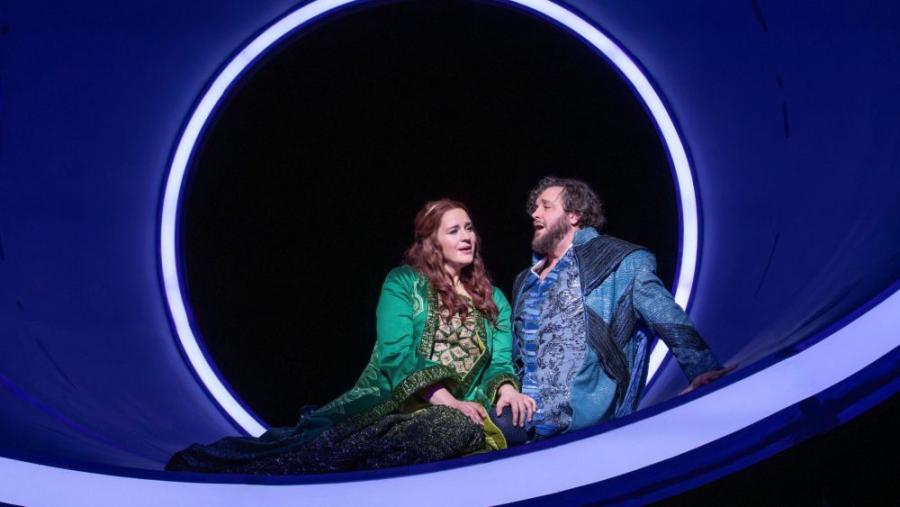
The closeups reveal only remarkable truthfulness from both leading singers. Lise Davidsen never seems to break a sweat, her reactions to everything perfect as in every role I've seen her play, including in otherwise uninspired revivals where the rest of the cast do very little. The camera loves her beautiful, mobile face, as it does Michael Spyres' intense and credible Tristan. We knew what Davidsen could do, but Spyres has defied genres by singing Donizetti's Nemorino earlier this season, and though he calls himself a baritenor, the baritonal weight is only applied when relevant. In fact this proved him to be, as Alberto Remedios always called himself, a lyric Heldentenor, uniquely beautiful in phrase and meaning as the "Night of Love" begins in Act Two (the Met does indulge him with a big cut in the debate about night and day that preceded it, a pity, because this is all great music).
The voices at their softest here are beautifully blended and Yannick Nézet-Séguin, having been a tad heavy with the Metropolitan Opera Orchestra in Act One - slow, sometimes deliberate, very different from the Royal Opera's Antonio Pappano, whom we heard in dynamic action early this week in Siegfried - helps to create the feeling of phantasmagorical timelessness.
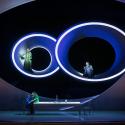
The whole act is a success stagewise, too: Es Devlin's ingenious stage-filling, with its circular otherworlds in contrast to the table at the front of the stage, helps us levitate with the eclipsed sun at the back breaking away as the lovers occupy their own spaces during the watch-warnings of Isolde's servant Brangäne. Earlier the sympathetic characterisation of Ekaterina Gubanova is placed in the nether world, Isolde at the front with a single candle on the table to serve as beacon, which Davidsen blows out almost skittishly.
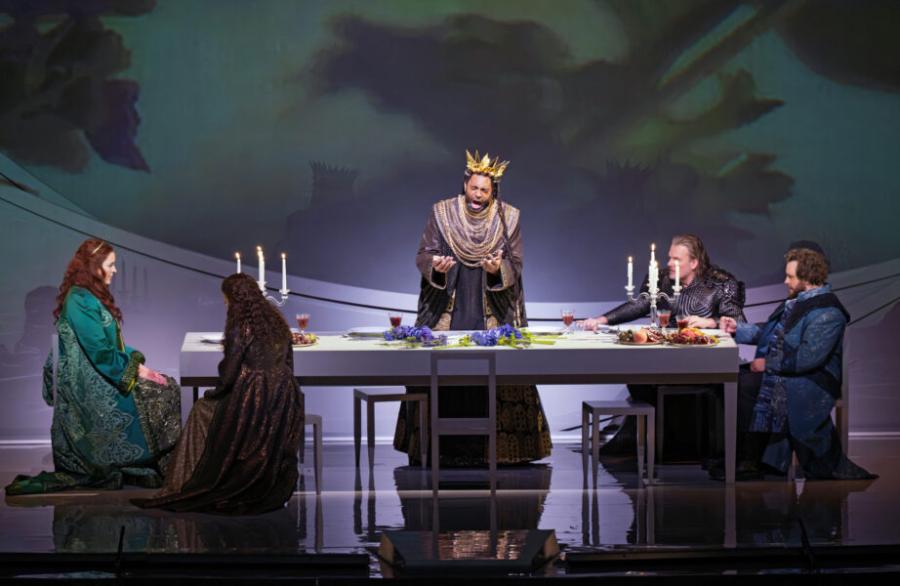
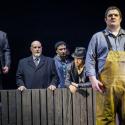
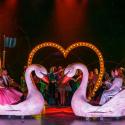
The whole final scene of the act takes place at that table (pictured above). Reports of Ryan Speedo Green's King Marke had been damning, but he, too, encompassed all of this difficult role's demands yesterday, above all the lacerating sense of injury at his friend's betrayal (for Marke, Isolde will only ever be an icon of beauty). When Tristan asks Isolde if she will follow him into the bourne of night, he snuffs out each light on the candelabra, and she, in responsive agreement, does the same at the other end of the table: a superb idea.
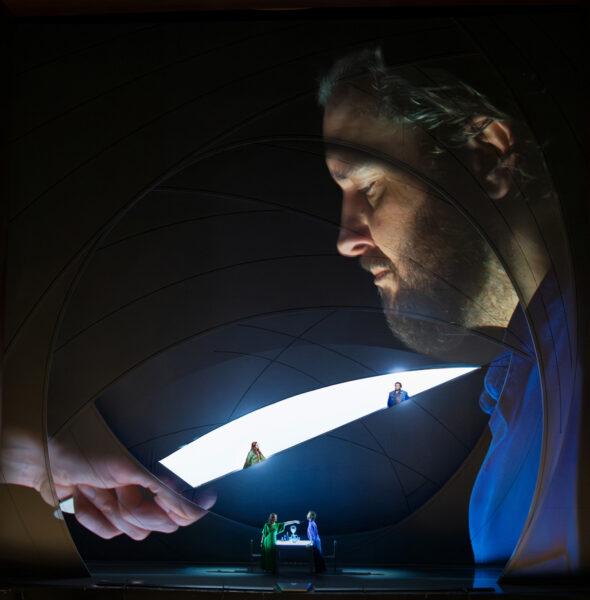
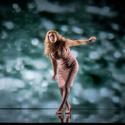
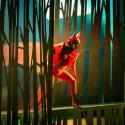
Earlier, there are question marks. If we must have vision to match the sound of the Prelude, Sharon's in conjunction with Devlin, lighting from John Torres, projection designer Jason H. Thompson and Ruth Hogben manages to be impressive and haunting, not in violation of the unfolding purely orchestral love-drama. But to have Davidsen and Gubanova, later Spyres and the Kurwenal of Tomasz Konieczny (in alarmingly rough voice at first for what I've witnessed as the best Wotan of our time), set back and restricted on the precipitous curve is far from ideal. When it shifts, there's a stunning image as the sliver of a knife held by projected actor-Isolde to actor-Tristan's throat (pictured below).
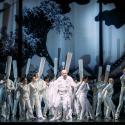
The movement group playing "sailors" are a distraction, and in Act Three to have the limbo in which Tristan finds himself - all alone, surely - peopled with folk in white is a mistake (it would be helpful if the Tristan were less able to hold full focus, as many who can merely sing the role have been, but not Spyres). Maybe remove them in a revival and stick to the phantom Isoldes. What does work is the piper at the gates of nothingness, cor anglais soloist Pedro R. Díaz, on stage for probably the first time in any Tristan.
Sharon just about carries off the idea of a pregnant Isolde in Act Three giving birth before she "dies"; as Tristan returns to the womb - again a not quite successful group scene - new life is seen, and the last image is of Marke holding the baby.

Before that, the Liebestod duly overwhelms us, Davidsen in white after her Irish green starting with infinite tender wonderment, building effortlessly as usual to the great climax. She may be the longed-for revelation of this production, but Spyres is every inch her equal, never tiring through the insane waves of hope and despair, with Nézet-Séguin and Sharon not far behind. I long to see what this director does with the Met's forthcoming Ring.



Comments
Onstage cor anglais player in Tristan und Isolde
This was certainly not the first time that a cor anglais player was onstage for act 3 of "Tristan." Sometimes we see the shepherd miming while the musician plays his instrument offstage. But I think it is better to have a cor anglais player doubling the shepherd and visible onstage.
Onstage cor anglais
I'd be glad to know of where it was done before. In this case, of course, it's a celestian cor anglais player and the Shepherd is down by the sickbed singing, not playing
Indeed especially in Germany…
Indeed especially in Germany there have been some productions with the cor anglais onstage, the first I can remember was the opening of the Prinzregententheater in Munich way back in 1996 and the second one which I've witnessed myself is rhe staging of Dimitri Cerniakov at the Berliner Staatsoper .I'm sure though there were some more: Greetings to you from Hamburg, Germany
The baby final scene
Many do the very natural connection between the baby scene and the fact that Tristan's mother died at his birth, and he lost his father early too, and another story, different but not contradicting the former, can be that as King Marke took care of the infant Tristan, then he will take care of the newborn orphan, conceived during the duet night, and taking care of Tristan's and Isolde's baby consecrates the forgiveness of their respective, and common, treason. And both stories explain so much emotion in the magnanimous King Marke.
Add comment