Is it possible to successfully challenge naturalism in British theatre today? At a time when audiences crave feelgood dramas, uplifting musicals and classic well-made plays, there is very little room for experimental writing.
Still, the Downstairs studio space of the Hampstead Theatre, manages to continue to offer an opportunity to go beyond the usual naturalism of traditional storytelling, and this is exemplified by Cordelia Lynn’s new play, which is an experiment in new writing, partly a family play and partly a symbolist drama. While not entirely successful, it does have its good points.
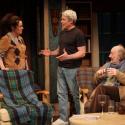
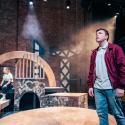
The refreshing thing about Sea Creatures is that it pictures an unusual family situation. In a cottage by the sea, a mother, her lover and two of her three daughters (all from different fathers) spend the summer swimming, cooking and playing charades and Jenga. And making art. Shirley is a middle-aged academic who is also a creative writer, while her partner Sarah is a painter. Living with them is George, the oldest daughter who is seven months or so pregnant, and Toni, the youngest, a rather unambitious 22-year-old of mixed heritage who stays all day in her pajamas. Domestic tranquility is disturbed by Mark, a young man seeking Robin – the missing middle daughter.
Mark has known this family for a while, and is in love with Robin. But she is apparently mentally unstable and often disappears. As well as seeking his lost love, he is also an academic who has written a PhD about Shirley’s work, and wants to know what she thinks of his analysis. Gradually, it emerges that he is as much as victim of trauma as the rest of Shirley’s children, who have suffered from parental neglect. But Mark’s rather busy persona is in contrast to the more laidback women, who drift in and out of the house, occasionally getting down to creative work, often just being.
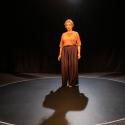
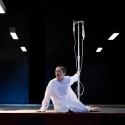
Lynn writes in a poetic literary way, dreamy passages of lyrical descriptions of the force of the sea, with allusions to folk myths about selkies and mermaids, sitting side-by-side with naturalistic passages about domestic matters. There is a strange sense of almost indefinable loss, exemplified by the sudden arrival of an Old Woman, a mythical creature who is trapped between sea and land. She is looking for her skin, and her final resting place. But this longing is as futile as trying to hold back the tides. Each of the other women also suggest a sense of loss: Shirley might be losing her grip due to Alzheimer’s, George has lost her maternal feeling and seeks to harm her unborn baby, Toni often destroys the work of Sarah.
But the beauty of the writing, and its offbeat suggestiveness, doesn’t really compensate for the unattractiveness of the characters, and lack of a plot with something definite at stake. Okay, I understand that this play is an experiment that challenges the great British tradition of naturalism, but somehow it is neither a straight play nor an absurdist drama. Being neither one nor the other, it is puzzling rather than illuminating. And while James Macdonald’s production is haunting in its atmosphere, with wonderful lighting by Jack Knowles and sound by Max Pappenheim, his cast have not really found the right melody to do complete justice to Lynn’s words.
Throughout the show’s 110 minutes I wished that the acting – by Geraldine Alexander (Shirley), Thusitha Jayasundera (Sarah), Pearl Chanda (George), Grace Saif (Toni) and June Watson (Old Woman) – could have been as strange as the text. So while there is much to admire in Zoë Hurwitz’s design, with its simple interiors, shiny kitchen utensils, sea shells and pebbles, it is the charismatic Tom Mothersdale’s troubled Mark who provides the main energy in most of the scenes, and he is given some well scripted asides that suggest the raw violence underneath his pleasing outward demeanour. Other memorable aspects of the production are the sound of the waves, the thunderstorm and the metal lobsters clicking across the kitchen floor. A mysterious show which, for me, didn’t quite work.