Popular culture includes both will-o'-the-wisp confections, gone in 900 seconds pace Warhol’s aphorism, but can also creates a shorthand that conveys more than a lengthy monograph in The London Review of Books. Long before he was Prime Minister, Andy Burnham was dubbed the "King of the North", and nobody felt the need to explain. That was the kind of cut-through achieved by Game of Thrones on page and screen.
So it’s a surprise to learn that in 30 years since George RR Martin introduced Ned Stark to the world and 15 since he lined up with his family in the cold on TV, that he had never appeared on stage (save a parody or two). That delay might be explained by the scale and complexity of the world Martin created and the technical challenge of presenting the visual impact at the heart of its appeal.
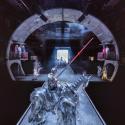
I cannot have been alone in sitting in a reconfigured Royal Shakespeare Theatre, the audience around, within and above two stages, crossing in the middle like a large airport’s runways, and pondering about whether it could be done at all. It would be our home for the next four hours or so, and we knew there had been problems in previews - would the GoT thrill (I can still summon it now when I see HBO’s opening credits) still be there?
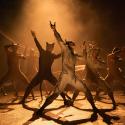
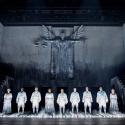
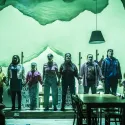
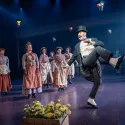
Heralded by trumpets - just hand Tom Gibbons all the sound design awards for 2026 now, the work is that good - a parade marches towards us, costumes (Georgia McGuinness) pitch perfect, cast teeming out of the wings in numbers that would please Cecil B DeMille, and the spectacle already groundbreaking. “Guys, you’ve three and a half hours to go”, I whispered under my breath, “keep something back”.
Duncan Macmillan has scoured the lore of Westeros (there are almost as many backstories as stories in the canon after all) and set his play 25 years or so before the tumultuous events with which fans will be familiar. King Aerys II is descending into the bloodthirsty madness that has characterised generations of Targaryen monarchs, but, with their mighty dragons now extinct, the other houses, and even his own son, see their chance to move against him. “No Kings” isn’t quite their clarion call, but “Not this King” certainly is. And off we go!
Well, not quite, Martin famously overplotted his books, characters coming and going, no byway left unexplored, and we’re still waiting for him to start to pull things together for a conclusion. It’s a job that the showrunners at HBO botched horribly, an indication of the length and breadth of the canvas they worked on. It’s akin to squashing all Shakespeare’s history plays into a single narrative thread.
Inevitably, the first 40 minutes or so is largely concerned with exposition and introductions of Houses, characters and organisations. I was just about to give up on trying to keep all these people in their proper places (knowing their later selves and offspring is more a hindrance than a help, as it’s intrusive) when the strands suddenly came together and I felt at ease. It might be poor manners, but if you can sneak a quick look at the programme’s family tree page now and again, open on your knees, do.
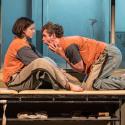
Michael Abubakar gives Eddard, sorry Ned, Stark a youthful idealistic nobility that we recognise, mellowed and diminished by the years, when he is the patriarch played by Sean Bean on TV. One glows a little at the sight of Harmony Rose-Bremner playing his sister, Lyanna, very much the aunt of the much-loved Arya Stark and one shivers a little on seeing Noah Ritter, his family’s signature long hair, white and flowing, as Prince Rhaegar Targaryen, who catches her eye and she his. At the jousting tourney attended by most of the great houses, he acts on that teenage attraction and, well, it’s GoT, so things don’t get better as a result do they?
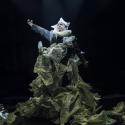
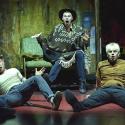
As civil war erupts, the Mad King gets madder, Michael Shaeffer channelling King Lear as his kingdom collapses, firing apparatchiks faster than Stalin’s toucher-upper of photographs could blur them out. Schaeffer’s diction is particularly impressive, indeed accent work is central to the tale as it unfolds in all its glory, the hardworking ensemble cast cycling through many.
Despite that, and some real bravado spells of directing, Dominic Cooke cannot quite hold the centre, the sheer sprawl (let’s be kinder) ambition of the production overwhelming the storytelling, as yet another character arrives to have yet another swordfight.
If that’s understandable, less explicable is the lack of sex in a play that often turns on the tensions between love, lust and duty. Perhaps times have moved on, but the 18 certificate stuff really mattered on screen and to remove all but a halfhearted glance or two between a low energy Jamie Lannister and a rather prim Cersei diminishes those villains. Most of the killing is delivered via blackouts accompanied by that superb sound design, and there is one notable moment that warrants its trigger warning. Nevertheless, downplaying the sex and violence is the approach taken, to the characters' detriment - mayhaps the audience could be trusted more?
For many, not much of that criticism will count even if they agree with it, because… PUPPETS! Finn Caldwell and Nick Barnes of Lume are credited with puppetry and movement but those words are too bland, too ordinary, for the astonishing work we see on stage. Never has disbelief been easier to suspend, as monumental sculptures come to life, dazzlingly animated by teams of actors, to fly and fight, to trot and terrify, to worry us and wow us. In concept and execution, this production moves an influential area of theatrical practice on to a whole new level.
If Game of Thrones: The Mad King is not quite an unmitigated triumph, it’s still a must-see show (and, surely, this sold-out run will not be its last). That a production as demanding, on both sides of the fourth wall, can be funded and staged at all in 2026 is a tremendous shot in the arm for UK theatre itself.
All it needs now is a visit from today’s King of the North to give his blessing to a remarkably successful example, first on screen, now on stage, of what British technicians and creatives working together can do. It’ll certainly inspire kids to pursue the kind of education he wants to promote in schools.
Ned Stark himself would approve.
- Game of Thrones: The Mad King at the RSC, Stratford until 5 September
- More theatre reviews on theartsdesk