

It was a year for outstanding individual performances, especially from relative newcomers, and at least three flawless ensembles, less so for the Total Work of Art. That would seem to be the domain of works new and relatively recent: the world premiere of Mark-Anthony Turnage’s Festen at the Royal Opera, and the first UK staging of Jake Heggie’s Dead Man Walking at English National Opera.
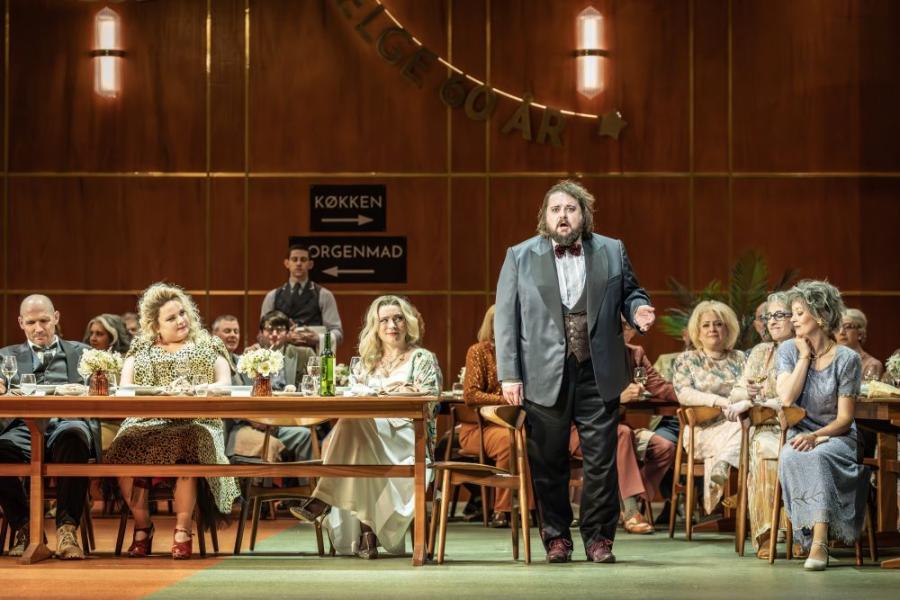
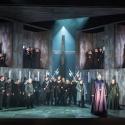
Turnage’s operatic work may have been uneven over the years, but his radical adaptation with Lee Hall of Thomas Vinterberg’s first Dogma 95 film, integrating a magnificent role for the Royal Opera chorus, didn’t put a foot wrong (though I waited for the real emotion, which was a long time coming, but it certainly arrived). A vintage cast led by Allan Clayton (pictured below standing by Marc Brenner), Natalya Romaniw and Gerald Finley executed Richard Jones’ demanding, choreographed action to perfection; Edward Gardner (cued by Turnage, of course) got razor-sharp and variously characterized results from the Royal Opera Orchestra.
ENO’s wasted championship of Jake Heggie’s embarrassing operatic, sugar-coated Capra in 2022’s It’s a Wonderful Life made me worry for Dead Man Walking, but it seems this may well be the one-off masterpiece every top creative artist can go for in their (relative) youth (much the same could be said for the early success of Conor McPherson’s The Weir).
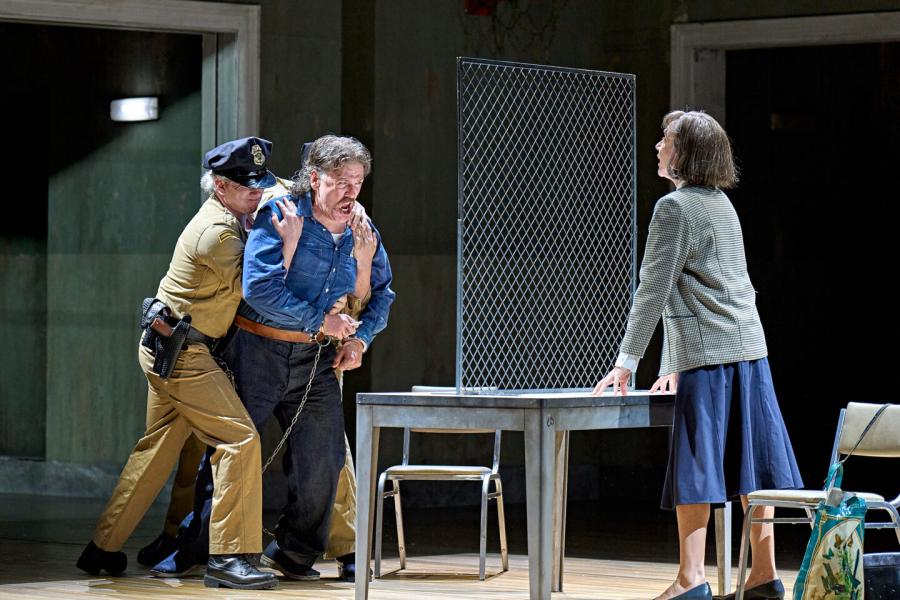
Annilese Miskimmon’s success as ENO's Artistic Director has been fitful - she simply wasn't there when the company needed her most, but let Alexandra Coghlan sing her production’s praises here: “exactly the kind of show ENO should be putting on; seriously strong ensemble cast”. Boyd Tonkin declared it “an event to shake the soul. Michael Mayes, Christine Rice and Sarah Connolly elevated Heggie’s death-row shocker with performances of riveting force and depth.” I’d single out Mayes’ performance (pictured below by Manuel Harlan with Malachy Frame and Rice) as the closest to a terrifying edge of the year’s standouts.
ENO were on a roll around this success with two more first-rate ensembles. Antony McDonald’s ingenious minimal production (much more than a semi-staging) of Britten’s Albert Herring should have been playing in all the smaller houses Glyndebourne no longer tours to, not two performances in the vast London Coliseum and two in the equally unsuitable Salford Quays. The company’s admin failed us yet again. Ridiculously limited rehearsal time had the cast on tenterhooks for the first night, I later learned, but they pulled it off. And the revival of Christopher Alden’s endlessly resourceful Handel Partenope had the best cast possible, led by Nardus Williams’ gorgeous (sorry, no other word will do) Queen and countertenor Hugh Cutting’s most persistent suitor. It’s been the year in which the very best of his vocal type to have emerged in recent times fully emerged: the bravura of his second act aria showed the opposite side of the coin to the heartrending expression of his “Agnus Dei” in Bach’s B minor Mass (more on that in the forthcoming "Best of Classical Concerts").
Phenomenal and hugely liked, Jakub Hrůša has yet to chime with a production totally on his level as the new Music Director of the Royal Opera. Oliver Mears’ new Puccini Tosca came close, at least in the second and third acts, but it started with eternally-disgraced former Putinist Anna Netrebko in the title role – why couldn’t they say no? – so I plumped for the Aleksandra Kurzak takeover – and got the stunning Ailyn Pérez, stepping in for an indisposed Kurzak, in a flawless assumption of diva and woman.

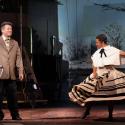
Before his official appointment, Hrůša encouraged the revival director to bring the singers more to the front in the difficult spaces of Claus Guth’s Janáček Jenůfa. There was nothing he could do about the baffling overload of Katie Mitchell’s take on The Makropulos Case, though: my turkey of the year, dishonouring the concept and an interesting cast. Five Monday afternoon Zoom classes showed me and my students what this bewildering masterpiece can be (try Lehnhoff with Silja at Glyndebourne on DVD). At least Hrůša will eventually get to share Barrie Kosky's so far unforgettable production of Wagner's Ring with outgoing Antonio Pappano; this year's Die Walküre had impressive performances all round, but outstandingly so from Welsh-Ukrainian soprano Romaniw – who should, have course, been the Royal Opera's Tosca – as Sieglinde to Stanislas de Barbeyrac's equally intense Siegmund (pictured above by Bill Knight).
Regional companies soldiered on, sometimes under dire circumstances. Stephen Walsh salutes Melly Still’s bold production of Britten’s Peter Grimes for Welsh National Opera, as “important… for the signal it sent to the Arts Council and the world that this company is not for burning”. Stephen’s other choice was Tchaikovsky’s Mazeppa from Grange Park Opera, directed by David Pountney: “an important revival of a gripping work of musical theatre, not enchanting like Eugene Onegin nor as consistently inspired as The Queen of Spades, but thought through powerfully in its own way.”
Opera North had another good year. Robert Beale admired both its “dramatic staging” of Verdi’s Simon Boccanegra in Bradford, 2025 City of Culture, “with the august Victorian civic premises of St George’s Hall brilliantly used for the story of civic discord”, and “an all-too-brief three-performance run of Lerner and Weill’s Love Life: the world's first concept musical (for what was mainly a recording project), but imaginatively directed in Leeds Grand Theatre by Matthew Eberhardt and wonderfully performed by Quirijn de Lang and Stephanie Corley with the talented Opera North Chorus, conducted by James Holmes.”
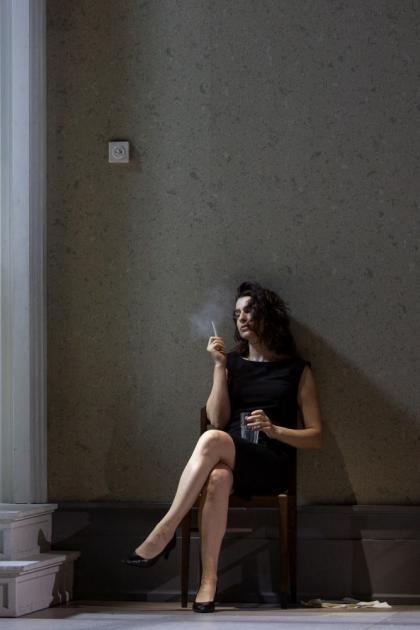
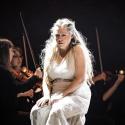
Standout performances were abundant. In addition to those already mentioned, Asmik Grigorian’s assumption of the three soprano roles in Puccini’s Il Trittico made a one-off justification for putting Gianni Schicchi, comic heaven to the inferno of Il tabarro and the purgatory of Suor Angelica (Grigorian in that role pictured right by Guergana Damianova) , first. I happened to be in Paris for a not-exactly-operatic but brilliant Bizet double bill, and found Christof Loy’s production as well as Carlo Rizzi’s typically nuanced conducting just as compelling as Grigorian's threefold triumph. You can still see it all, in whatever order you choose, on OperaVision. Grigorian’s concert Salome, very low-key dramatically between the singing, was equally perfect in vocal terms, with Antonio Pappano predictably drawing shot-silk colours from the London Symphony Orchestra at the Barbican in Strauss’s miraculous score.
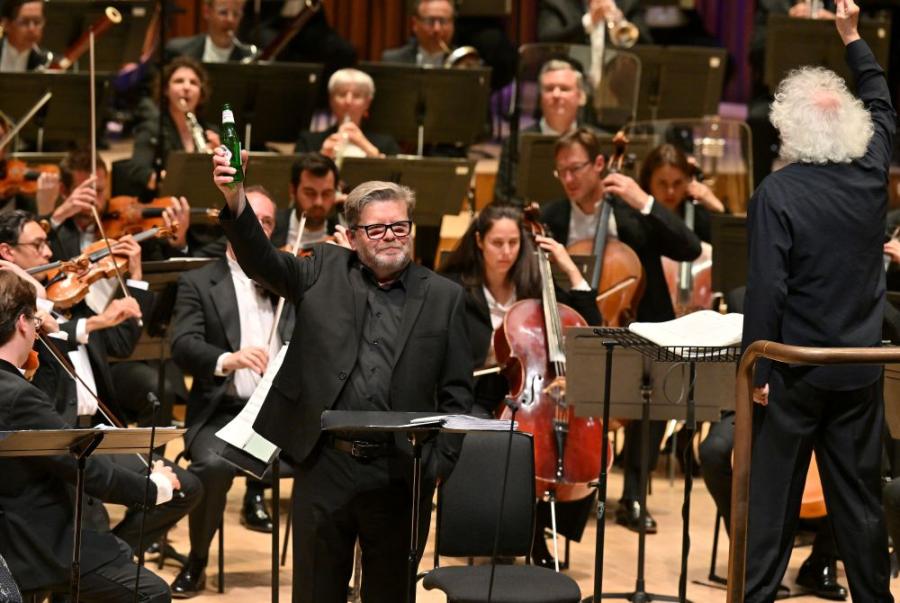
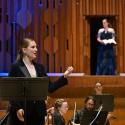
Another LSO spectacular, with more suggestion of staging, saw Simon Rattle make the most significant pleading of his Janáček series so far: never has the aesthetic-spoofy fantasy of The Excursion of Mr Brouček to the Moon sounded more ravishing. The beer-swilling Prague philistine’s time in the heroic 15th century always works, but its splendours were even more marked here. A terrific lead trio of Peter Hoare (pictured below with Rattle and the LSO by Mark Allan), Lucy Crowe and Aleš Briscein seemed to be having a whale of a time in another perfect line-up.
Other perfect performances in less than perfect wholes complete the list. Wexford Festival Opera, having seen a vintage year in 2024, had a more uneven threesome of main operas, though the witty take on Handel’s Deidamia was a hit. Direction in the French version of Verdi’s Il Trovatore, Le trouvère, was static and leaden, but the four principal roles were all strongly taken and newcomer of the year must go to American Lydia Grindatto, a soprano who can do it all and whose recital the following day was such a treat: funnily enough “Climb Ev’ry Mountain” showed her secure technique from top to bottom perfectly. Glyndebourne had a mixed season too, with a limiting take on Parsifal, but nothing could detract from the levitating interpretation of Robin Ticciati. Sequels to the best here can be expected in 2026 when Rattle tackles The Makropulos Case in concert staging, with the infinitely various Marlis Petersen as the 337-year-old protagonist, and Barrie Kosky continues his unpredictable Royal Opera Ring with Siegfried.

Add comment